Lone Star Tick
Scientific name: Amblyomma Americanum
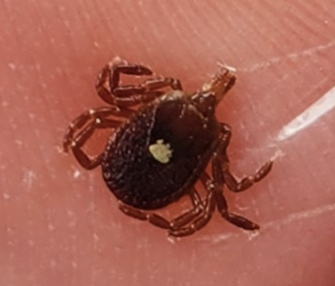
⭐️ A frequent human biter
Hosts
Lone star ticks feed primarily on medium to large mammals like white-tailed deer, raccoons, cattle, domestic pets, and people but can also be found on squirrels and birds such as sparrows and turkeys. All tick stages are commonly found on white-tailed deer.
Habitat
Forests and forest edges across New Jersey, with the greatest numbers in the coastal plains and the Pinelands.
Locations in NJ
This tick species has been expanding north, regaining its range before agricultural practices in the 19th century removed most New Jersey forests. Recent detections have occurred in Hunterdon and Somerset counties.
Active Months
Lone star ticks are active in New Jersey from March through October. The larvae are most abundant in the Fall and can attach to hosts as larval “balls” of hundreds of individuals – sometimes called “seed ticks.”