Winter Tick (Moose Tick)
Scientific name: Dermacentor albipictus
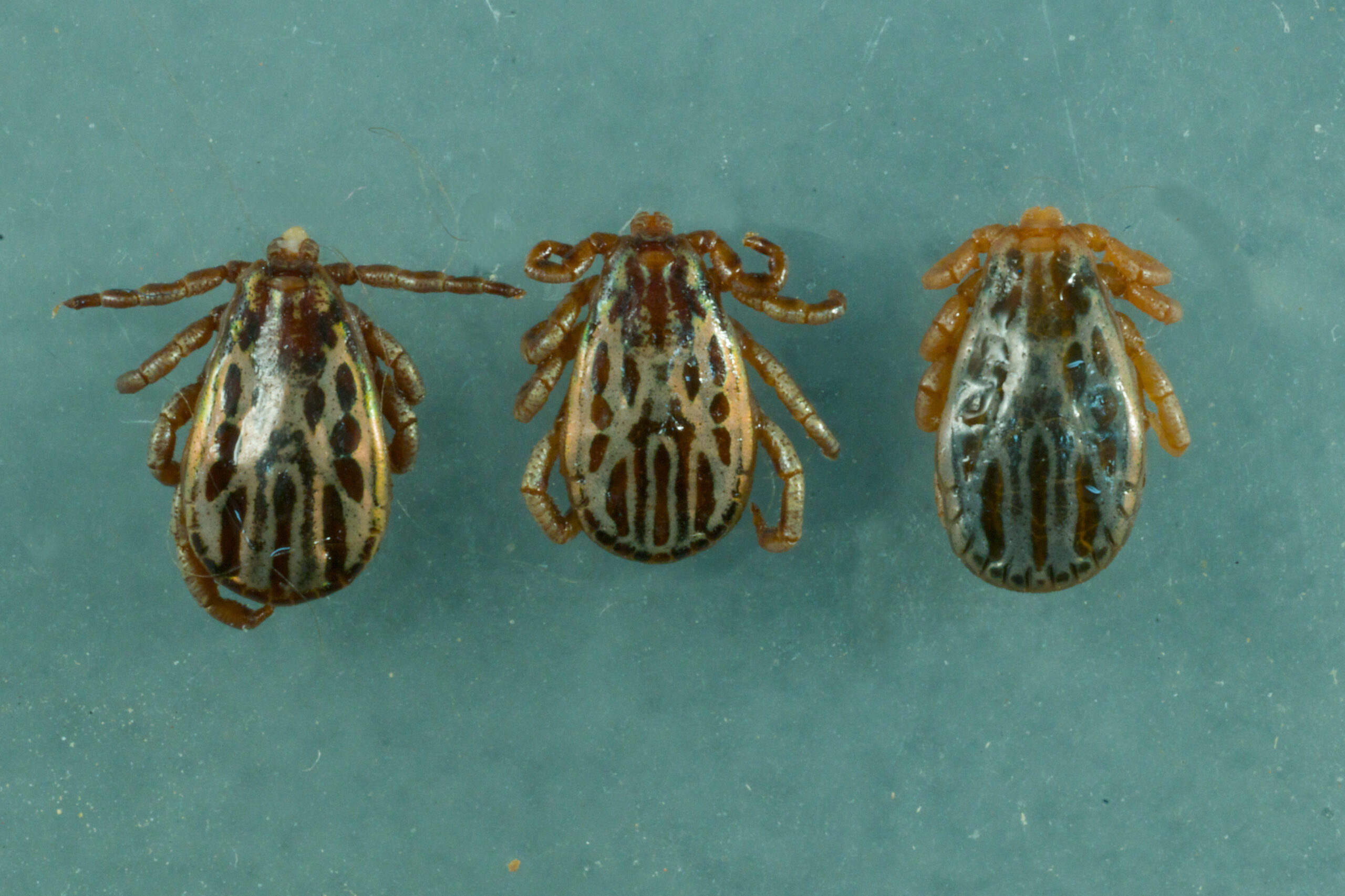
The winter tick is a one-host tick, which means they latch onto a host as larvae, blood feed and molt into nymphs, blood feed, and then molt into adults all while remaining on the same host. Blood engorged females drop off onto the forest floor to lay eggs. The only questing life stage is the larva. Their primary hosts are moose, distributed in the U.S. between Maine, Washington, and Alaska. In New Jersey, the winter tick feeds primarily on white-tailed deer.
Hosts
Moose or other ungulates such as deer, elk, caribou, and mountain sheep. In New Jersey, primary hosts are white-tailed deer.
Habitat
Winter ticks are found in forested areas where their hosts live.
Locations in NJ
Information on the distribution of winter ticks in New Jersey is limited. There are known records from Monmouth and Ocean counties, but given the ubiquity of white-tailed deer throughout the state, their distribution is likely more extensive.
Active Months
These ticks may be active in New Jersey from February through November.