
Parasitoid Wasps and Flies (Hymenoptera & Diptera)
Overview:
- Cause the death of their hosts
- Feed on internal organs within hosts
- Majority of observed landscape parasitoids will be wasp or fly species
- Provide better biological control than larger predators
- More host-specific
- Better searching ability
- Work at lower pest densities
- Require less food to complete development
- Better synchronized to their hosts’ life cycle
- Eliminate the hazards of host-seeking since eggs are laid in or on the host
- Often undetected by nurseries and landscapers
- Larvae develop inside the host, so often difficult to monitor
- Adult wasps are exceptionally small & will often have a constricted waist & beaded antennae
- Yellow sticky traps can be used to monitor hosts
- Look for:
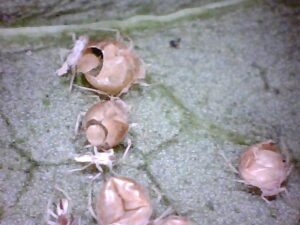
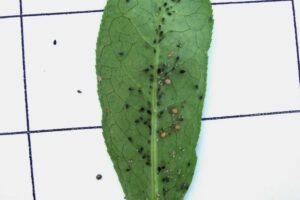
- Swelling of aphids into mummies
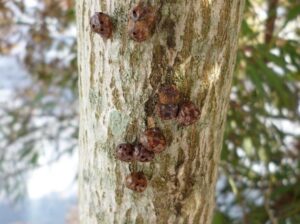
- Darkening of soft scale insects
- Exit holes in armored scale insect waxy covers and exoskeletons of soft scales
- Prey pests: Parasitoids are host specific
Management:
Fostering Beneficial Insect Populations:
- Plant a diverse mix of flowers that bloom throughout the season
- Plant native species
- Choose flowers with ample nectar and pollen
- Asters, yarrow, anemones, milkweed, dogwood, serviceberries
- Plant with organic matter and leaf litter
- Avoid over-weeding
Pesticide Impacts/Considerations:
- Insecticides can kill parasitoids or disrupt their behavior, reducing their ability to navigate, find food, and mate
- Often exposed through contaminated food sources (nectar or pollen) or through encountering residues on leaves or flowers
- When pests are exposed, beneficial insects are exposed
- Applicators MUST follow label instructions for in-bloom applications for any insecticide
- Spray only when necessary
Resources:
Parasitoids: The Hidden Backyard Beneficials – PPA

Disclaimer – Materials do not cover all possible control scenarios and are intended for licensed professionals. Tradenames do not imply endorsement and are used as examples. You must strictly follow the label for each compound prior to use. Rutgers is not responsible form is used materials or damages thereof. The label is the law. Labels will provide detailed information on use and restrictions. Additionally, application intervals, compatibility, surfactant use, PHI, PPE, important and other key information is described in detail. Always discuss treatments with your local agents. Note: Neonicotinoids can only be legally applied in commercial agriculture settings by licensed applicators. Guidelines and recommendations made in this presentation are specific to the state of New Jersey.