
Inner Needle Discoloration of Spruce (Picea spp.)
Overview:
- Host plants: most common on White and Colorado spruce species, but sometimes seen on Norway spruce
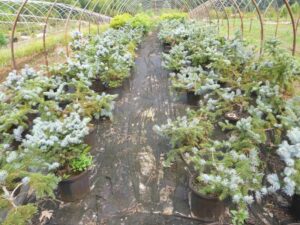
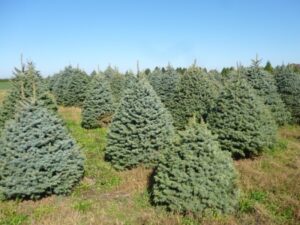
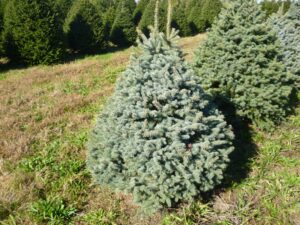
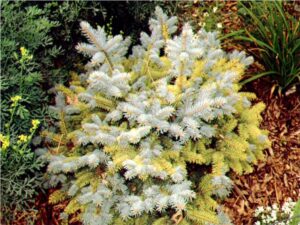
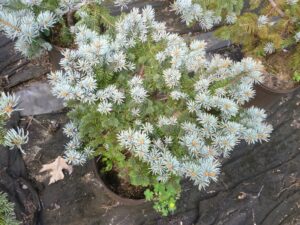
- Current needle growth has a blue-green color, but older, inner needles lose their desirable color (blue glaucus bloom) and turn pale or even yellow.
- This sometimes becomes dramatic and initiates both aesthetic and plant health concerns
- Reasons for these symptoms can be from a complex number of conditions, but a compromised root system is typically the underlying cause (often excessively wet soils)
- To determine the cause, first eliminate other causes such as the spruce spider mite stippling systems or dormant oil applications that may have removed the waxy bloom growth on the needles
- Compromised root systems result in nutrient deficiencies within the spruce
- The inability of the roots to uptake Potassium (K) or Magnesium (Mg) are often involved
- Highly acidic soil pH can also be a factor
- Excessively dry or wet soils will cause inner needle discoloration
- To compensate, the tree creates a self-induced deficiency of potassium (K) to older needles by translocation of K to the newest growth needles
- Pale older needles often never fully return back to their previous coloration even after soil conditions are corrected
- Often improves in 2-3 years with new growth
Management:
- Fertilization with potassium (K) will not solve the problem because the cause is from root stress and not a shortage of potassium (K) in the soil (usually)
- Excessive nitrogen fertilization can make the problem worse
- Rework the soil to improve drainage
- This might be difficult in lower areas with high % clay soils
- (Christmas tree farms must select tree species planting sites carefully)
Resources:
Why Do Spruce Trees Show Interior Needle Discoloration? – PPA

Disclaimer – Materials do not cover all possible control scenarios and are intended for licensed professionals. Tradenames do not imply endorsement and are used as examples. You must strictly follow the label for each compound prior to use. Rutgers is not responsible form is used materials or damages thereof. The label is the law. Labels will provide detailed information on use and restrictions. Additionally, application intervals, compatibility, surfactant use, PHI, PPE, important and other key information is described in detail. Always discuss treatments with your local agents. Note: Neonicotinoids can only be legally applied in commercial agriculture settings by licensed applicators. Guidelines and recommendations made in this presentation are specific to the state of New Jersey.