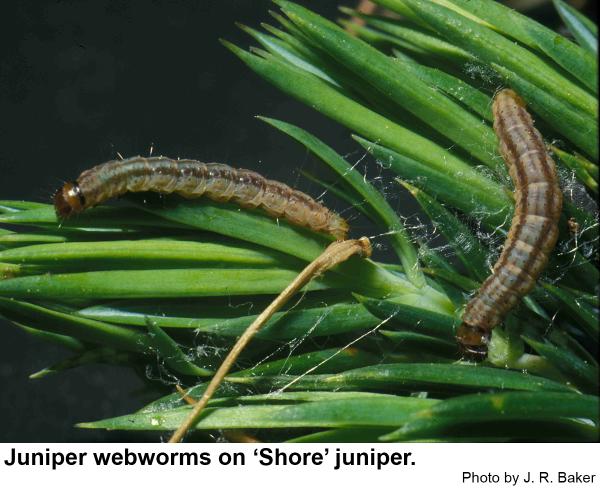
Juniper Webworm (Dichomeris marginella)
GDD Window (base 50): 1645-1917
Overview:
- Spins silk to fasten together the needles and twigs of juniper
- Overwinter as partially grown black-headed, brown striped worms inside webbed juniper needles
- Adults emerge from May to July and lay tiny, whitish-pink eggs before dying
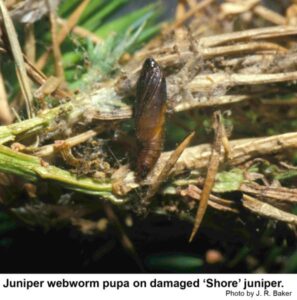
- Eggs hatch in about 10 days, and tiny, light dark to reddish brown, ¼” long pupa emerge
- Larvae initially mine within the foliage, but later completely consumes needles
- Needles will brown from initial puncture
- Mined needle is used as protection for the worm
- Tiny, white web is formed around the mined leaf, which grows to encompass dead needles as the worm grows
- Caterpillars are ¾” long, whitish brown with reddish brown stripes
- Adults are small, skinny, brown moths, about ½” in length, with white wings
- Often go unnoticed, and only fly when they are disturbed
- As they age, older worms are grayish brown with three stripes down their backs
- Symptoms first appear similar to spider mite damage since needles yellow, but webbed needles will brown and die
- Community webs can form by the following spring
- Small shrubs can be completely webbed
- Aesthetic damage can be severe
- Host plants: Juniper (Irish juniper is especially susceptible)
Management:
Cultural Practices:
- Natural parasitoids: Braconid and Ichneumon wasps
- Prune out infested branches and webs
- Reduce plant stress
- Monitor for correct timing of insecticide applications
Materials:
- Contact insecticides (must get past web):
- Spinosyns [5]: spinosad
- Carbamates [1A]: carbaryl
- Pyrethroids [3]: –thrins
- Systemic insecticides:
- Organophosphates [1B]: acephate
- Diamides [28]: chlorantraniliprole
- Considerations:
- Will harm non-target species
Biorationals:
- Azadirachtin [UN]
- Bt [11]
- Spinosad
- Chlorantraniliprole
Resources:
Landscape Pest Notes for July 2023 – PPA
Disclaimer – Materials do not cover all possible control scenarios and are intended for licensed professionals. Tradenames do not imply endorsement and are used as examples. You must strictly follow the label for each compound prior to use. Rutgers is not responsible form is used materials or damages thereof. The label is the law. Labels will provide detailed information on use and restrictions. Additionally, application intervals, compatibility, surfactant use, PHI, PPE, important and other key information is described in detail. Always discuss treatments with your local agents. Note: Neonicotinoids can only be legally applied in commercial agriculture settings by licensed applicators. Guidelines and recommendations made in this presentation are specific to the state of New Jersey.