
Dragonfly (Anisoptera spp.)
Overview:
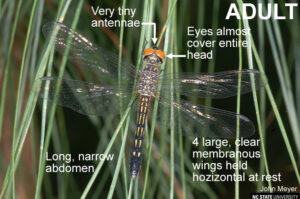
- Adults have a long, narrow abdomen, two tiny antennae and two pairs of large, clear wings that stay open during rest
- Larger species can fly at speeds exceeding 30 mph, making it easy for them to avoid predators and capture prey
- Large compound eyes with a nearly 360-degree field of view and ultraviolet vision allows them to catch prey in midair with a 95% success rate
- Many existing species, coming in different colors and sizes
- Percher types make frequent stops in a small range
- Patroller types have constant motion within a larger range
- Lay their eggs in mud or water
- Nymphs hatch within a few weeks and live in water for up to two years
- Nymphs (naiads) crawl out of the water when they are grown so that adults can emerge from the nymphal skin
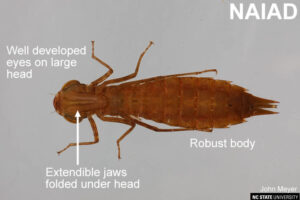
- Nymphs have large heads and well-developed eyes, and extendible mandibles that can catch prey from a long distance away
- Few species are migratory
- Adults live 2-3 months
- The life cycle is one to several years long
- Nymph prey: aquatic insects, mosquito larvae, tadpoles, small fish
- Adult prey: mosquitoes, flies, butterflies and moths, bees and wasps,
other flying insects
Management:
Fostering Beneficial Insect Populations:
- A permanent water source
- Diverse vegetation (including aquatic and terrestrial plants, and native plants which will attract prey and provide food for the dragonflies)
- Perches and sunny spots for resting and hunting Avoid removing all leaf litter from the habitat
Pesticide Impacts/Considerations:
- Avoid or reduce use of broad-spectrum insecticides
- Spray only when necessary
- Apply pesticides directly to the pests rather than spraying the entire garden
- Opt for organic pest control methods when available
- Applicators MUST follow label instructions for in-bloom applications for any insecticide

Disclaimer – Materials do not cover all possible control scenarios and are intended for licensed professionals. Tradenames do not imply endorsement and are used as examples. You must strictly follow the label for each compound prior to use. Rutgers is not responsible form is used materials or damages thereof. The label is the law. Labels will provide detailed information on use and restrictions. Additionally, application intervals, compatibility, surfactant use, PHI, PPE, important and other key information is described in detail. Always discuss treatments with your local agents. Note: Neonicotinoids can only be legally applied in commercial agriculture settings by licensed applicators. Guidelines and recommendations made in this presentation are specific to the state of New Jersey.