
Lacewings (Crysoplera spp.)
GDD Window (base 50): emergence at 253 GDD
Overview:
- Popular, commercially available beneficial insects
- Adults ½ to ¾” long, delicate, green or brown, small heads, large eyes, & transparent wings are longer than the body
- Larvae are spindle shaped, yellow to brown in color, and mottled
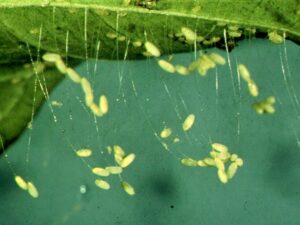
- Eggs are laid on the end of long, fine silk stalks, and are usually attached to leaves or twigs
- Hatching larvae eat a wide range of insects, including own siblings
- Piercing, sucking sickle-shaped mouthparts of larva are sharp &hollow (can easily penetrate soft bodied insects)
- Adults often seen near porch lights, especially in warmer months
- Prey pests: aphids, caterpillars, lace bugs, beetle larvae, insect eggs, and mites (sometimes called “aphid lions”)
Management:
Fostering Beneficial Insect Populations:
- Allow minor populations of soft body pest populations, especially in plants not sold that year
- Avoid broad spectrums wherever possible
- Monitor shaded regions for beneficial predators
- Misting foliage before releasing can help them stick
- Provide pollen and nectar sources
- Release early in the season when pest populations are low
Pesticide Impacts/Considerations:
- Insecticides negatively impact predators through direct contact and also when they eat prey that has been treated with insecticides
- Larvae are more susceptible than adults, and insecticides can prohibit them from reaching adulthood



Disclaimer – Materials do not cover all possible control scenarios and are intended for licensed professionals. Tradenames do not imply endorsement and are used as examples. You must strictly follow the label for each compound prior to use. Rutgers is not responsible form is used materials or damages thereof. The label is the law. Labels will provide detailed information on use and restrictions. Additionally, application intervals, compatibility, surfactant use, PHI, PPE, important and other key information is described in detail. Always discuss treatments with your local agents. Note: Neonicotinoids can only be legally applied in commercial agriculture settings by licensed applicators. Guidelines and recommendations made in this presentation are specific to the state of New Jersey.