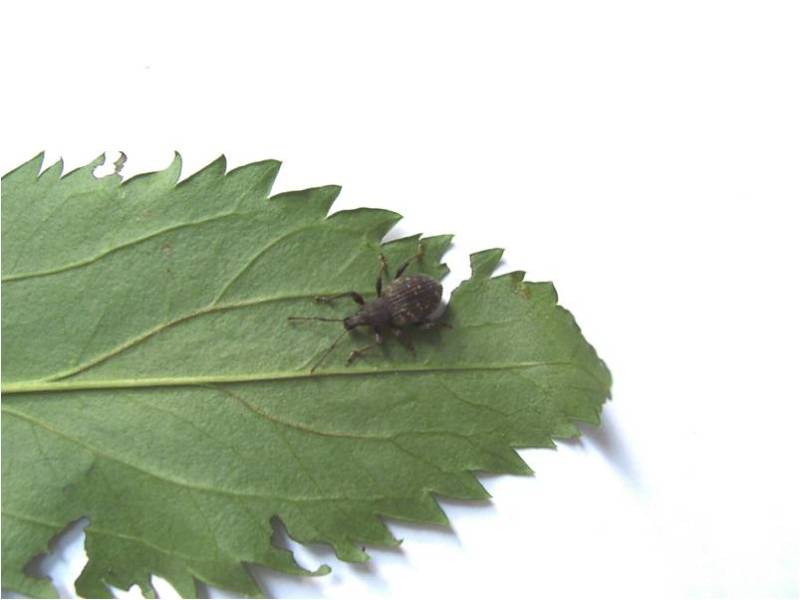
Black Vine Weevil (Otiorhynchus sulcatu)
GDD Window (base 50): 400-900
Overview:
- Also known as taxus weevil
- Larvae are white, legless, and C-shaped with a brown head
- Adults are gray to black, flightless, 9-13mm in length, with a short snout and bent antennae, and wings covered in patches of short, golden hairs
- Mature larvae are 10-15 mm in length and form pupal cells in the soil in early spring
- During the day, they hide in the soil or in dark spots on the stems near dense foliage
- Eggs are laid in the soil near the base of host plants, hatching in 10-14 days into small larvae that feed on roots until temperatures go down in the fall, when they move deeper into the soil to overwinter
- One generation per year
- Larvae feed on small roots at first, but move to the bark of large roots or the stem as they grow older
- Infested container-grown plants may not show symptoms until planted in the ground
- Adults cause notching of broadleaved evergreen foliage and other host plants
- Host plants: 100+ species (Rhododendron spp., Taxus spp., Euonymus spp., Japanese holly, hemlock)
Management:
Cultural Practices:
- Natural predators: Entomopathogenic nematodes: (Heterorhabditis bacteriophora, Steinernema kraussei)
- Place wooden boards on top of mulch under host plants in early May, checking the underside of the board in the middle of the day for adults
- Reduce plant stress
- Crop rotation
- Remove weeds from surrounding area
- Sticky & pit-fall traps for adults
Materials:
- Contact insecticides:
- Pyrethroids [3]: –thrins, bifenthrin
- Systemic insecticides:
- Neonicotinoids [4A]: imidacloprid
- Considerations:
- First foliar application should be made three weeks after detection of first adult, and second application three weeks after that
- Will harm non-target species
Biorationals:
- Fungus: Metarhizium brunneum

Disclaimer – Materials do not cover all possible control scenarios and are intended for licensed professionals. Tradenames do not imply endorsement and are used as examples. You must strictly follow the label for each compound prior to use. Rutgers is not responsible form is used materials or damages thereof. The label is the law. Labels will provide detailed information on use and restrictions. Additionally, application intervals, compatibility, surfactant use, PHI, PPE, important and other key information is described in detail. Always discuss treatments with your local agents. Note: Neonicotinoids can only be legally applied in commercial agriculture settings by licensed applicators. Guidelines and recommendations made in this presentation are specific to the state of New Jersey.