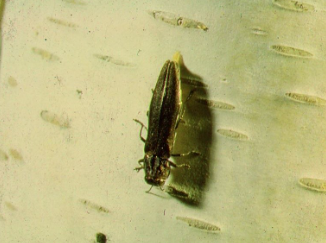
Bronze Birch Borer (Agrilus anxius)
GDD Window (base 50): 400-880
Overview:
- Adults are black beetles with a shiny greenish-bronze color on their backs, about ½” long
- Mostly found on the sunny side of trunks
- Female deposits eggs under cracks and crevices of bark
- Eggs hatch in two weeks or less, and tiny white larvae (7-12mm long) immediately tunnel into the phloem tissue to build galleries
- Larvae molt and overwinter in the xylem as fourth instars
- Larval development can take one to two years
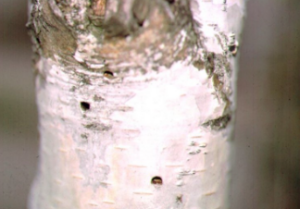
- Larvae pupate in xylem in late spring, and in early summer, adults chew their way through the bark, leaving a “D” shaped hole
- Adults begin to fly when black locust trees bloom
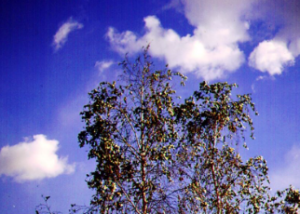
- Causes wilting and dying of upper crown, ridges and bumps on limbs and branches
- Trunk may develop a rusty brown stain
- Removal of bark near ridges will reveal winding, sawdust-packed tunnels called galleries
- Host plants: Birch, beech, hornbeam
Management:
Cultural Practices:
- Natural predators: woodpeckers, parasitic wasps
- Reduce plant stress – plant birch trees in cool, moist, shaded environment
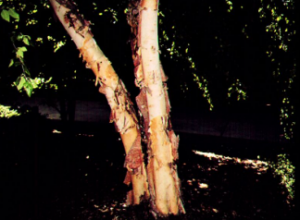
- Plant borer-resistant species (river birch, Japanese birch)
- Irrigate sufficiently
- Prevent defoliation and injury by controlling other pests
- Remove dying trees and branches before adults begin to emerge
Materials:
- Contact insecticides:
- Pyrethroids [3]: –thrins
- Systemic insecticides:
- Neonicotinoids [4A]: imidacloprid, clothianidin, dinotefuran
- Considerations:
- Pyrethroids: target newly hatch eggs (timing near adult flight and egg laying, before boring into host plants)
- Neonicotinoids: targets developing larvae within host plants
Biorationals:
- Azadirachtin [1B] (trunk injection)
Disclaimer – Materials do not cover all possible control scenarios and are intended for licensed professionals. Tradenames do not imply endorsement and are used as examples. You must strictly follow the label for each compound prior to use. Rutgers is not responsible form is used materials or damages thereof. The label is the law. Labels will provide detailed information on use and restrictions. Additionally, application intervals, compatibility, surfactant use, PHI, PPE, important and other key information is described in detail. Always discuss treatments with your local agents. Note: Neonicotinoids can only be legally applied in commercial agriculture settings by licensed applicators. Guidelines and recommendations made in this presentation are specific to the state of New Jersey.