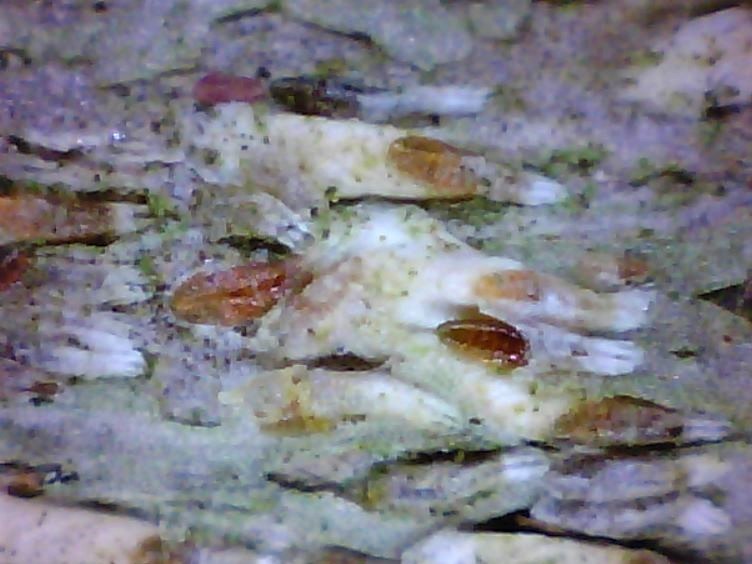
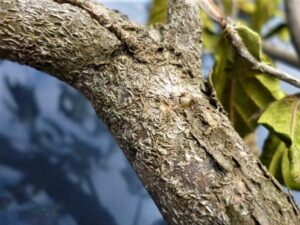
Japanese Maple Scale (Lopholeucaspis japonica)
GDD Window (base 50): 800-1200 (1st gen), 2500+ (2nd gen)
Overview:
- Host plants: Large host range, including maples, firethorn, serviceberry, lilac, cotoneaster, Prunus
- 1st generation crawlers emerge in June; extends for 4+ weeks
- 2nd generation in August (1st & 2nd generations can overlap)
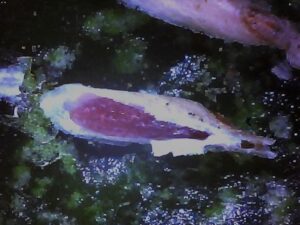
- Under the white cover, the female scales have a deep purple color = Diagnostic
- Both males & females have elliptical white, waxy covers
- Feed only on branches
- Females are larger than males
- Trees in hot environments are more likely to become infested
- Individual branch dieback & tree tree death may occur
- Whole stem surfaces or trunks may become covered in multiple layers of scales
Management:
Cultural Practices:
- Natural predators: brown lacewings, green lacewings, lady beetles, & Parasitoid wasps
- Prevent dusty conditions
- Reduce plant stress
- Dispose of heavily infested plants
Materials:
- Contact insecticides:
- Carbamates [1A]: carbaryl
- Pyrethroids [3A]: –thrins
- Organophosphates [1B]: acephate (translaminar), malathion
- Considerations:
- Will harm non-target species
- Timing is essential in controlling armored scales (target crawler stage before waxy covering forms)
- Systemic insecticides:
- Neonicotinoids [4A]: dinotefuran, acetamiprid, thiamethoxam
- Tetronic acids [23}: spirotetramat
Biorationals:
- Insecticidal soaps and Horticultural oils
- Neem oil
- Insect growth regulators:
- Pyriproxyfen [7A]
- Buprofezin [16]

Disclaimer – Materials do not cover all possible control scenarios and are intended for licensed professionals. Tradenames do not imply endorsement and are used as examples. You must strictly follow the label for each compound prior to use. Rutgers is not responsible form is used materials or damages thereof. The label is the law. Labels will provide detailed information on use and restrictions. Additionally, application intervals, compatibility, surfactant use, PHI, PPE, important and other key information is described in detail. Always discuss treatments with your local agents. Note: Neonicotinoids can only be legally applied in commercial agriculture settings by licensed applicators. Guidelines and recommendations made in this presentation are specific to the state of New Jersey.