
Nantucket Pine Tip Moth (Rhyacionia frustrana)
GDD Window (base 50): 121-448 (1st gen larvae)/1514-1917 (2nd gen larvae)
Overview:
- Caterpillar pest that overwinters as brown-colored pupae within branch tips
- On small trees and in low populations, the tips can be pruned out before adults emerge
- Adults first emerge in April to lay their eggs on the tips of new growth = (2 generation per year)
- Adults are ¼” long or less and have gray wings that are mottled with rust-colored patches
- Newly hatched larvae feed on the needles first and then enter the buds and stems
- Pines less than 6 ft. tall growing in full sun will show the most damage
- Second generation occurs in July
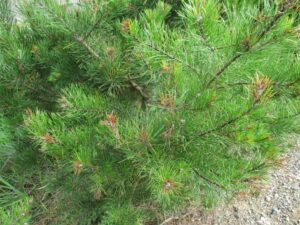
- Feeding causes growing tips to turn reddish-brown and die back
- Dead or dying branch tips are often curved or ripped
- Causes resin beads and fine silk webbing on branch tips
- Damage tree parts will be hollow
- Host plants: pines – mostly two- and three-needle species (Loblolly and shortleaf pines are especially susceptible)
Management:
Cultural Practices:
- Natural predators: parasitoids, spiders, birds
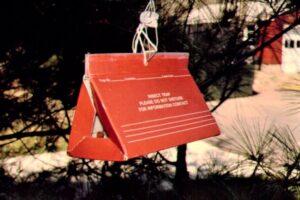
- Pheromone traps can detect initial emergence of male moths
- When the first moth is caught, wait 10 to 14 days before applying controls
- Prune out dying tips and destroy
- Reduce plant stress
- Allow weed growth to encourage natural predator populations
- Plant resistant species
- Eastern white pine, longleaf pine
Materials:
- Contact insecticides:
- Spinosyns [5]: spinosad
- Pyrethroids [3]: –thrins (cyfluthrin, fluvalinate)
- Systemic insecticides:
- Neonicotinoids [4A]: imidacloprid
- Effective when proper lead time is provided (4-8 weeks with soil injections or drenches)
- Organophosphates [1B]: acephate
- Avermectins [6]: Abamectin
- Neonicotinoids [4A]: imidacloprid
- Considerations:
- Will harm non-target species
Biorationals:
- Spinosyns [5]: spinosad
- Tebufenozide (IGR)
- Diflubenzuron (IGR)
Resources:
Landscape Pest Notes: Some Mid-Spring Insects/Mites – PPA
Some Early Spring Insect Pests of Christmas Trees – PPA
Winter Reading to Prepare for Early Season – PPA

Disclaimer – Materials do not cover all possible control scenarios and are intended for licensed professionals. Tradenames do not imply endorsement and are used as examples. You must strictly follow the label for each compound prior to use. Rutgers is not responsible form is used materials or damages thereof. The label is the law. Labels will provide detailed information on use and restrictions. Additionally, application intervals, compatibility, surfactant use, PHI, PPE, important and other key information is described in detail. Always discuss treatments with your local agents. Note: Neonicotinoids can only be legally applied in commercial agriculture settings by licensed applicators. Guidelines and recommendations made in this presentation are specific to the state of New Jersey.