
Oak Lace Bug (Corythucha arcuata)
GDD Window (base 50): 408-900 (egg laying/hatching)
Overview:
- Feed on deciduous trees and overwinter as adults
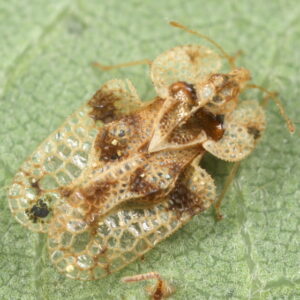
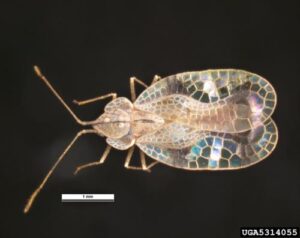
- Adults have rectangular shaped wings
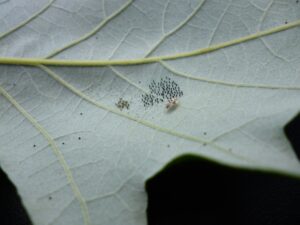
- Lay eggs on leaf undersides
- Resemble “miniature Stonehenge” – 30 to 50 eggs look like tiny black spikes arranged in a circular area of 3/4”diameter or less
- Overwintering females begin laying eggs in late spring after oak leaves have expanded
- 3-4 generations per year, final generation eggs are laid in late summer
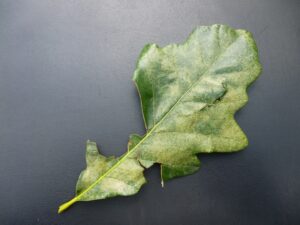
- Causes leaf stippling like spider mites or leaf scorch
- Leaf discoloration
- Mostly aesthetic damage
- Host plants: oaks (white oaks especially), deciduous trees
Management:
Cultural Practices:
- Natural predators: lacewings, predatory mites, assassin bugs
- Grow a variety of flowering plants to attract beneficial insects
- Remove infested leaves and dispose
- Syringing
Materials:
- Contact insecticides:
- Carbaryl [1A]
- Pyrethroids [3A]
- Systemic/Translaminar insecticides:
- Neonicotinoids [4A] (Several)
- Spinosyns [5]: Spinosad / Spinetoram
- Acephate [1B] (translaminar) / Abamectin [6]
- Considerations:
- Spraying is usually not necessary –volume required to spray large trees is too high and insect damage is not severe
Biorationals:
- Insecticidal soap
- Horticultural oils
- Chlorantraniliprole [28]
- Beauvaria bassiana
- Often not necessary, and may be costly with larger trees
Resources:
Oak Lace Bug Symptoms Have Bark, But They Have Little Bite – PPA
Summer Pests on Oaks: Oak Sawflies, Oak Spider Mites & Oak Lace Bugs – PPA




Disclaimer – Materials do not cover all possible control scenarios and are intended for licensed professionals. Tradenames do not imply endorsement and are used as examples. You must strictly follow the label for each compound prior to use. Rutgers is not responsible form is used materials or damages thereof. The label is the law. Labels will provide detailed information on use and restrictions. Additionally, application intervals, compatibility, surfactant use, PHI, PPE, important and other key information is described in detail. Always discuss treatments with your local agents. Note: Neonicotinoids can only be legally applied in commercial agriculture settings by licensed applicators. Guidelines and recommendations made in this presentation are specific to the state of New Jersey.