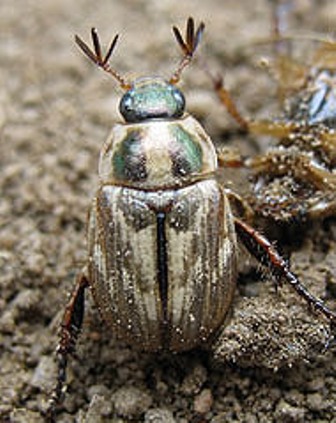
Oriental Beetle (Anomala orientalis)
GDD Window (base 50): 450-1500
Overview:
- Small, oval beetles with a tan to dark brown shell, often with darker mottling
- Adults are about 8-11 mm long and active during summer
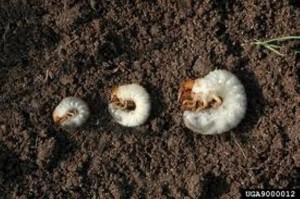
- Larvae are white, c-shaped grubs found in soil, feeding on roots, growing to ¾” long
- One generation per year
- Adults emerge mid-June, peaking in early July
- Females lay small, spherical eggs in the soil at the bases of bushes, preferring wetter soils
- Eggs cannot develop in dry soil
- Overwinter as third-instars and enter pre-pupal stage in late May
- Adults feed on foliage – causing minor damage, but can leave holes or skeletonized leaves, especially on the top of the plants
- Damaged leaves may turn brown and drop
- Larvae damage grass and other plant roots, causing wilting and yellowing
- Host plants: daisies, roses, hollyhock, phlox, petunias, annual and perennial grasses, fully grown nursery stock
Management:
Cultural Practices:
- Natural predators: Entomopathogenic fungi (Beauveria bassiana and Beauveria brongniartii), nematodes (Heterorhabditis bacteriophora)
- Mating disruption using pheromones
- Maintain healthy plants and reduce stress
- Select resistant varieties
- Handpick beetles and trap in soapy water
- Use fabric covers
- Avoid overcrowding
- Delay planting until after peak activity
Materials:
- Contact insecticides:
- Carbamates [1A]: carbaryl
- Pyrethroids [3A]: –thrins
- Systemic insecticides:
- Neonicotinoids [4A]: imidacloprid
- Organophosphates [1B]: acephate
- Diamides [28]: chlorantraniliprole
- Considerations:
- Will harm non-target species
Biorationals:
- Insect Growth Regulators:
- Halofenozide [15]



Disclaimer – Materials do not cover all possible control scenarios and are intended for licensed professionals. Tradenames do not imply endorsement and are used as examples. You must strictly follow the label for each compound prior to use. Rutgers is not responsible form is used materials or damages thereof. The label is the law. Labels will provide detailed information on use and restrictions. Additionally, application intervals, compatibility, surfactant use, PHI, PPE, important and other key information is described in detail. Always discuss treatments with your local agents. Note: Neonicotinoids can only be legally applied in commercial agriculture settings by licensed applicators. Guidelines and recommendations made in this presentation are specific to the state of New Jersey.