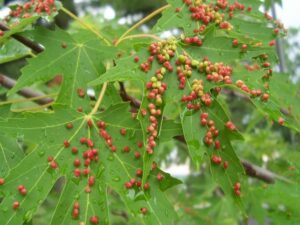
Plant Leaf Galls (Eriophyid mites)
Overview:
- Abnormal growths triggered by various factors
- Appear as bumps, bladder, & spindle galls, or Erineums (dense cluster of plant hairs) as a plant’s reaction to the presence or activity of foreign substances
- Appear on leaves
- Vary in size, shape, color, and texture
- Caused by feeding or egg-laying Eriophyid mites which release chemicals that cause the plant cells to multiply rapidly
- Generally, not harmful, but can cause some minor issues like leaf drop or stunted growth in severe cases
- Host plants: numerous
Management:
- Often, no treatment is needed (aesthetic concerns)
- Pruning affected areas can be an option
- Sprays can be effective if applied before gall formation
- Preventative treatments are available, but with a very
small window of opportunity (leaf bud break/swell) - Precise treatment timing is required (practicable?)
- Contact materials required (miticides)
- (systemics are not effective after gall formation)
- Horticultural dormant oils & soaps; abamectin;
carbaryl; neem oil; acephate
Resources:
Landscape Pest Notes: Some Mid-Spring Insects/Mites – PPA

Disclaimer – Materials do not cover all possible control scenarios and are intended for licensed professionals. Tradenames do not imply endorsement and are used as examples. You must strictly follow the label for each compound prior to use. Rutgers is not responsible form is used materials or damages thereof. The label is the law. Labels will provide detailed information on use and restrictions. Additionally, application intervals, compatibility, surfactant use, PHI, PPE, important and other key information is described in detail. Always discuss treatments with your local agents. Note: Neonicotinoids can only be legally applied in commercial agriculture settings by licensed applicators. Guidelines and recommendations made in this presentation are specific to the state of New Jersey.