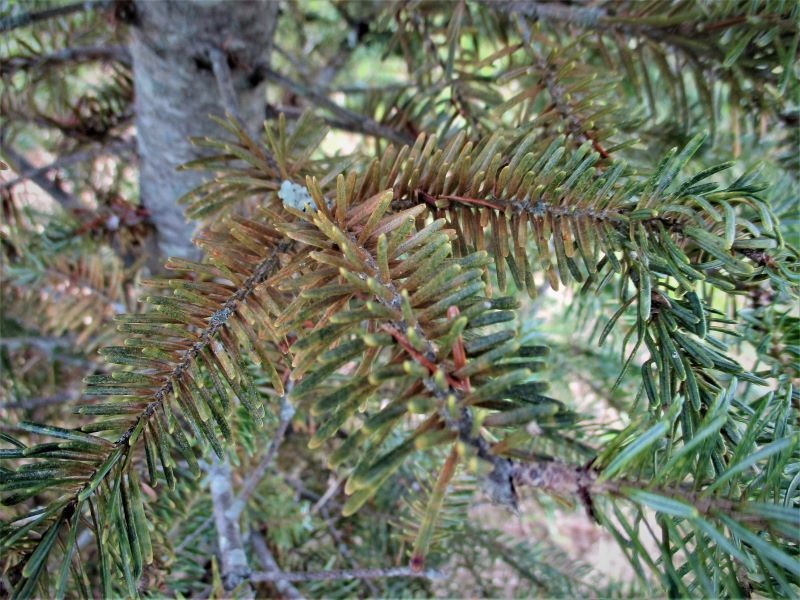
Spruce Spider Mite (Oligonychus ununguis)
GDD Window (base 50): 7-121
Overview:
- Eggs are brown, round, flattened and have a thread sticking up fromtheir center
- Growth from larvae to adult happens in about a month
- Adults are ½ mm in length, varying from brown to dark green in color, with salmon pink colored legs
- 3-4, but up to 10 generations can occur per year, depending on conditions
- When temperature is too hot, SSM enters a dormancy period until it becomes cooler in the fall
- Wind is main dispersal mechanism
- Leaves behind tiny strands of webbing on the needles of host plants
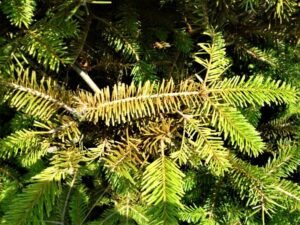
- Can lead to damage, dropping needles and a reddish-brown tint
- Early signs of infestation include a stippled yellow color on the upper surface of host needles
- Prefer older needles over new ones, on the lower inner branches of the tree
- Can cause sudden damage as reproduction quickly occurs
- Host plants: Ornamental landscape conifers
- Can be present in natural forests
Management:
Cultural Practices:
- Natural predators: phytoseiid mites, spiders, some beetles, lacewings
- Pests are less active in hot, dry weather
- Simulated rainfall on Fraser fir seedlings significantly limits spruce spider mite populations
- Reduce plant stress
- Syringing, or spraying infested foliage with a heavy water stream, may help to dislodge the mites and reduce infestation severity.
- Tap branches over white paper to scout for presence
Materials:
- Contact insecticides:
- Avermectins [6]: Abamectin
- Pyrethroids [3]: –thrins, Tau-fluvalinate
- METI acaricides and insecticides [21A]: Fenazaquin
- Spinosyns [5]: Spinosad
- Systemic insecticides:
- Tetronics [23]: Spirotetramat
- Organophosphates [1B]: Malathion, Acephate
- Considerations:
- Will harm beneficial and non-target species.
Biorationals:
- MGI [10A]: Hexythiazox
- MGI [10B]: Etoxazole
- Azadirachtin [UN]
- Beauveria bassiana
- Chromobacterium subtsugae
- Metarhizium anisopliae (robertii)
- Horticultural oil
- Test for phytotoxicity before spraying the whole plant.


Disclaimer – Materials do not cover all possible control scenarios and are intended for licensed professionals. Tradenames do not imply endorsement and are used as examples. You must strictly follow the label for each compound prior to use. Rutgers is not responsible form is used materials or damages thereof. The label is the law. Labels will provide detailed information on use and restrictions. Additionally, application intervals, compatibility, surfactant use, PHI, PPE, important and other key information is described in detail. Always discuss treatments with your local agents. Note: Neonicotinoids can only be legally applied in commercial agriculture settings by licensed applicators. Guidelines and recommendations made in this presentation are specific to the state of New Jersey.