
Taxus Mealybug (Dysmicoccus wistariae)
GDD Window (base 50): 246-618
Overview:
- Considered a type of scale insect
- Overwinter as 1st instar nymphs (soft scales overwinter as 2nd instar nymphs)
- Adults are 1/8″ long and covered with white cottony waxy filaments that makes them difficult to control
- White adults and crawlers feed in clusters at nodes and branch forks
- Give birth to live young in the early summer
- Feed within Phloem (vascular tissues)
- Produce honeydew that later produces black sooty mold
- Two to three generations per year (like many armored scale species)
- Insects become more abundant by midsummer
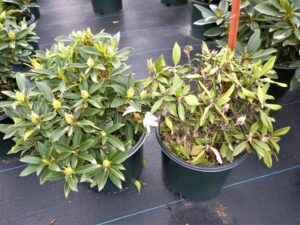
- Feeding causes yellowing, stunted growth, and dieback of branches
- Lead to sparse looking plants that have lost foliage, with remaining needles caked with honeydew & black sooty mold
- Host plants: Yew, Rhododendron, dogwood, maple, Prunus
Management:
Cultural Practices:
- Natural predators: Hymenoptera parasites, lacewings, syrphid flies, lady beetles
- Control ant populations (feed on honeydew & fight-off predators)
- Reduce plant stress
- Prune out and destroy infested branches or throw plant away
- Scout in areas with dense foliage
Materials:
- Contact insecticides:
- Organophosphates [1B]: acephate
- Carbamates [1A]: carbaryl
- Pyrethroids [3A]: –thrins
- Considerations:
- Will harm non-target species
- Timing of treatment is essential
- Systemic insecticides:
- Neonicotinoids are not always effective (drench or bark sprays may help)
- Acetamiprid is a reduced risk neonicotinoid (spray only)
Biorationals:
- Insecticidal soap
- Horticultural oils
- Insect growth regulators:
- Pyriproxyfen [7A]
- Buprofezin [16]

Disclaimer – Materials do not cover all possible control scenarios and are intended for licensed professionals. Tradenames do not imply endorsement and are used as examples. You must strictly follow the label for each compound prior to use. Rutgers is not responsible form is used materials or damages thereof. The label is the law. Labels will provide detailed information on use and restrictions. Additionally, application intervals, compatibility, surfactant use, PHI, PPE, important and other key information is described in detail. Always discuss treatments with your local agents. Note: Neonicotinoids can only be legally applied in commercial agriculture settings by licensed applicators. Guidelines and recommendations made in this presentation are specific to the state of New Jersey.