
Two Spotted Spider Mite (Tetranychus urticae)
GDD Window (base 50): 363-618 (emerging overwintering females)
Overview:
- Microscopic (1/50”) arachnids with oval bodies, typically yellow-orange in color, with two dark spot on each side of the body.
- Most common during hot, dry summer weather
- Overwinter as orange colored adult females beneath plants
- During warm summer months can have 10-15 generations / year
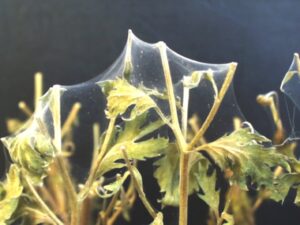
- Multiple generations can produce extensive webbing over infested plants
- Causes yellow or white stippling on leaves, leading to leaf drop
- Leaves begin to look bronzed, bleached, or distorted
- Severe infestation can stunt plant growth and lead to death
- Host plants: Over 200 species (cosmopolitan mite)
Management:
Cultural Practices:
- Natural predators: lady beetles, predatory mites (Phytoseiulus persimilis)
- Increase humidity around plants to deter mites
- Reduce drought stress
- Reduce plant stress overall
- Do not overwater
- Do not fertilize during droughts
- Mulch to conserve moisture
- Syringing
Materials:
- Contact insecticides:
- Pyrethroids [3]: –thrins
- Considerations:
- Will impact non-target species
- Can promote mite resurgence
- Spray in early morning or early evening
- Systemics:
- Abamectin [6]
- Acephate [1B] (translaminar)
- Reduced Risk:
- Acequinocyl [20B]
- Mito. Compx III [20D]: bifenazate
- Spiromesifen [23]
Biorationals:
- Horticultural oil
- Insecticidal soap
- Hexythiazox [10A] (MGR)
Resources:
Nursery update; focus on warm season spider mites – PPA
Two-Spotted Spider Mites – NJAES
Cool Season Mites Fade, As Warm Season Mites Surge – PPA
Cool Season Mites Wax as the Warm Season Mites Wane – PPA
Landscape Pest Notes for Late June 2023 – PPA
Weather Effects on Plants & Insect-Mite Pests – PPA


Disclaimer – Materials do not cover all possible control scenarios and are intended for licensed professionals. Tradenames do not imply endorsement and are used as examples. You must strictly follow the label for each compound prior to use. Rutgers is not responsible form is used materials or damages thereof. The label is the law. Labels will provide detailed information on use and restrictions. Additionally, application intervals, compatibility, surfactant use, PHI, PPE, important and other key information is described in detail. Always discuss treatments with your local agents. Note: Neonicotinoids can only be legally applied in commercial agriculture settings by licensed applicators. Guidelines and recommendations made in this presentation are specific to the state of New Jersey.