NECRO-IST
Necrogeographies of Istanbul (NECRO-IST) aims to map out surviving and lost graveyards of Istanbul, identify the individuals buried therein, research their stories, and generate publicly accessible information about them.
Please take a look at our Blog

TEAM
Nukhet Varlik
Principal Investigator – Rutgers University
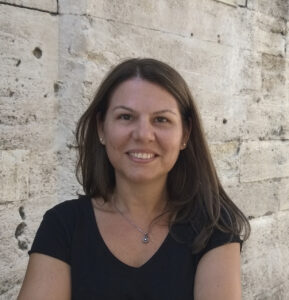
https://sasn.rutgers.edu/nukhet-varlik
Nükhet Varlık is Associate Professor of History at Rutgers University–Newark. Her research focuses on disease, death, medicine, and public health in the Ottoman Empire. Her first book, Plague and Empire in the Early Modern Mediterranean World: The Ottoman Experience, 1347–1600 (Turkish translation: Akdeniz Dünyasında ve Osmanlılarda Veba, 1347-1600), is the first systematic scholarly study of the Ottoman experience of plague during the Black Death pandemic and the centuries that followed. It was awarded Middle East Studies Association’s 2016 Albert Hourani Book Award, the Ottoman and Turkish Studies Association’s 2016 M. Fuat Köprülü Book Prize, the Society for the Medieval Mediterranean’s 2017 Dionisius A. Agius Prize, and the American Association for the History of Medicine’s 2018 George Rosen Prize. She is the editor of Plague and Contagion in the Islamic Mediterranean, a collection of articles on the social, cultural, and political responses to epidemics in the post-Black Death Islamic Mediterranean. Together with Lori Jones, Varlık is co-editor of Death and Disease in the Medieval and Early Modern World: Perspectives From Across the Mediterranean and Beyond.
Varlık has authored numerous articles and book chapters addressing different aspects of disease, death, and medicine in Ottoman society (see here). Her research has been supported by the Institute for Advanced Study-Princeton, Social Sciences and Humanities Research Council of Canada, National Endowment for the Humanities, American Research Institute in Turkey, Koç University’s Research Center for Anatolian Civilizations, and Turkish Cultural Foundation. From 2018 to 2022, she served as Editor-in-Chief of the Journal of the Ottoman and Turkish Studies Association. Together with Ali Yaycıoğlu, Varlık serves as co-editor of Stanford Ottoman World Series: Critical Studies in Empire, Nature, and Knowledge. She is co-convener of History of Infectious Disease in the Islamicate World Working Group.
Akarsu Melike Demirkol
Project Coordinator – Boğaziçi University

Akarsu Melike Demirkol is currently pursuing a master’s degree in Ottoman Literature at Boğaziçi University. She initially got involved with the SHIFA-ANA project through her interest in micro-environments of historical cities and how they’re created. She has been traveling around İstanbul with a group of people to discover old cemeteries in İstanbul – a journey that recently culminated in NECRO-IST. Prior to her master’s studies, Demirkol studied in Department of History and Department of Political Science and International Relations (double major) at Boğaziçi University. She is interested in cultural history, and particularly the history of political culture. She is currently studying a sixteenth-century Ottoman miscellany (mecmua) of stories. Akarsu serves as the coordinator of SHIFA-ANA Project, organizing summer schools, arranging social media accounts, and designing the visuals.
Batuğhan Tatar
Project Member – Rutgers University
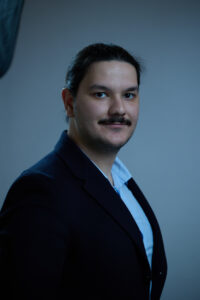
Batuğhan Tatar holds a Bachelor’s degree in History from Middle East Technical University (ODTÜ). He is currently pursuing a Master’s degree in the Federated Department of History at Rutgers University with full tuition scholarship awarded by the Dean. His research focuses on the political and cultural history of Eurasian communities. Particularly the migration routes and journeys of Turkic tribes from Inner Asia to Anatolia, incorporating culture, genetics, archaeology, and linguistics into his future studies. In addition to researching the transmission of diseases and their treatments from the Eurasian steppes to Europe with Cumans and Kipchaks.
İkbal Sezen Polat
Project Member – Middle East Technical University
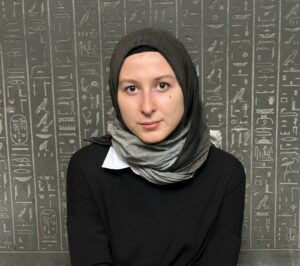
İkbal Sezen Polat is an architect and PhD student in Architectural History at Middle East Technical University (METU), holding a BA from Mimar Sinan Fine Arts University. She is currently a Research Assistant at Gebze Technical University’s Department of Architecture. Her research on the cemeteries of Constantinople/Istanbul during the Byzantine and Ottoman periods earned her the Best MAThesis Award in Social Sciences at METU. She has presented her research at international conferences in Switzerland, Netherlands, UK, and USA, where she has received accolades including the Scott F. Opler Fellowship from the Society of Architectural Historians (SAH). She is also part of the DocTalks organising team, an online platform for PhD students in architectural history and theory.
Meyçem Ceren Ulu
Project Member – FreieUniversität Berlin
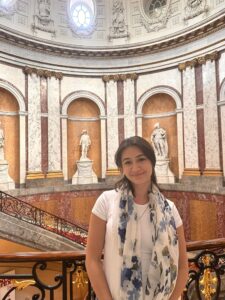
Meyçem Ceren Ulu is a DAAD-funded M.A. student in Interdisciplinary Studies of the Middle East at FreieUniversität Berlin, holding a double B.A. in Psychology and History from Boğaziçi University. Her research focuses on the cultural politics of heritage, museum history, and the circulation of objects and human remains in the late Ottoman and early Republican periods. She has conducted archival work in Istanbul and Berlin and presented her work at international workshops and conferences. She previously interned at the Museum of Islamic Art in Berlin and is amember of academic networks in Turkey and Germany.
Tarkan Görücü
Project Member – Middle East Technical University

Tarkan Görücü holds a Bachelor’s degree in History from Middle East Technical University (ODTÜ). His academic interests focus on the Ottoman presence in Hungary, particularly on development and transformation of the Ottoman administrative and military organization in the region. During his studies, he completed an Erasmus mobility at the University of Szeged, Hungary, where he gained first-hand academic and cultural experience in the region central to his research interests.