The dissertation is a text that lives with one for so long that it is difficult to comprehend
that indeed it has to someday come to an end. If only to begin life anew in a different iteration.
So it was with a slight sense of amazement that I went about deciding the logistics of the
dissertation defense such as a reasonable timeline to hand in the full text to my committee to read
and arrive at a date and time that would work for all of us. How incredible that after years of
conceptualizing my research ideas, drawing up reading lists, writing, and editing the
day–Tuesday, March 25, 2025–had finally arrived to present my dissertation!
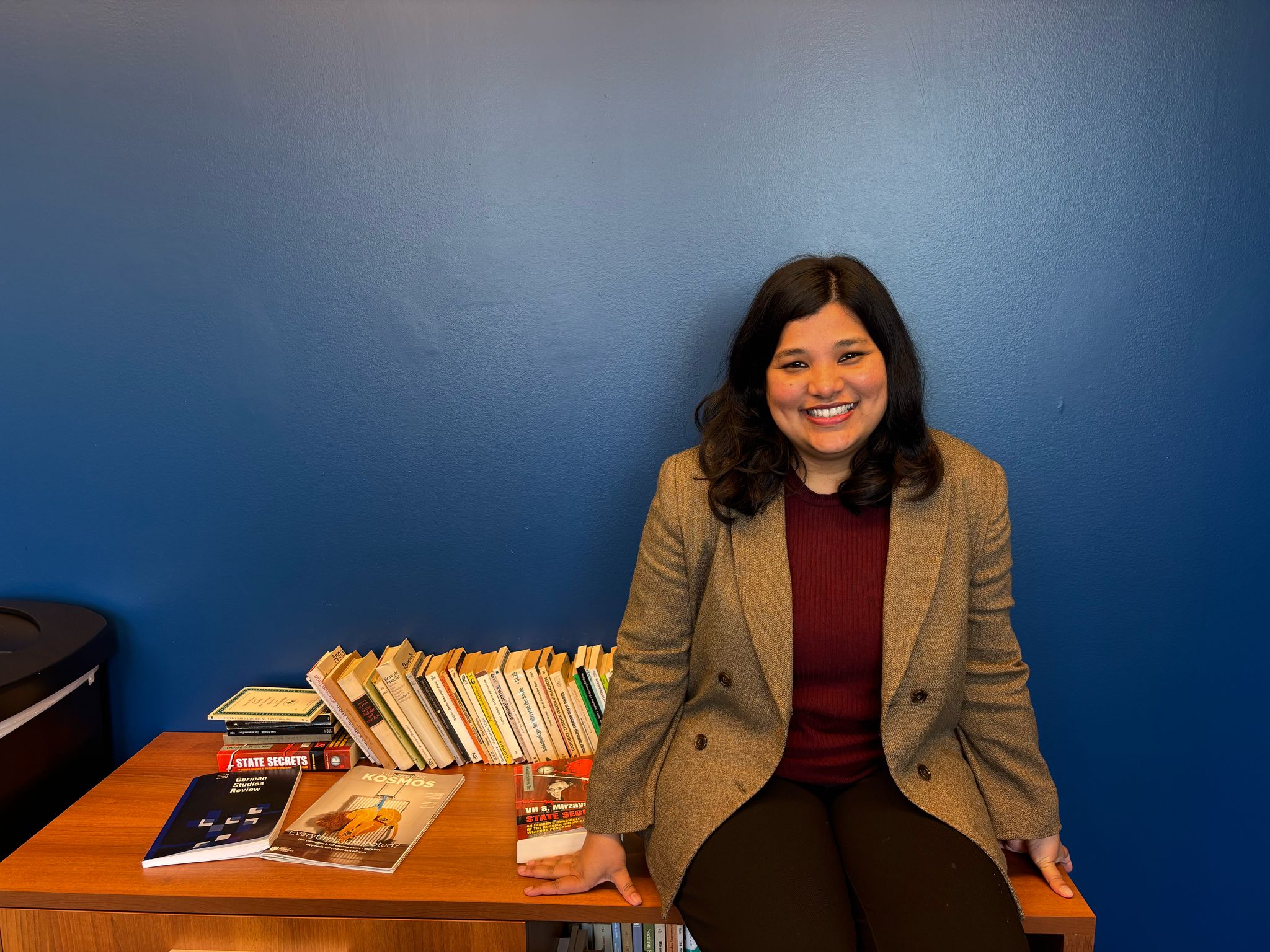
It was a truly special feeling that I will cherish always to defend my dissertation in the
Comp Lit seminar room. Two of my committee members, Professors Anjali Nerlekar and Chloë
Kitzinger were present in person and my advisor, Prof Preetha Mani, and external reader, Prof
Amit Baishya, were there on Zoom–everyone made making these logistical arrangements a very
smooth and easy affair, despite conflicting schedules, locations, and timezones. Thanks to the
wonders of online connectivity, my family and friends were also able to join and support me.
Prof Mani chaired the session and offered generous introductory remarks on my time at
Rutgers, including teaching and research, following which I described my project titled
“Multilingual Assamese: Literature, Identity, and Resistance in the Indo-Bangladesh
Borderlands” to the committee and the audience present in the room and online. I spoke about
how although the Assamese language is considered a peripheral language, it is a major site that
encapsulates the monolingual constructions of language and literature in a postcolonial nation. I
described the varied multilingual modes and strategies in the works of writers such as Roma Das,
Saurav Kumar Chaliha, Aruni Kashyap, Nitoo Das, Jayanta Saikia, Kaushik Baruah, and the self-
styled Miya poets like Rehna Sultana and Shalim M Hussain and also drew attention to the
specific ways in which a focus on minor forms like the short story and poetry facilitate these
enquiries.
I admit that even as I had been living and breathing my project for the past six years, the
prospect of speaking about it as a comprehensive whole was intimidating. What if someone asks
a question about line 6 on page 37 and I don’t have an answer?! The immense kindness and
intellectual richness of my committee put these fears to rest the minute the defense began. I
received thoughtful and helpful recommendations from each committee member and they
nudged me to expand upon certain points that I had brought up as well as offered constructive
broader ways I can potentially frame my research to speak to a large scholarly network.
Similarly, members of the audience posed questions that showed how curious they were to learn
about my project, make connections with concepts and theorists they were thinking about, and
act as collaborators. It felt like the perfect summation of a Comp Lit degree!
Sneha Khaund