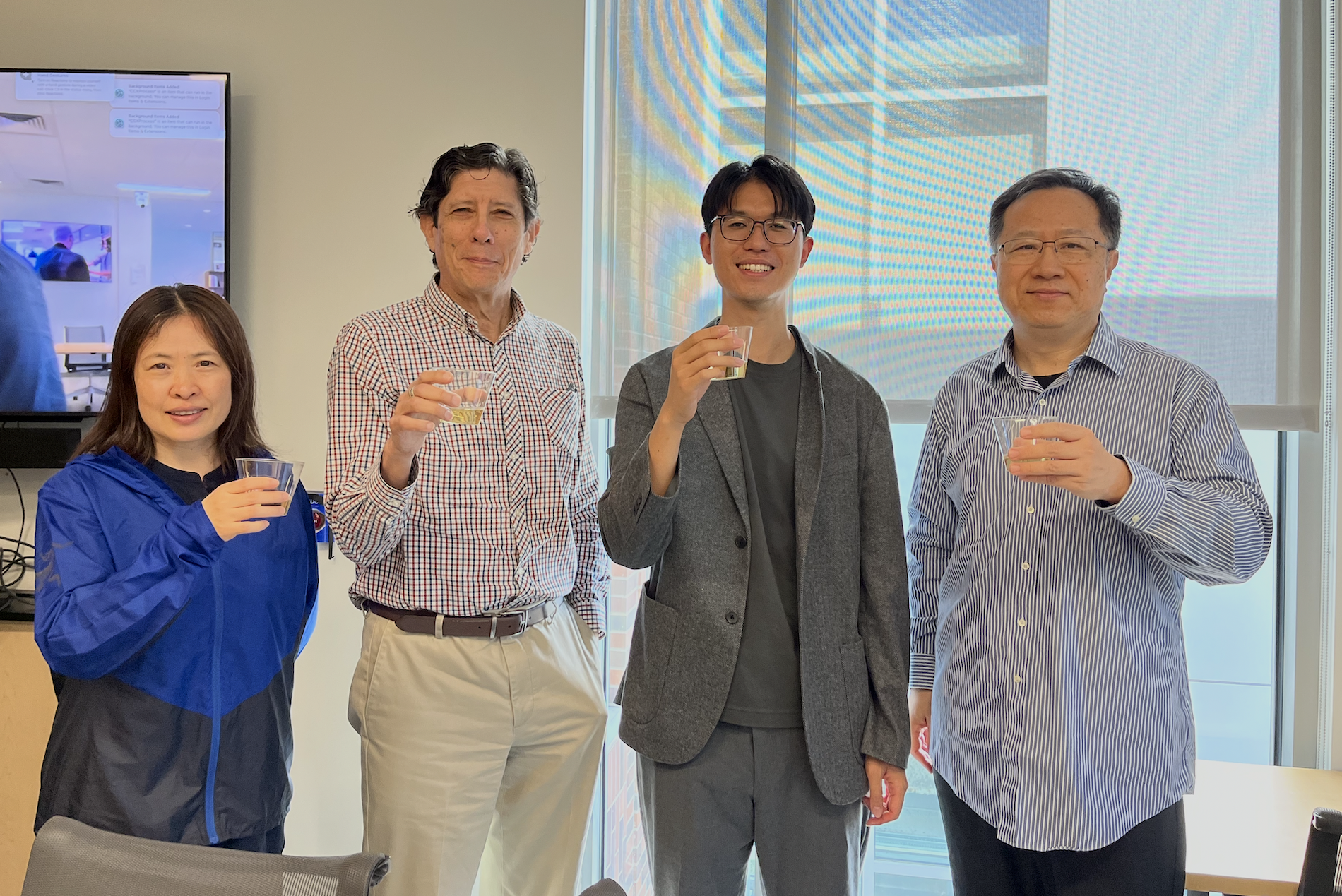
Xingming Wang defended his dissertation, “Coal Attachment: Cultures of Fossil Fuels in Modern China,” on September 26. His committee consists of Prof. Jorge Marcone (co-chair), Prof. Weijie Song (co-chair), Prof. Xiaojue Wang, and Prof. Victor Seow (external reader).
The defense began with Xingming debriefing his dissertation project, presenting its research questions, chapter outline, and its contributions to Chinese Studies and Environmental Humanities. He displayed that his project explores the proliferation of coal narratives and media from the late Qing to the contemporary era, delving into the psychological drives behind Chinese intellectuals’ century-long interest in coal. Then the committee asked Xingming questions about the theoretical value of coal, the selection of primary sources, and the project’s contribution beyond area studies. Xingming enjoyed the conversation with his committee and used these questions to explicate the affective and political potential of coal. He argued that Chinese intellectuals are interested in not just coal but also what coal provokes them to desire: nation-building, revolutionary movements, environmental justice, and a balance between resource extraction and sustainable development. Treating coal as a medium of desire, he examined the shifting structures of feeling attached to fossil fuels in modern China. After responding to the committee’s questions, he received excellent feedback from Prof. Louisa Schein and Prof. Andrew Parker on how to develop this dissertation into a book manuscript.
Xingming concluded his defense by thanking the support he received from faculty and students in the Comparative Literature Program, the Department of Asian Languages and Cultures, the Center for Chinese Studies, and the Global Asias Initiative. His experiences at Rutgers were particularly enriching and enjoyable thanks to, in his own words, “the nurturing environment he inhabited.” He believes that the people around him at Rutgers cultivate not only his academic skills but also his worldview and personality. They set examples for him to become a scholar with compassion, consideration, and a sense of justice.
Let’s congratulate Dr. Wang and wish him well in his future academic journeys!