Summer 2025 FAME Student Science Stories

Amaranth – Tori Rosen, PhD Candidate

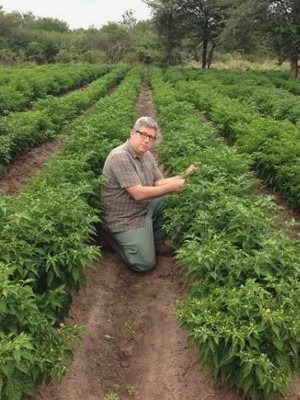
Tori Rosen is a PhD student in the department of Plant Biology focusing on crop introduction and improvement of bioculturally-preferred leafy greens, amaranth and roselle. She is interested in increasing the accessibility and quality of key vegetables in under-represented migrant diets, focusing on consumer preferences, agronomic traits, and nutrient-density. Her research considers food market trends, climate-resilient agriculture, and micronutrient-deficiencies within migrant populations. Ultimately, she hopes to improve the diversity and quality of specialty produce within the United States.

Read more about her research here:

Amaranth greens as a model for nutrient-dense, culturally preferred produce in an urban setting

Amaranth as a Climate-Resilient, Nutrient-Dense, Culturally-Preferred Crop to be Integrated in New Jersey Agriculture

Rutgers Grows 100 Varieties of Amaranth


Spring 2025 FAME Student Science Stories

Introduction to Phytoplankton – Nicole Waite, Lab Research Technician

Nicole is a Lab Research Technician at the Rutgers Center of Ocean Observing Leadership (COOL). Her research focuses on phytoplankton ecology along the Western Antarctic Peninsula, one of the most rapidly warming places on Earth. She also works for COOL to help deploy gliders (autonomous underwater vehicles) for oceanographic research purposes. Read more about her research here:

Phytoplankton and Bio-optics

Biases in phytoplankton size class models in the Antarctic Peninsula: How well do we know our diatoms?

Molecular physiology of Antarctic diatom natural assemblages reveals multiple strategies contributing to their ecological success

Testing the Canyon Hypothesis: Evaluating light and nutrient controls of phytoplankton growth in penguin foraging hotspots along the West Antarctic Peninsula

Changes in the upper ocean mixed layer and phytoplankton productivity along the West Antarctic Peninsula

Decadal variability in coastal phytoplankton community composition in a changing West Antarctic Peninsula


Phytoplankton’s Hidden Contribution – Rachel Davitt, PhD Student

Rachel is a PhD student studying Oceanography in the Rutgers Department of Marine and Coastal Sciences. She studies phytoplankton-virus interactions and is currently studying the biological impacts of Ocean Alkalinity Enhancement on diatoms. Read more about RU COOL’s phytoplankton research here:

Seasonal time bombs: dominant temperate viruses affect Southern Ocean microbial dynamics

Phytoplankton productivity in a turbid buoyant coastal plume

Multiscale control of bacterial production by phytoplankton dynamics and sea ice along the western Antarctic Peninsula: A regional and decadal investigation


Coastal Coral – Kayla Cayemitte, PhD Student

Kayla is a PhD student studying oceanography in the Rutgers Department of Marine and Coastal Sciences. She studies various environmental impacts on marine calcifiers (focus on corals) under the advisement of Dr. Fiorella Prada. Dr. Fiorella focuses on how marine calcifying organisms, like corals and mollusks, build their biomineralized structures and how this process is influenced by shifting ocean conditions. They study these processes by integrating material science, molecular, and physiological approaches to identify mechanisms underlying coral resilience and persistence in extreme environments (e.g., CO2 vents, deep-sea, upwelling systems). Read more about their research here:

Increasing acidification does not affect sexual reproduction of a solitary zooxanthellate coral transplanted at a carbon dioxide vent

Ocean warming and acidification detrimentally affect coral tissue regeneration at a Mediterranean CO2 vent

Corrigendum to “Peculiar polycyclic aromatic hydrocarbons accumulation patterns in a non-zooxanthellate scleractinian coral” [Mar. Pollut. Bull. 184 (2022) 114109

Acclimatization of a coral-dinoflagellate mutualism at a CO2 vent

Peculiar polycyclic aromatic hydrocarbons accumulation patterns in a non-zooxanthellate scleractinian coral

Metagenomic shifts in mucus, tissue and skeleton of the coral Balanophyllia europaea living along a natural CO2 gradient

Skeletal properties of the coral Desmophyllum dianthus are related to the aragonite saturation state along a depth gradient in the Mediterranean Sea

Coral micro- and macro-morphological skeletal properties in response to life-long acclimatization at CO2 vents in Papua New Guinea