Vacuum Facility

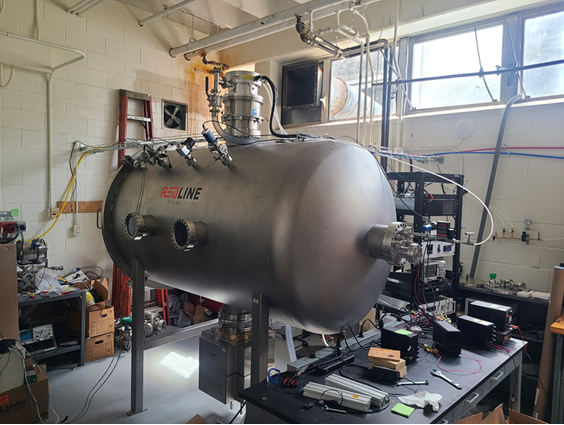
The SPACE Lab primary vacuum facility is a 4′ x 6′ cylindrical vacuum chamber featuring Leybold D50 mechanical pump with RuVac roots blower, Ebarra EMT2400MBWC turbo pump (2400 L/s), and Gamma Vacuum 1200LX TiTan Ion Pump with integrated Titanium Sublimation Pump and Cryoshield (up to 30,000 L/s). The chamber includes two sets of 8″ aligned optical access ports and other instrumentation ports. The facility includes a variety of plasma and rarified gas diagnostics.
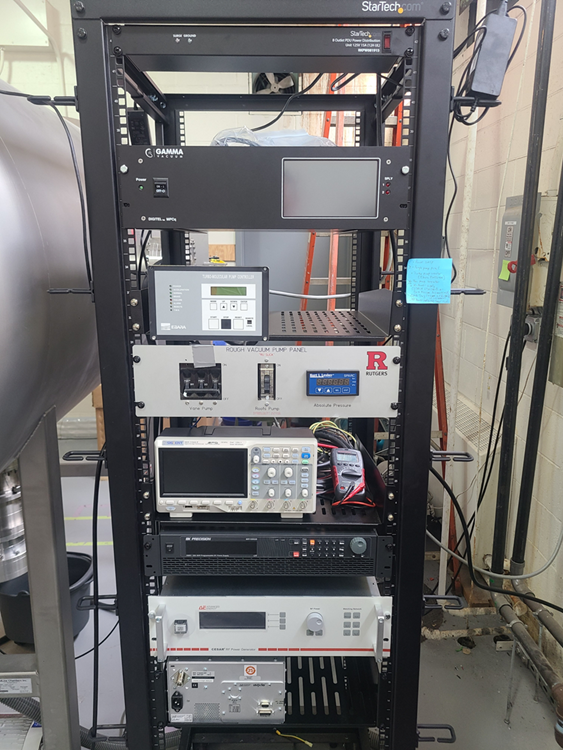
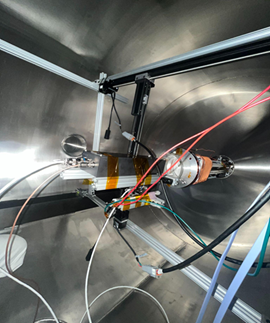
Diagnostics, Power, and Data Acquisition

Plasma/Rarified Gas Diagnostics:

  • Plasma Controls Retarding Potential Analyzer (RPA)
  • Plasma Controls ExB probe
  • Stanford Systems RGA100 Residual Gas Analyzer (RGA)
  • CrystalTek Quartz Crystal Microbalance (QCM)
  • Double and Triple Langmuir Probes
  • Time-of-flight mass spectrometer

Data Acquisition:

  • Multiple NI CompactDAQ chassis (up to 8 cards)
  • Oscillosopes (up to 500 MHz)
  • Keithley picoammeters and electrometers

Power Supplies:

  • Advanced Energy Cesar 1320 2 kW RF generator with Navio match network
  • BK Precision 5 kW DC power supply
  • Numerous benchtop DC power supplies (up to 1 kV, 30 A)

VLEO Wind Tunnel Setup

Setup currently housed in primary vacuum facility designed to replicate flows experienced by spacecraft in Earth orbits from ~230-350 km altitude. The setup consists of an RF plasma flow source which produces representative chemical species (O, N, O+, N+, NO, N2+, O2+) at velocities relevant to VLEO flight (~8 km/s). The test section includes a plasma and rarified flow diagnostic rake with multiple sensors (RPA, ExB, RGA, QCM, Langmuir probes) mounted on a two axis linear motion stage. Test articles are mounted on a micronewton force balance for direct measurement of drag forces.

Propellant Synthesis and Analysis

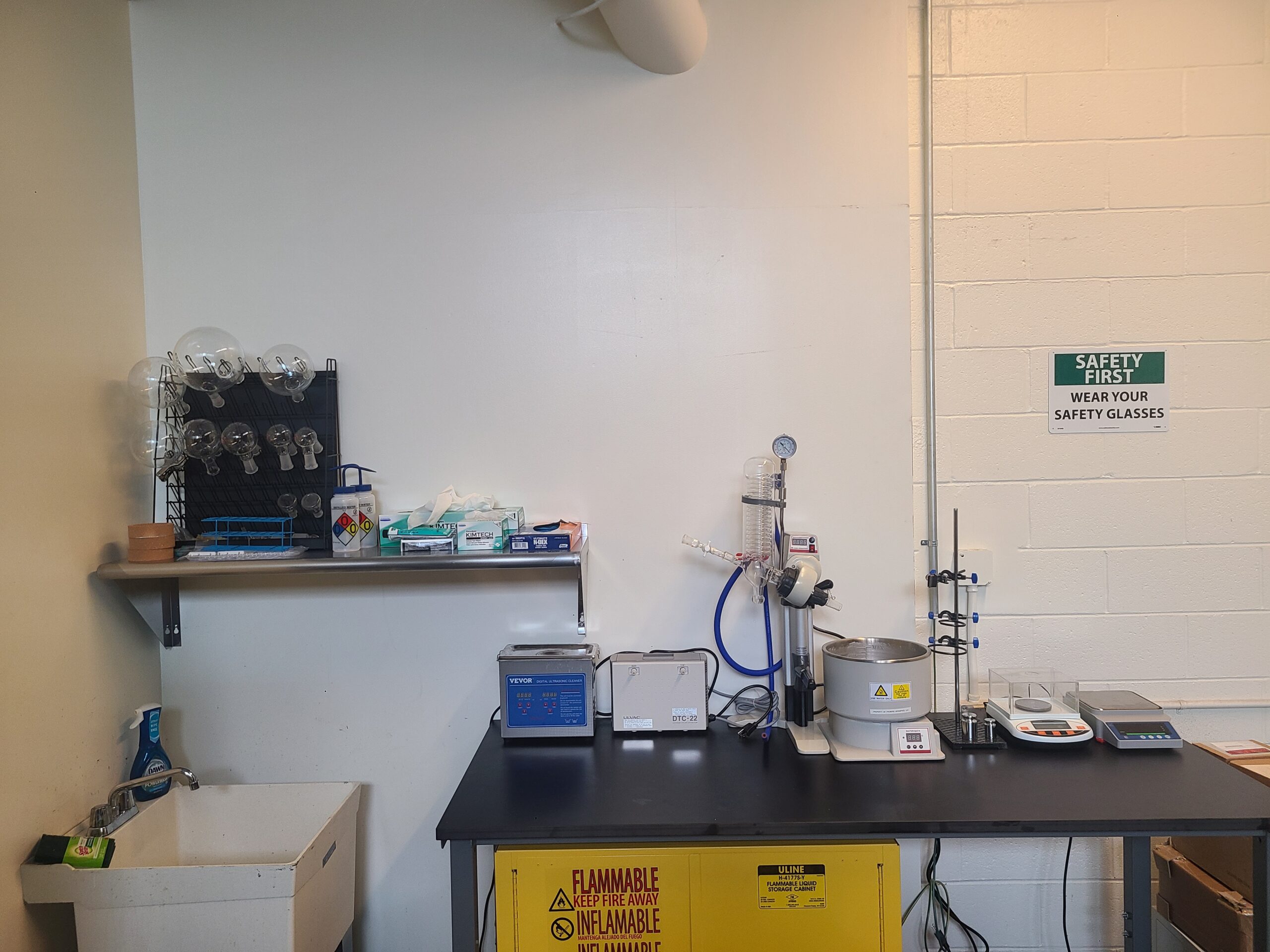
The SPACE Lab propellant synthesis station includes an Across International SE06 Rotary Evaporator, milligram accurate measurement scales, rotary viscometers, a laboratory oven, pH meters, and other measurement equipment.

Chemical Thruster Test Stand

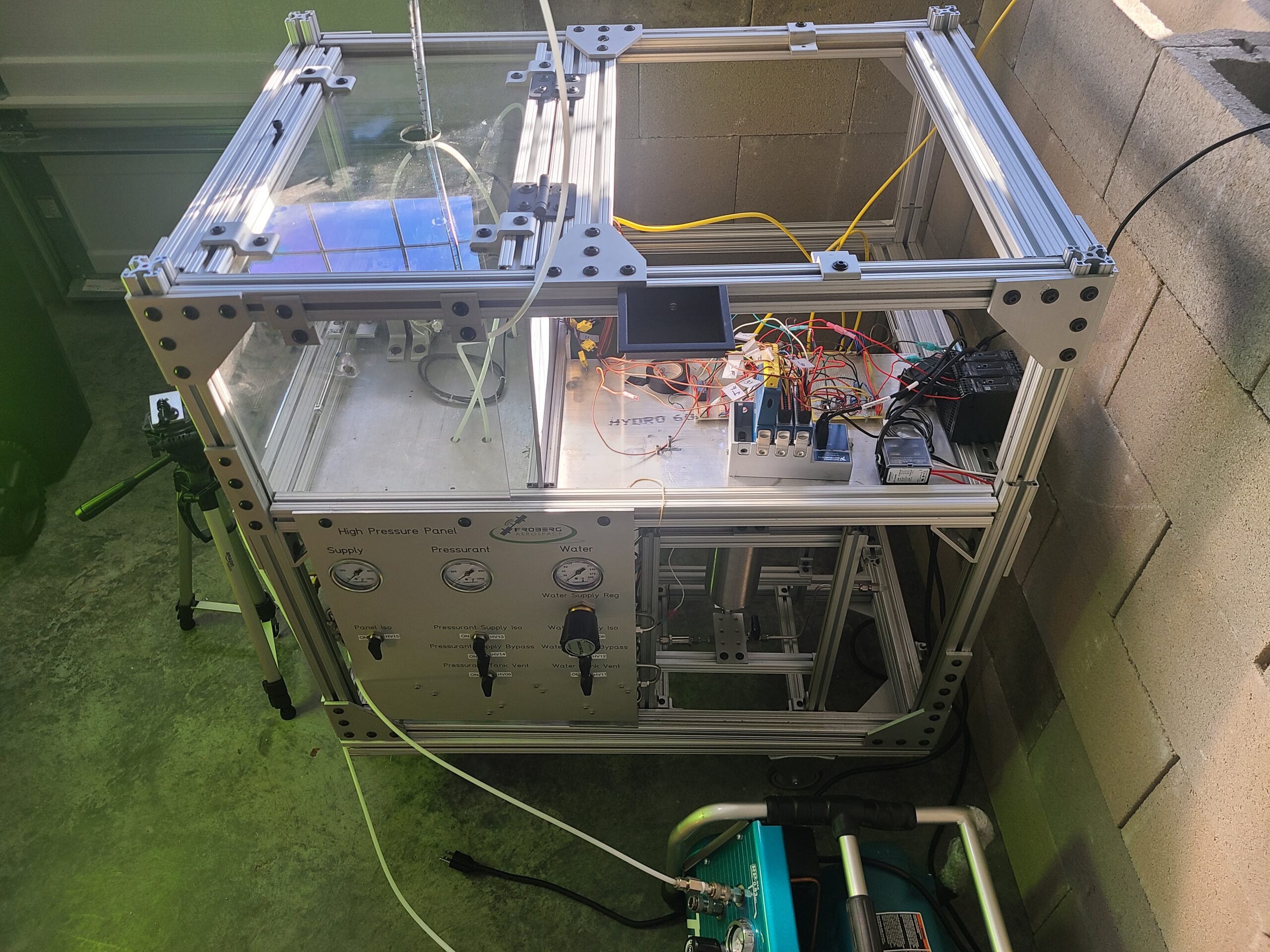
The chemical thruster test stand is portable and primarily purposed for testing of small (< 22N) monopropellant thrusters. The stand is capable of driving propellant either via syringe pump or pressurant gas. The stand has built in remote gas purge, water purge and vacuum control capability. Data acquisition capabilities include a National Instruments CompactDAQ with 10 voltage in channels, 4 current in channels, 16 analog output channels, and 16 Type-K thermocouple channels all of which are controlled, measured, and recorded via Labview software.