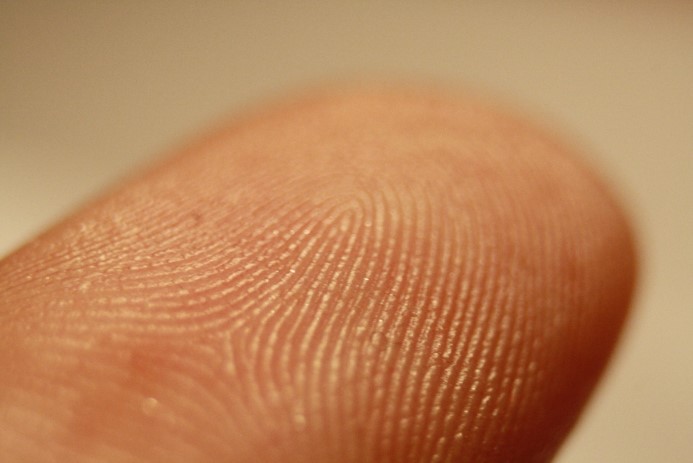
Image: Fingerprint detail on male finger: https://commons.wikimedia.org/wiki/File:Fingerprint_detail_on_male_finger.jpg
Introduction: What are Fingerprints?
This is a fingerprint – the patterning that is formed by the ridged skin on our fingertips.
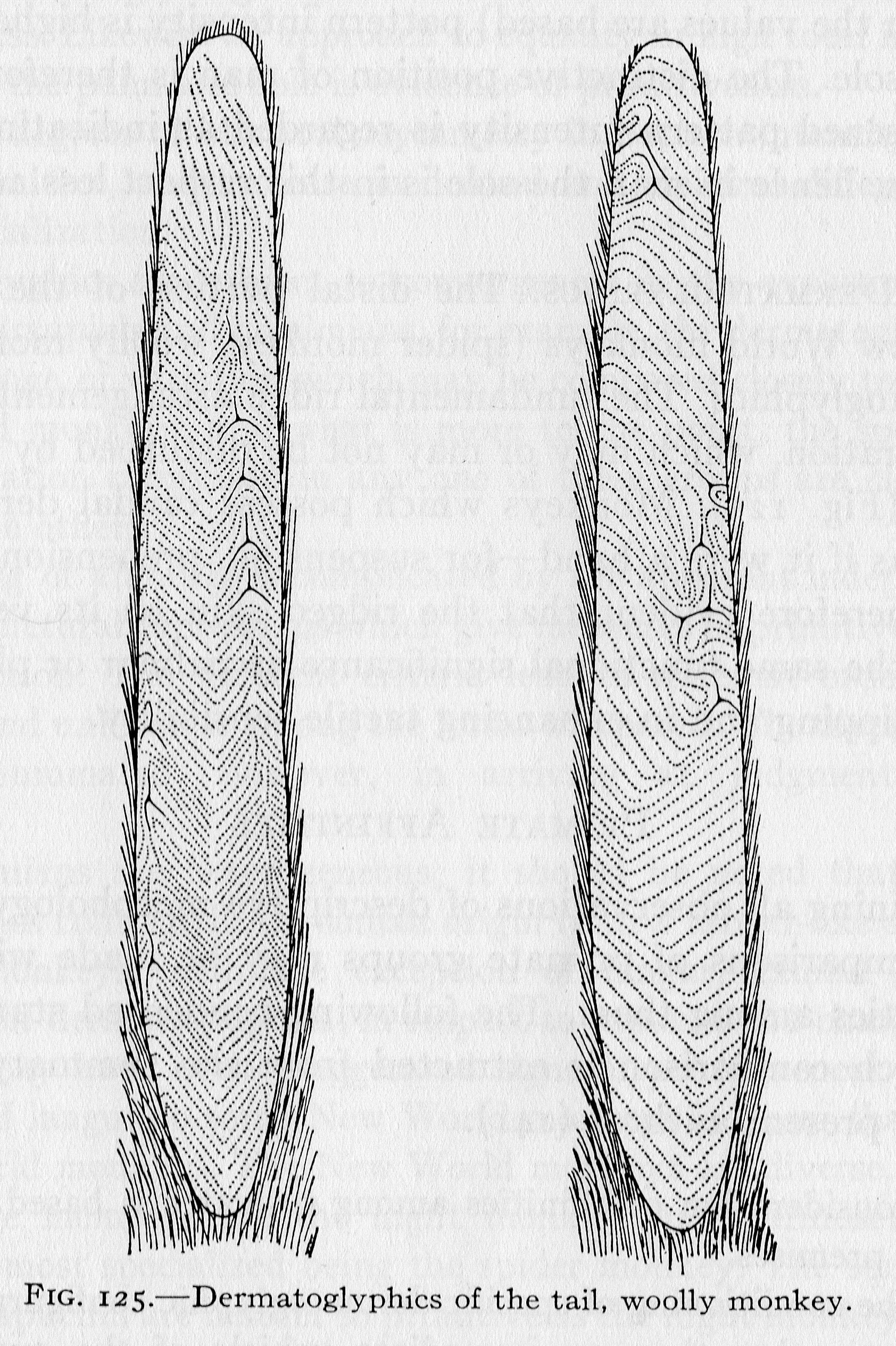
The fingers are not the only part of the body that has this kind of skin. It is also found on our palms and the soles of our feet. Ridged skin is even found on the hands and feet of primates more generally as well as some other mammals, and some primates even have it on the underside of their tails.
Image: Harold Cummins and Charles Midlo. Finger Prints, Palms and Soles: An Introduction to Dermatoglyphics. New York: Dover Publications, 1961, 175. Used with permission. Image courtesy of Dover Publications.
While the most basic biological function of these friction ridges is to help us grip objects, the patterning that appears on this skin – especially in the form of our fingerprints – has taken on important legal, social, and even scientific meanings in modern societies.
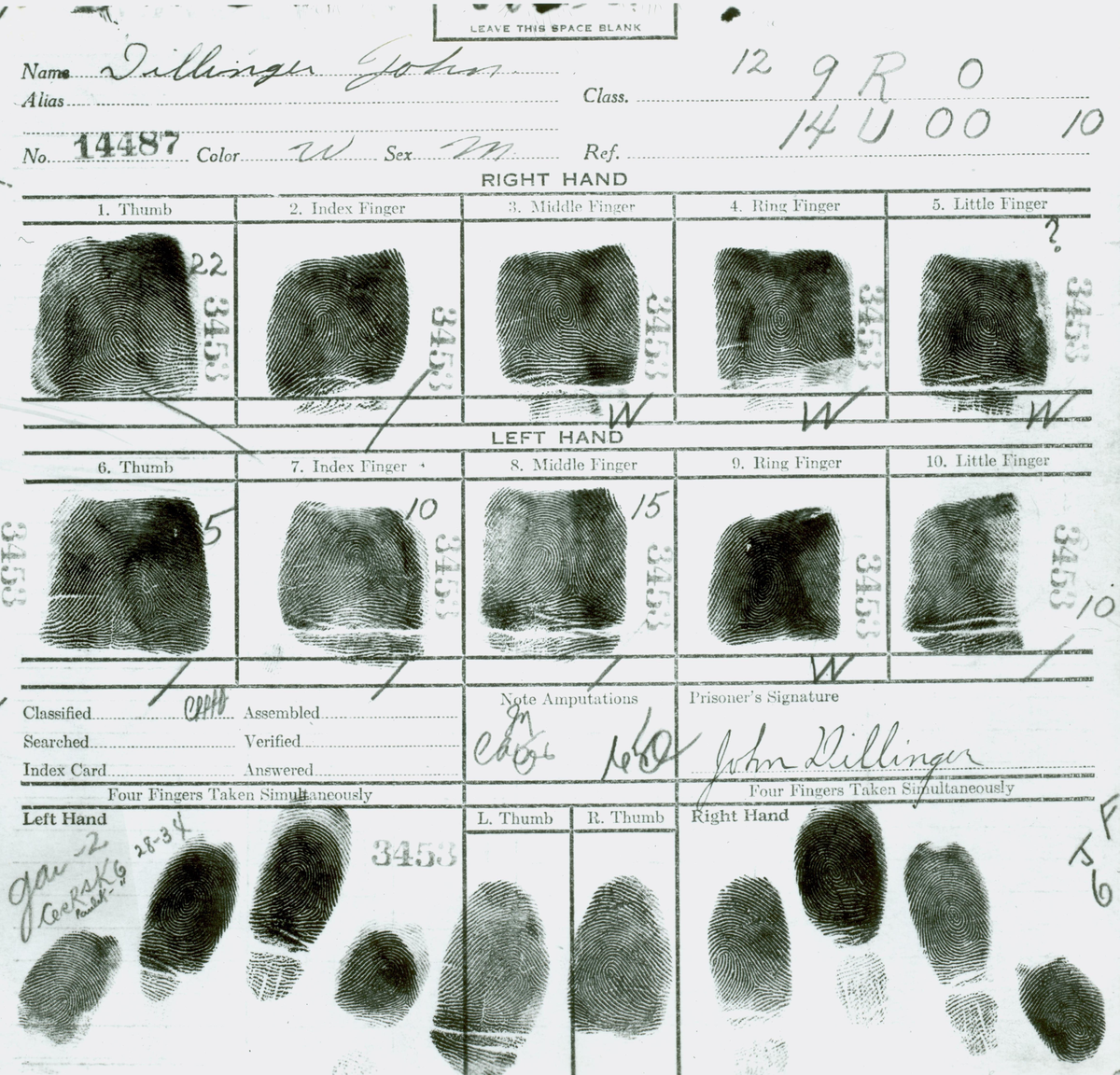
Recorded in ink or digitized on a computer, fingerprints are markers of individual identity that are used in many different ways. Collected from crime scenes, fingerprints can provide crucial evidence about who committed a crime.
Image: John Dillinger’s fingerprint card. FBI Media: https://multimedia.fbi.gov/item?type=image&id=1474
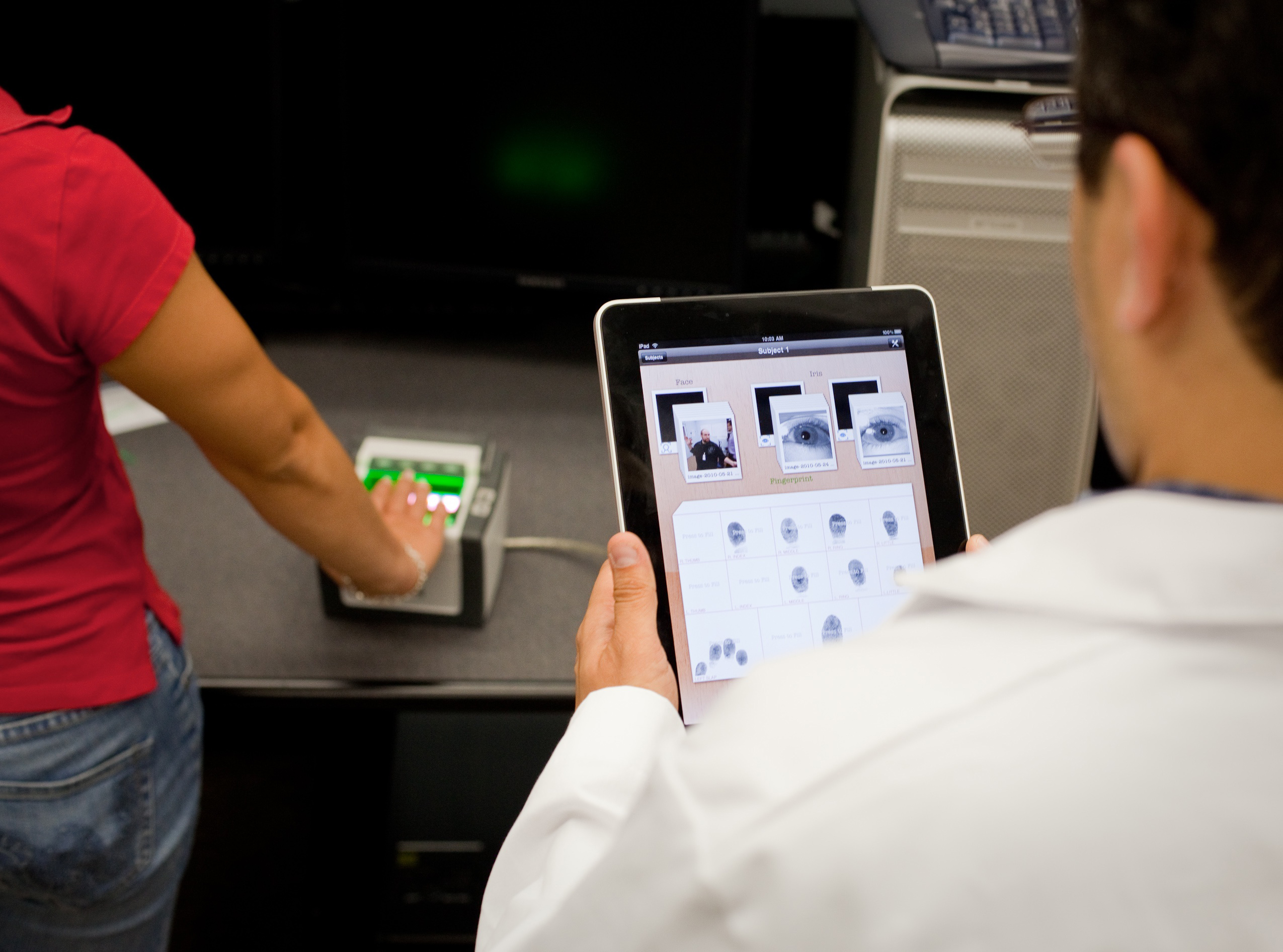
Through the use of electronic biometric readers, fingerprints can give access to a college dining hall or even unlock your phone or computer.
Image: “NIST’s Biometric Web Services team captures a fingerprint remotely using Web Services for Biometric Devices, which is a new system built on standard web technologies.” National Institute of Standards and Technology’s Photostream: https://www.flickr.com/photos/usnistgov/6058942839/in/album-72157627083358436/
Yet how did fingerprints become such an important way of identifying people, especially in the field of forensic science? What are some of the larger contexts – historical, social, political, scientific and technological – that have given fingerprints so much importance today? Finally, on what scientific basis does the forensic use of fingerprinting rest?
These are some of the questions that you will learn about on this website.