Interdisciplinary Research Teams
Program Description: Interdisciplinary Research Teams (IRT)
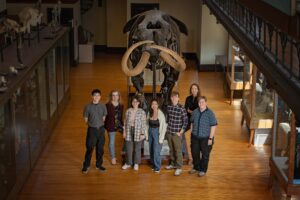 The Interdisciplinary Research Teams (IRT) program at Rutgers University, offered through the School of Arts and Sciences Office of Undergraduate Education, provides students with an opportunity to collaborate on creative, interdisciplinary research projects alongside faculty mentors. Designed primarily for rising sophomores and juniors, IRT brings together small teams of students from different majors to explore real-world questions and produce meaningful deliverables that often go beyond traditional research papers, such as exhibits, educational resources, digital projects, prototypes, or public outreach materials. Students earn academic credit, gain hands-on research experience, develop collaboration and leadership skills, and present their work at campus symposia, making IRT a unique, high-impact learning experience that connects scholarship, creativity, and teamwork.
The program is made possible by the generous support of Rutgers alumnus Alan Grossman, whose donation advances interdisciplinary learning and student research opportunities.
IRT Project Spotlight: My Friend Manny
As part of this program, our team based their work in the Rutgers University Geology Museum (RUGM) to research and tell the story of the museum’s most famous resident, Manny, a 12-foot-tall, fully articulated mastodon skeleton. Drawing on historical archives, scientific literature, and educational theory, the team synthesized past and current research to create My Friend Manny, a children’s book that makes Manny’s story accessible and engaging for K–12 audiences. Building on earlier work by student interns and researchers, the project highlights both the science behind the mastodon and the museum’s rich history. By combining expertise from multiple disciplines, the team developed an innovative approach to science communication that accurately represents the museum’s legacy, celebrates the diverse people who have contributed to RUGM since its opening in 1872, and supports current educational and curricular needs.