Click the image to enlarge
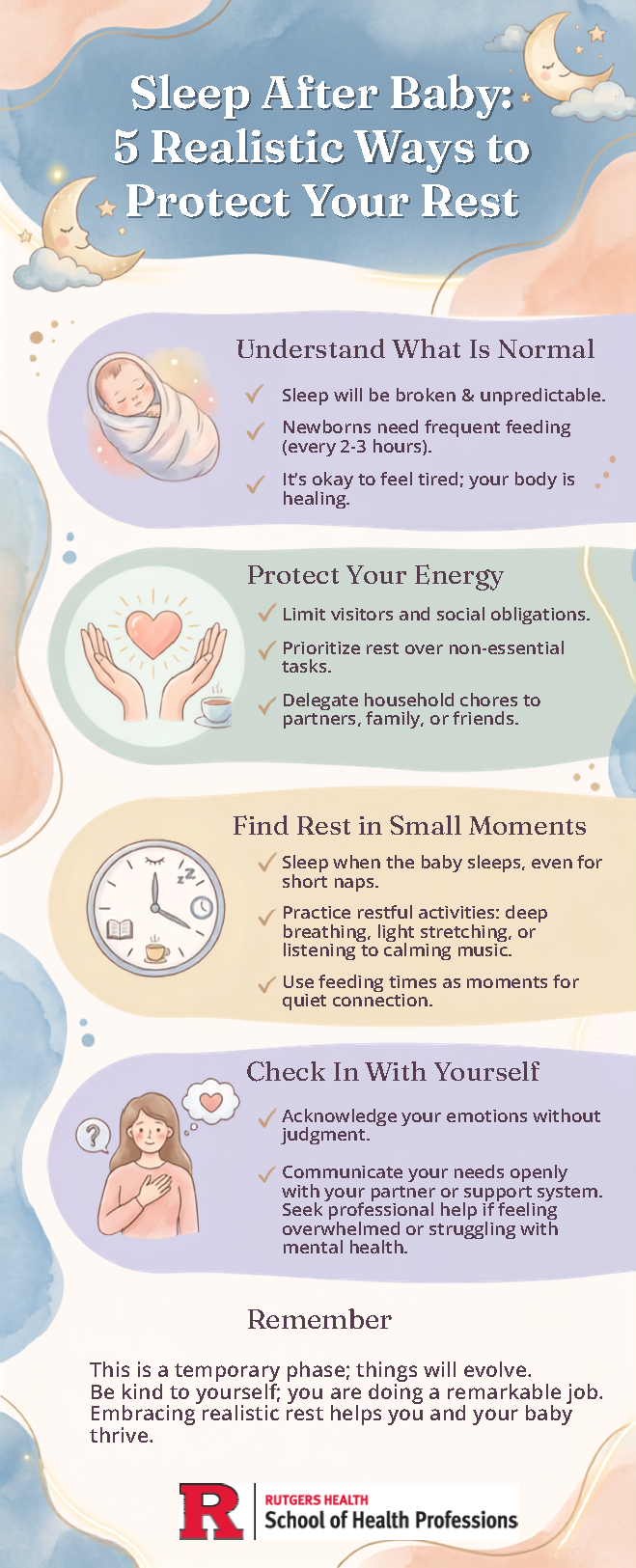
Sleep May Look Different, But Rest Still Matters
One of the biggest changes after having a baby is sleep. Newborns do not follow the same sleep patterns as adults, and frequent waking is a normal part of early development. While interrupted sleep can be challenging, understanding what to expect can help parents feel more prepared and reduce frustration. There is no perfect way to handle sleep after a baby arrives. The goal is not perfection, but finding realistic ways to protect your health, recover, and adjust during this important transition.
During the postpartum period, rest is not only about getting a full night of sleep. Recovery also comes from finding opportunities to recharge, protecting your energy, and recognizing when your body and mind need care.
Understanding Newborn Sleep
Newborn sleep can look very different from what many parents expect. Newborns have small stomachs and are growing quickly, so they need to eat often during the day and night. Waking every 2 to 4 hours is normal. Your baby is also still developing their internal body clock, which means they do not yet know the difference between day and night. Most newborns sleep about 14 to 17 hours in a 24-hour period, usually in shorter stretches. You can help your baby begin learning the difference between day and night by keeping daytime bright and active, while keeping nighttime feedings and diaper changes calm, quiet, and dimly lit.
A simple bedtime routine can help create a calm and comforting environment. For a newborn, this is not about teaching your baby when to sleep. It is about bonding, comfort, and helping your baby become familiar with your voice and presence. A short 5 to 15 minute routine may include a diaper change, feeding, swaddling if appropriate and safe, dim lights, soothing music and/or cuddle.
Remember, frequent waking is a normal part of newborn development. These routines will not stop your baby from waking to eat or needing comfort. Focus on safe sleep, responding to your baby’s cues, and creating a calm environment. Longer stretches of sleep will develop as your baby grows.
Protecting Your Energy
When sleep is limited, conserving energy becomes important. Parents may benefit from thinking about how to use their available energy rather than trying to maintain their previous routines.
Consider:
- Choose what needs to be done today. Pick the most important tasks and let nonessential chores wait when possible.
- Make tasks easier. Cook simple meals, combine errands when possible, and use the easiest option available for everyday tasks.
- Set up what you need ahead of time. Keep diapers, wipes, feeding supplies, water, and snacks nearby in the areas where you spend the most time with your baby.
- Rest in small moments. If you cannot sleep, use short breaks to sit down, close your eyes, or relax your body while your baby is resting.
- Lower the pressure to do everything the same way. The newborn period is temporary. A simpler routine, fewer chores, and easier meals are practical ways to save energy while caring for your baby.
- Ask for help from family, friends, neighbors, etc., with specific tasks such as washing dishes, folding laundry, preparing food, grocery pick up, errands, or watching the baby while you shower or rest.
If you do not have extra help, focus on small changes that make your day easier, such as:
- Preparing simple foods ahead of time and choosing easy meals when possible.
- Breaking tasks into smaller steps, such as doing smaller loads of laundry or using a basket to collect items that can be put away later.
- Using a safe place to put your baby down while you complete quick tasks nearby.
- Planning simple tasks, like showering, eating, or making a phone call, around times when your baby is calm or resting.
Supporting Rest and Recovery
Recovery after birth involves physical, emotional, and mental healing. Even short periods of rest can be valuable.
Helpful strategies may include:
- Resting when your baby is resting when possible
- Taking quiet moments without focusing on tasks
- Limiting unnecessary pressure to “get everything done”
- Making time for activities that help you feel refreshed. A few minutes outside, a phone call with someone you trust, listening to music, or having quiet time can help you feel more like yourself.
- Support your body while caring for your baby. Use pillows for feeding, sit in comfortable positions, and change positions throughout the day to reduce soreness and strain.
- Let some things wait. Your body is healing and your baby needs care. A slower pace and a less organized home are normal parts of the postpartum period.
Checking In With Yourself
The postpartum period brings many changes, and lack of sleep can affect your mood, patience, energy, and ability to cope. Taking a moment to notice how you are feeling can help you recognize when you may need more support.
Helpful questions to ask yourself:
✔ Am I feeling more overwhelmed than usual?
Try taking one small step to reduce the load. Put one task off, take a few quiet minutes, or ask someone for help with one specific thing.
✔ Am I able to care for myself while caring for my baby?
Start with the basics: drink water, eat something nourishing, rest when you can, and give yourself short breaks throughout the day.
✔ Have I shared how I am feeling with someone I trust?
Reach out and be specific. Instead of saying “I need help,” try asking for something concrete, like a meal, a phone call, help with a chore, or time to shower or rest.
***Download the infographic for 5 Realistic Ways to Protect Your Rest
References
American College of Obstetricians and Gynecologists. (2018). ACOG Committee Opinion No. 736: Optimizing postpartum care. Obstetrics & Gynecology, 131(5), e140–e150.
Dennis, C.-L., & Letourneau, N. (2007). Global and relationship-specific perceptions of support and the development of postpartum depressive symptomatology. Social Psychiatry and Psychiatric Epidemiology, 42(5), 389–395.
Insana, S. P., & Montgomery-Downs, H. E. (2013). Sleep and sleepiness among first-time postpartum parents: A field- and laboratory-based multimethod assessment. Developmental Psychobiology, 55(4), 361–372.
Mindell, J. A., Li, A. M., Sadeh, A., Kwon, R., & Goh, D. Y. T. (2015). Bedtime routines for young children: A dose-dependent association with sleep outcomes. Sleep, 38(5), 717–722.
Paruthi, S., Brooks, L. J., D’Ambrosio, C., Hall, W. A., Kotagal, S., Lloyd, R. M., Malow, B. A., Maski, K., Nichols, C., Quan, S. F., Rosen, C. L., & Troester, M. M. (2016). Recommended amount of sleep for pediatric populations: A consensus statement of the American Academy of Sleep Medicine. Journal of Clinical Sleep Medicine, 12(6), 785–786.