Conferences

SAVE THE DATE!
9th annual Non-Degree Credentials Research Network (NCRN)
2027 Spring Conference.
Monday, May 24 and Tuesday, May 25, 2027
Grand Ballroom, George Washington University, Washington D.C.
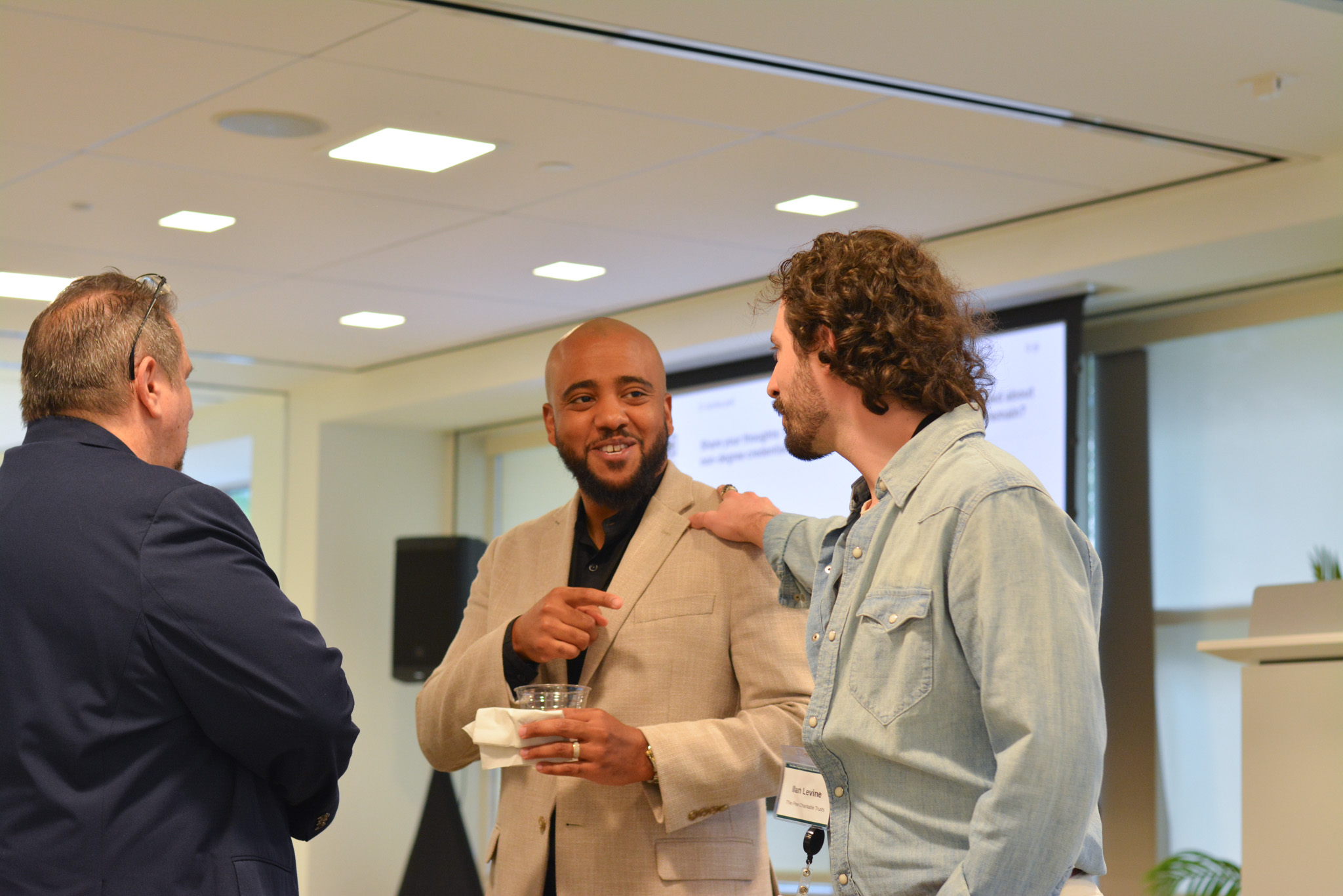
Our 8th annual NCRN conference was held on May 19th and 20th, 2026 at The Pew Charitable Trusts Conference Center in Washington D.C.
To watch the entire 2026 conference, please click here.
Follow us on LinkedIn for conference highlights.
View the 2026 Conference Agenda at this link
The 2026 Conference Session By Session
Introduction

Kyle Albert (The George Washington University) and Michelle Van Noy (EERC) welcome NCRN attendees and reflect on the growing interest in non-degree credentials. The conference kicks off with a call for collaboration among researchers, policymakers, and practitioners to shape a more effective credentialing system for all learners. Special thanks to our funders, the Pew Charitable Trusts, Lumina Foundation, Strada Education Foundation, and ECMC Foundation. Watch now.
Keynote: Federal Policy and the Outlook for Non-Degree Credentials

Nick Moore (Alabama Community College System), former Acting Assistant Secretary for the Office of Career, Technical, and Adult Education at the U.S. Department of Education, discusses federal and state opportunities to create effective pathways between learning and employment. His keynote explores Workforce Pell, talent development, workforce readiness, and the growing connection between education, workforce development, and economic growth. Moore also discusses the critical role states will play in translating federal policy into effective implementation.
Day 1 - Panel: Workforce Pell in Action
Watch the Panel: Workforce Pell in Action

Moderated by Tom Weko (The George Washington University), this panel examines the opportunities and challenges associated with Workforce Pell implementation. Rachel Stevens Parker (Maryland Governor’s Workforce Development Board), Chad Knights (Northern Virginia Community College), Iris Palmer (New America), and Corey Gheesling (SHEEO) discuss state implementation efforts, including Maryland initiatives and Virginia’s FastForward model, as well as data infrastructure, cross-agency coordination, financial aid alignment, student advising, and career navigation.
View the presentation slides here.
Day 1 - Policy Update: Learning and Employment Records (LERs)
Watch the Policy Update: Learning and Employment Records (LERs)
 Kyle Albert (The George Washington University), Amanda Bruno (Lewis-Burke Associates), and Annelies Goger, PhD (UpSkill America at the Aspen Institute) discuss the growing role of Learning and Employment Records (LERs) in workforce and education policy. The panel explores congressional interest in LERs, data interoperability, privacy and security considerations, skills validation, employer engagement, and the challenges of scaling adoption across states and institutions.
View the presentation slides here.
Day 2 - Reflection: The power of 3’s in Nondegrees: Then, Now, the Future
Watch Reflection: The Power of 3’s in Nondegrees: Then, Now, The Future Holly Zanville (The George Washington University) and Wendy Sedlak (Lumina Foundation) reflect on the evolution of non-degree credentials and consider future directions for the field. The discussion examines the role of community colleges as early leaders in credential innovation, the shift from credential attainment to credentials of value, skills-based hiring and employer recognition of credentials, the relationship between degree and non-degree pathways, and the importance of durable skills in preparing learners for an AI-driven economy.
View the presentation slides here.
Day 2 - Fireside Chat: Reflections from Those Who’ve Seen It All
Watch the Fireside Chat: Reflections from Those Who’ve Seen it All

Holly Zanville (The George Washington University) moderates a conversation with Roy Swift (WorkCred) and Jeff Strohl (Georgetown University Center on Education and the Workforce) on the evolution of non-degree credentials, workforce development, and labor market research. The discussion explores collaboration across sectors, challenges associated with research funding and data collection, and the need to consider broader measures of credential value beyond earnings, including career mobility, personal fulfillment, and social impact.
View the presentation slides here.
Day 2 - Panel: Is Higher Ed Losing Ground to Emerging Credentials?
Watch the Panel: Is Higher Ed Losing Ground to Emerging Credentials
 Kyle Albert (The George Washington University) moderates a discussion with Larry Schall (New England Commission on Higher Education) and Kelvin Bentley (NASH) on the relationship between traditional higher education and emerging credentials. Panelists explore microcredentials, skills-based learning, accreditation, employer engagement, work-based learning, and the growing role of AI in shaping credential pathways. The conversation considers how degrees and non-degree credentials can work together to support learner success.
Day 2 - Panel: What is the Value of Credentials?
Watch the Panel: What is the Value of Credentials

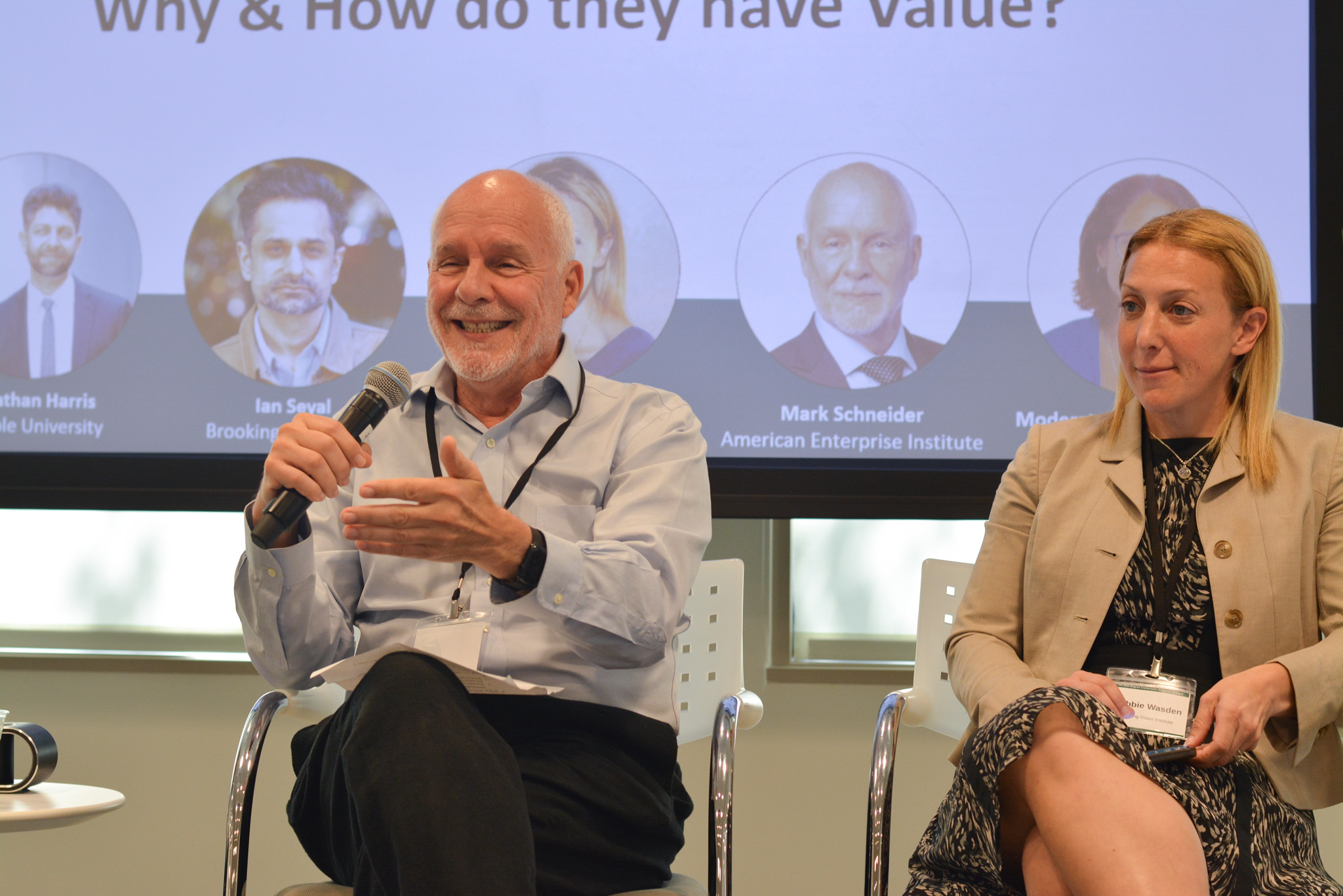
Michelle Van Noy (EERC) moderates a discussion with Jonathan Harris (Temple University), Ian Seyal (Brookings Institution), Debbie Wasden (Burning Glass Institute), and Mark Schneider (AEI) on how the value of credentials should be defined and measured. Panelists explore labor market signaling, consumer information, the cultural preference for four-year degrees, emerging approaches to measuring outcomes, and the need to look beyond wages when assessing credential value. The discussion also examines AI, worker mobility, and coordination across education and workforce systems.
Day 2 - Research Presentations Part 1
Watch the Research Presentations Part 1
 Terry Vaughan III (WorkCred), Stephanie Murphy (HCM Strategists), and Annelies Goger, PhD (UpSkill America at the Aspen Institute) present research on learner pathways, state investments in short-term credentials, and employer perspectives on credential value. Topics include degree and non-degree credential pathways, affordability, state policy trends, skills-based hiring, workforce signaling, and the growing influence of artificial intelligence on recruitment and talent assessment.
View Terry Vaughan’s slides here.
View Stephanie Murphy’s slides here.
Annelies Goger’s slides here.
Day 2 - Research Presentations Part 2
Watch the Research Presentations Part 2 
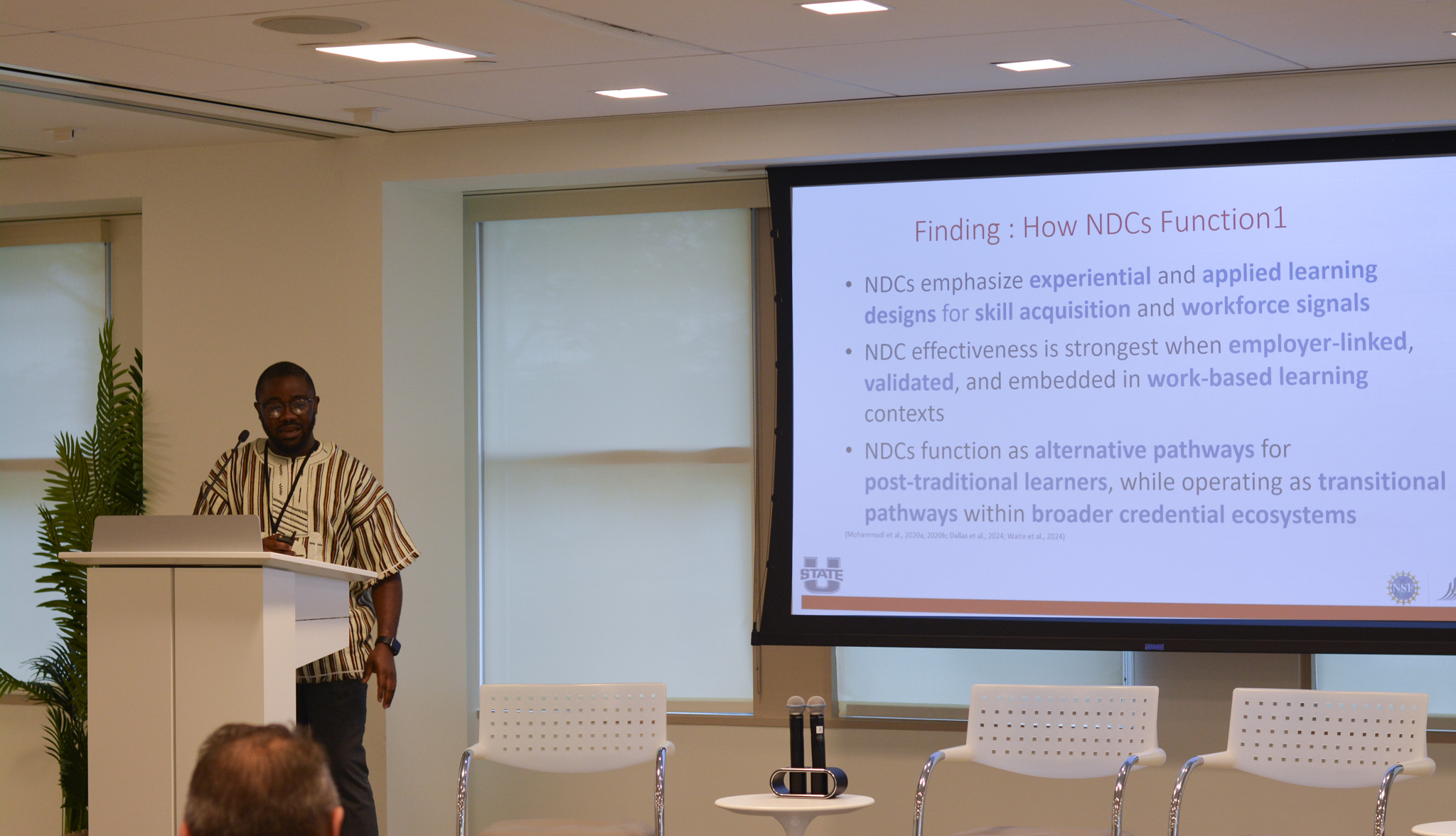
Foeday Zinnah (Utah State University), Jennifer Fong (IEEE), and Jane Kim (ACE) present research on STEM workforce development, employer engagement in credential design, and emerging trends in non-degree credentials. The presentations explore how credentials can better align with workforce needs, efforts to improve skills recognition and transparency, and new insights into non-degree credential participation, completion, and data collection at colleges and universities.
Foeday Zinnah’s slides here.
Jennifer Fong’s slides here.
Jane Kim’s slides here.
Day 2 - Panel: Navigation for the Lifelong Learner
Watch the Panel: Navigation for the Lifelong Learner Phil Oliff (The Pew Charitable Trusts) moderates a discussion with Caroline Healy (Britebound), Kathy Hughes (EERC), and Richard DeMartino (Rochester Institute of Technology) on how students, parents, and adult learners navigate non-degree credential pathways. Panelists explore various factors including affordability, career outcomes, information gaps, and awareness of available options. They discuss the need for clearer guidance and stronger support systems for learners.
View Caroline Healy’s slides here.
View Kathy Hughes’ slides here.
View Richard DeMartino’s slides here.
Day 2 - Panel: Innovations in NDC and Skills Data Infrastructure
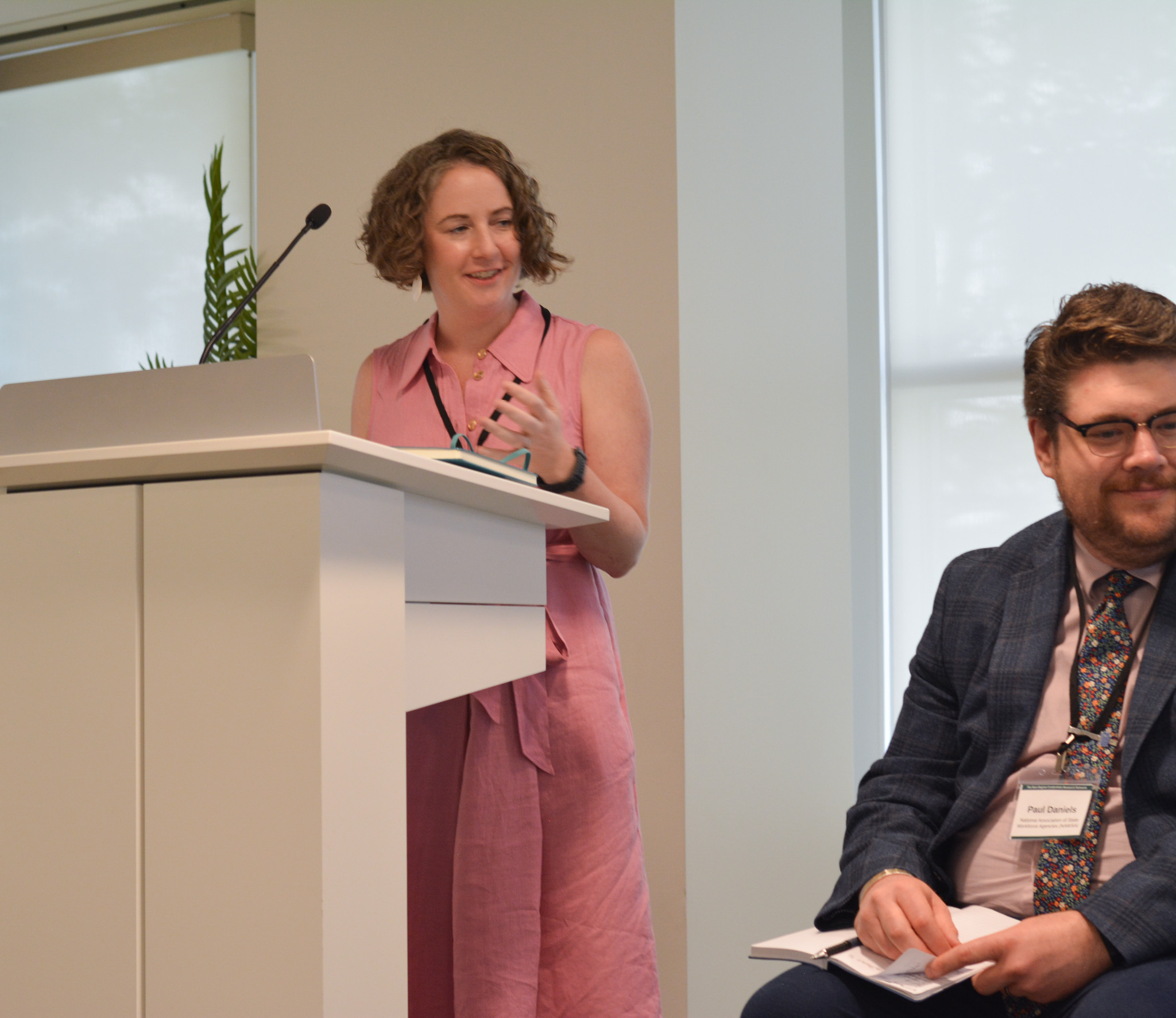
Watch the Panel: Innovations in NDC and Skills Data Infrastructure Moderated by Dana Brandt (Strada Education Foundation), this panel explores emerging approaches to non-degree credential and skills data infrastructure. Amanda Welsh (Northeastern University), Kerry McKittrick (Project on Workforce at Harvard University), Paul Daniels (NASWA), and Kyle Albert (The George Washington University) discuss innovations in job postings data, workforce training provider data, skills extraction, and AI-powered tools designed to improve understanding of skills, credentials, and labor market demand.








-
2025 Spring Conference
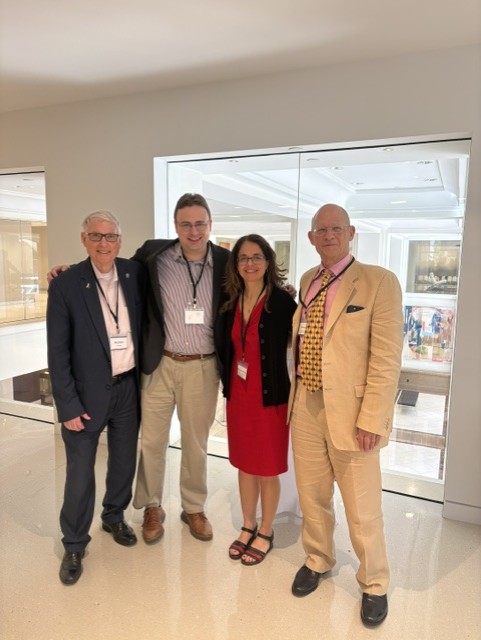
Thank you for attending NCRN’s 2025 Spring Conference on May 28th, at the George Washington University in Washington, D.C. It was an enriching day of leading experts discussing the evolving landscape of non-degree credentials (NDCs) with an audience of researchers, policymakers, and workforce experts.
Conference Session Details and Recordings
Introduction / Welcome and Strategic Plan Updates

Kyle Albert, George Washington University Institute of Public Policy
Michelle Van Noy, Rutgers University Education and Employment Research Center
Trends affecting non-degree credentials in the Trump era

Paul Fain, Work Shift

Moderator: Kyle Albert, George Washington University
The rise of a social movement around skills-based hiring was identified as one of the most significant developments affecting our field in the NCRN’s 2023 report Non-degree Credentials on the Move, but its implications for research and policy are still unclear as many organizations report that removing degree requirements has not necessarily resulted in the hiring and promotion of individuals without degrees. In this panel discussed the future of the skills-based hiring movement with a focus on how the research community can help us better understand its potential and limits. Among other questions, we asked what research and technological advances are needed to facilitate skills-based hiring, what changes in the political and social environment mean for the movement, and what role degrees and non-degree credentials should continue to play in a skills-centric labor market.-
-
-
-
-
-
- Manny Lamarre, The Workforce Lab
- Amanda Welsh, Northeastern University
- John Colborn, Apprenticeship for America
- Corey Moss-Pech, Florida State University
-
-
-
-
-
Panel One Resources
- Bringing Richer, Verifiable Candidate Data Into HR Systems: An ecosystem roadmap
- The Evolution of Hiring: What managers know about, think about and are doing with microcredentials
- Brought, Sought, and Taught: Toward a System of Skill-Driven Applications

Moderator: Michelle Van Noy, Rutgers University
Like an amoeba, definitions of non-degree credentials continue to morph and evolve as the field shifts and credentials and providers proliferate. Over the years definitions and categories have been proposed and discussed, yet the field continues to use a multiplicity of terms to refer to non-degree credentials, microcredentials, alternative credentials, certificates, badges, certifications, licenses, apprenticeships, and more. To continue to advance this conversation, our panelists will discuss research and various national efforts that are creating movement in making sense of this potentially confusing foundational area of terminology.-
-
-
-
-
-
- Scott Cheney, Credential Engine
- Noah Geisel, University of Colorado
- Melanie Gottlieb, American Association of Collegiate Registrars and Admissions Officers
- Hiro Okahana, American Council on Education
-
-
-
-
-
Panel 2 resources
Book Preview: Who Trains the Already Educated: Career-sustaining Training in Higher Education

John Skrentny, University of California-San Diego
Mary Walshok, University of California-San Diego
Book Preview Resources
 Moderator: Jeff Strohl, Georgetown University
Over its six-year history, the NCRN has seen significant improvements in the coverage of non-degree credentials in both public and private data systems. Cumulative investments in workforce data infrastructure covering non-degree credentials such as statewide longitudinal data systems, federal workforce surveys (such as GEMEnA and NTEWS), and privately held data (e.g., National Student Clearinghouse and CredLens) now easily exceed 100 million dollars, and while U.S.-based researchers undoubtedly enjoy access to vast amounts of data, significant gaps in our understanding of non-degree credentials persist. These gaps seem to be especially significant for certain types of non-degree credentials, including non-credit certificate programs and industry certifications. This panel will explore what additional improvements in data infrastructure are necessary to advance our field – while also considering the possibility that the field should prioritize making better use of existing resources. The discussion includes an exploration of whether there is a need for a nationwide individual-level administrative dataset covering non-degree credential attainment and earnings, and if so, how we would go about building such a dataset.-
-
-
-
-
-
- Mark D’Amico, University of North Carolina-Charlotte
- Naomi Boyer, Education Design Lab
- Adam Leonard, Natcast, formerly TX Workforce Commission
- Elliot Gillerman, CredLens
-
-
-
-
-
Panel 4: Research on Outcomes : What We’ve Learned Lately about the Labor Market Outcomes of NDCs

Moderator: Harry Holzer, Georgetown University
Whether non-degree credential deliver value and merit investment is a vital and urgently held question. Despite the limits to data in this realm, researchers are increasingly generating evidence needed to guide policy and practice on whether non-degree credentials deliver on the promises they are making to provide value to their holders. Our panelists shared the recent research from the field on costs, value, and learner perspectives.-
-
-
-
-
- Mina Dadgar, Education Equity Solutions
- Jason Jabbari, Washington University
- Jinann Bitar, Education Trust
- Peter Bahr, Strada Education Foundation
-
-
-
-
Panel 4 resources:
- Conference Slides
- Does noncredit occupational training pay off for students?
- Making Every Rung of the Credential Ladder Count Understanding How Community College Certificates Can Meet Learner Expectations for Economic Mobility
- More Money for Less Time? Examining the Relative and Heterogenous Financial Returns to Non-Degree Credentials and Degree Programs
- Understanding the Full Cost of Short-Term Credentials
- Short-Term Credential Cost Data
International Reflections on NDC Data and Outcomes: Same Questions, Different Answers

Tom Weko, George Washington University
Mairéad Nic Giolla Mhichíl, Dublin City University
International Panel Resources

Mitchell Stevens, Stanford University
Futures Project Resources
-
-
Click below to access a compendium of transcripts from select sessions at our 2023 Spring Conference and the cumulative report associated with our 2021-23 grant cycle, Recent Developments and New Opportunities for Non-degree Credentialing Research.
-
Representatives of several research organizations met on December 2, 2022 to present updates on key research projects and policy initiatives underway. Slides from selected presentations are available via the links below:
- Organization for Economic Cooperation and Development
- Georgetown University Center for Education and the Workforce
- Jobs for the Future
- National Skills Coalition
- National Center for Science and Engineering Statistics
- Rutgers Education and Employment Research Center
- Workcred
- Society for Human Resource Management (SHRM) Foundation
- Harvard University Program on Workforce
In addition, Andrew Reamer moderated a discussion with Elisabeth Reynolds on credentials and U.S. industrial policy. Slides from Andrew’s presentation.
-
View the slides from the NCRN Spring Conference:
- Resubmission of AccelNet Proposal to National Science Foundation
- International Developments in Micocredentialing: Margo Griffith
- Data Issues Impacting Researchers and Users of Research: Kyle Albert
- Data Issues Impacting Researchers and Users of Research: Mark D’Amico
- Data Issues Impacting Researchers and Users of Research: Heather McKay
- Data Issues Impacting Researchers and Users of Research: Felicia Perez
- Data Issues Impacting Researchers and Users of Research: Andrew Reamer
- Labor-Market Outcomes of Non-degree Credentials: Matthew Baird
- Labor-Market Outcomes of Non-degree Credentials: Ashley Edwards
- Labor-Market Outcomes of Non-degree Credentials: Daniel Kuehn
- Public Policies Shaping the Non-degree Marketpace: Dana Kunzman, Nick Moore, Cynthia Proctor, Michelle Van Noy
- Credentials As You Go: Kirk Knestis, Nan Travers, Holly Zanville
- Higher Education as a Provider of Non-degree Credentials: Julian Alssid
- Higher Education as a Provider of Non-degree Credentials: Jim Fong
- Higher Education as a Provider of Non-degree Credentials: Christos Makridis
- Summary of NCRN Session on International Developments in Micro-Credentialing contributed by Michael Fung, Tecnologico de Monterrey