Projects
Paneth cell heterogeneity
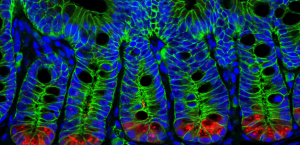 We have identified subsets of Paneth cells under homeostasis and during inflammatory progression. Using mouse genetics and human organoids, we are investigating the functions of these Paneth cell subpopulation in terms of modulation of disease progression.
Cellular plasticity in response to oxidative stress
 Intestinal epithelial tissues are constantly exposed to physiological luminal stressors, however the oxidative stresses can be elevated to pathological level during pathogen infection, strong inflammatory response, or chemo/radiation therapies. We are iinterested in understanding the molecular and epigenetic regulation of cellular oxidative responses.
Microbial metabolites and the regulation of stem cell renewal and barrier function
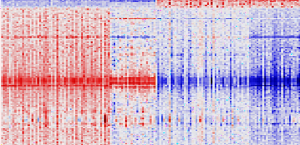 Over the last ten years, our collabration with metabolics experts have systematically and functionally tested metabolites produced by probiotic bacterial species. We are currently focusing on a nicotinamide derivative that demonstrates promising effects on tissue healing and gut barrier function. We are in the process of identify the bacterial enzymes producing this metabolite and host enzymes that utilize it.
Paneth cell and mucosal innate immune communication
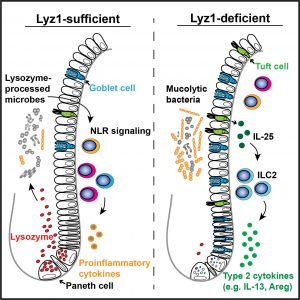 Paneth cell abnormalities are seen across numerous human gastrointestinal and metabolic diseases. We are interested in their direct communications with lamina propria immune cells. We have previously reported a link of Paneth cell-derived lysozyme with type 2 immune response. We are delineating the underlying mechanism as well as characterizing Paneth cell’s roles in recruiting, assembling, and activating specific immune cell clusters for tolerogenicity.