Red Twig Dogwood
Red Twig Dogwood
Cornus sericea
Family: Cornaceae
Phonetic spelling: KOR-nus ser-REE-ah
By Talia Gould
Description:
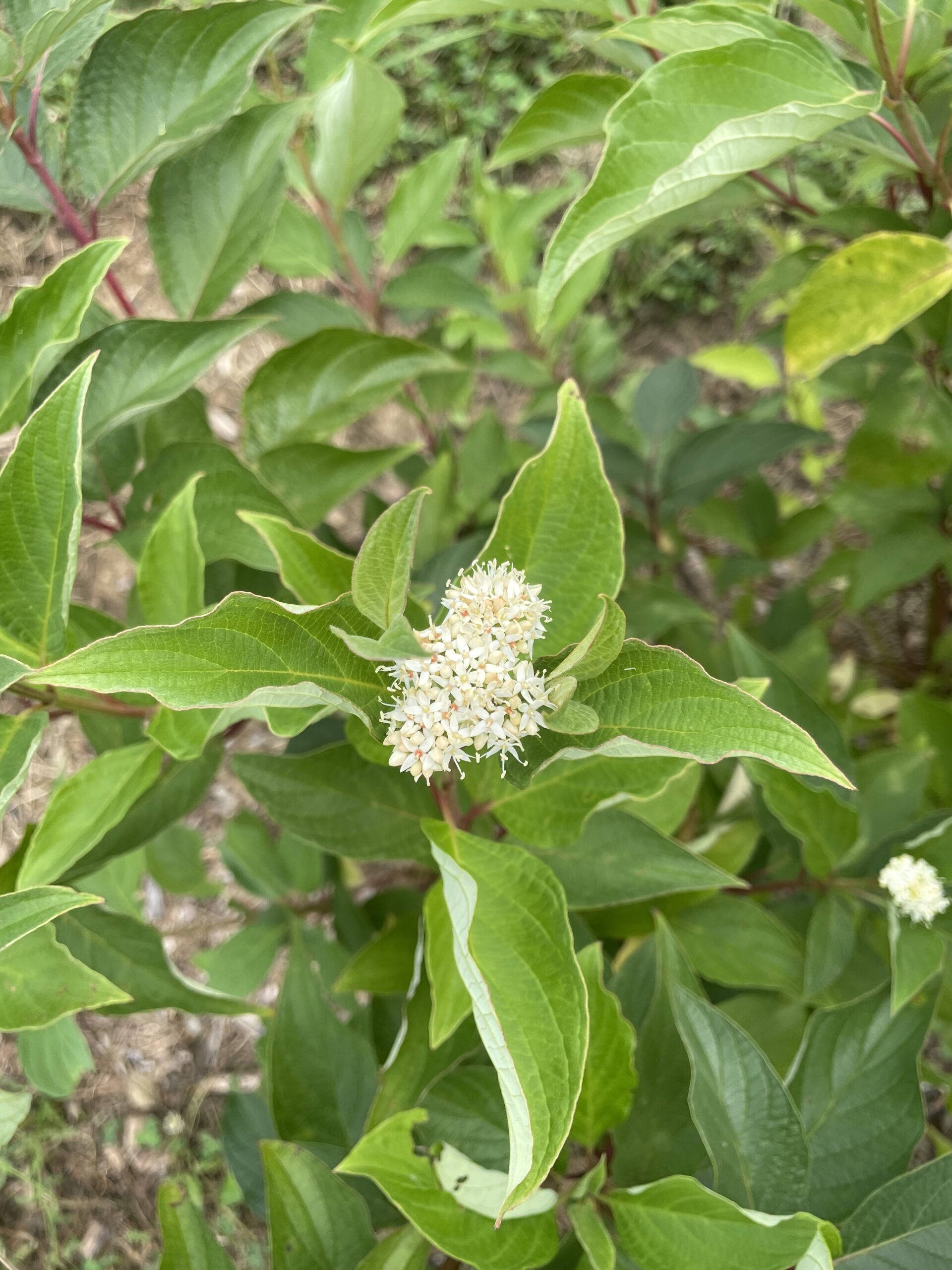
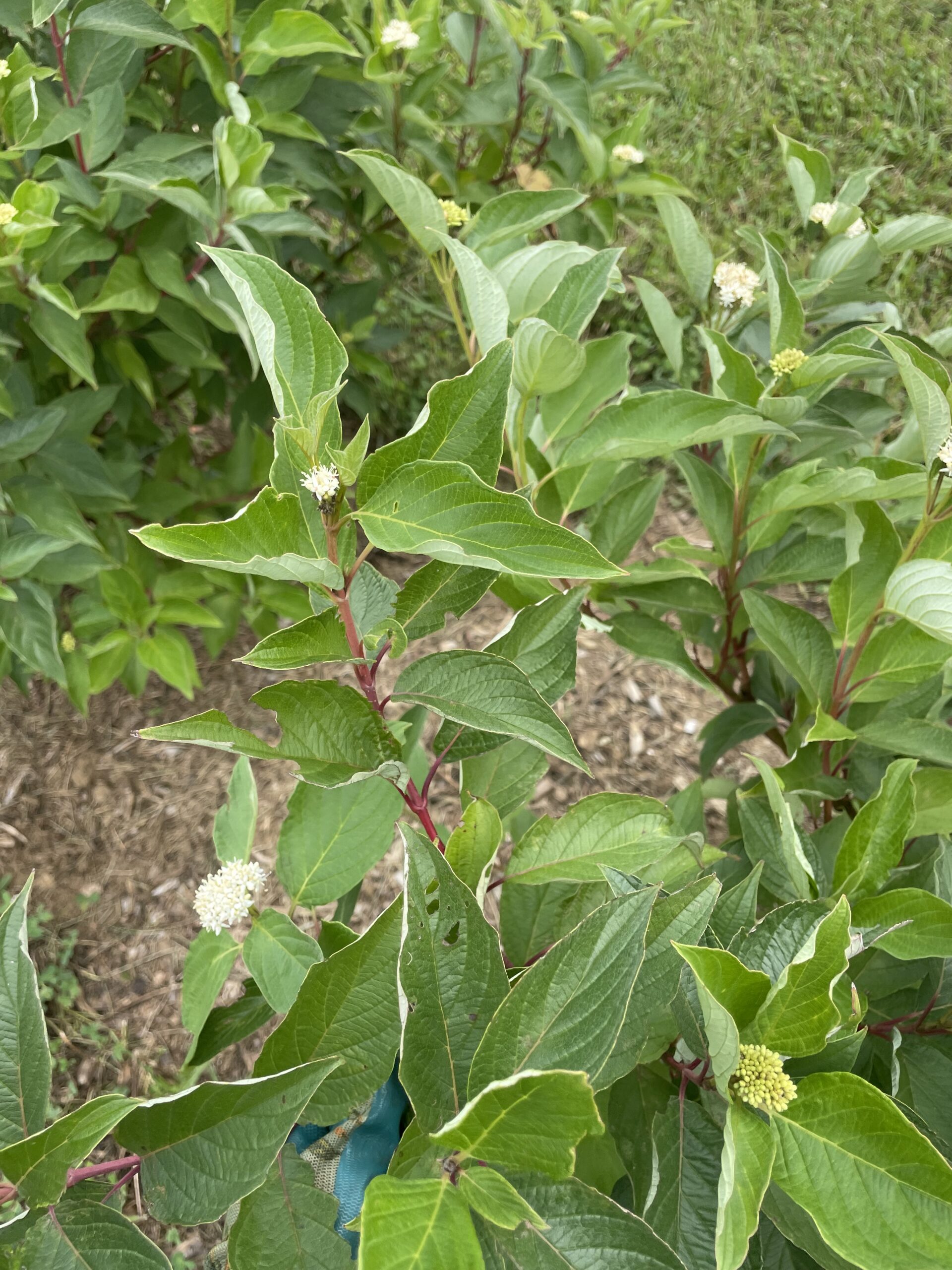
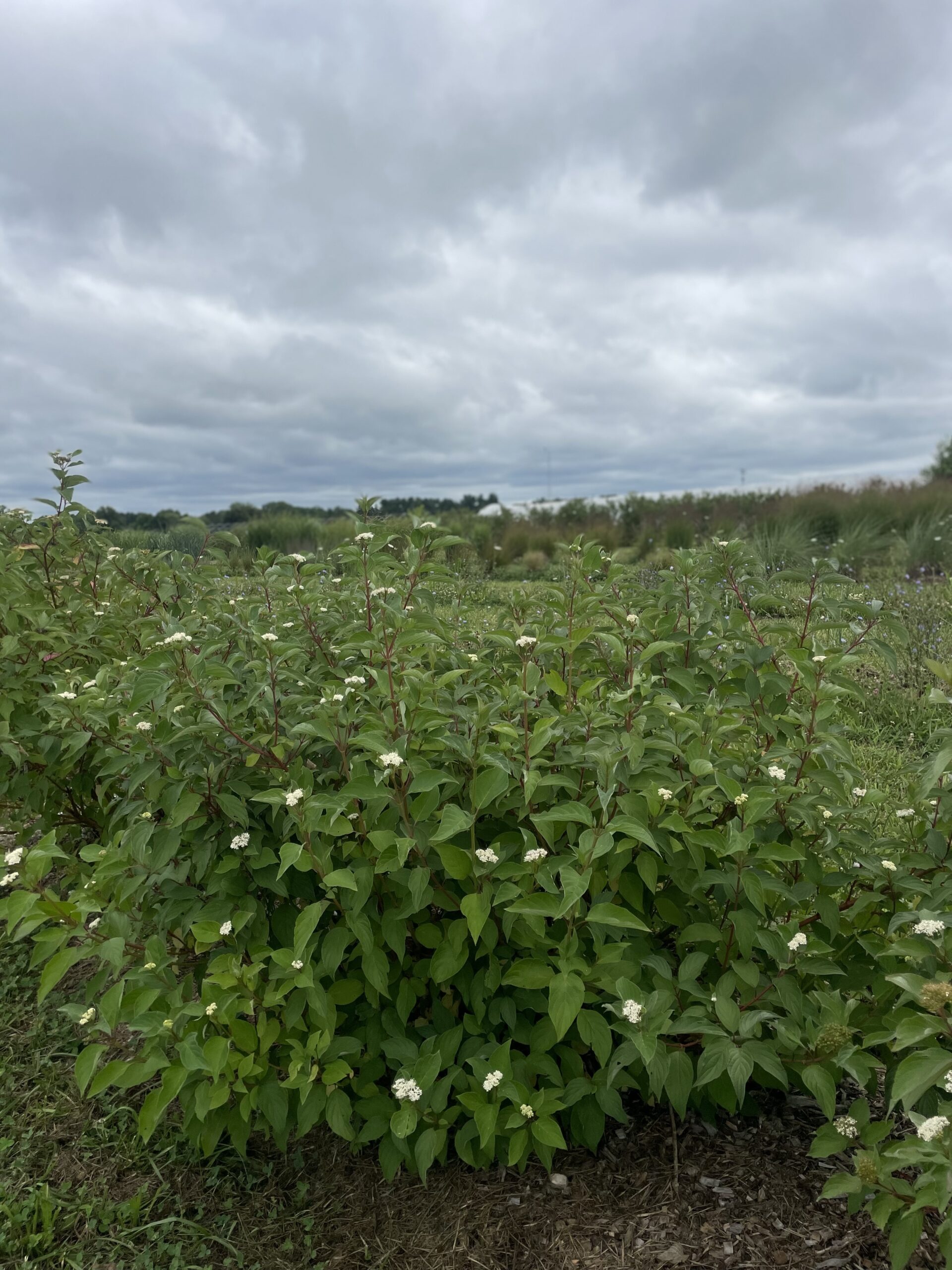
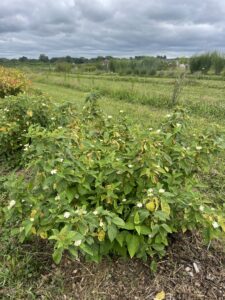
Red twig dogwood is a large, multi-stemmed deciduous shrub most commonly grown for its bright red stems and twigs that are very showy in the winter months. It grows to a height and width of 6-9 feet and is typically found in damp boggy areas, or wetland margins. It is native over a vast region of North America, ranging from Alaska to northern Canada, down across the United States and into Mexico. It features glossy, dark green leaves that turn shades of orange and red into purple in the fall. In mid to late spring it has dense clusters of cream white flowers that are followed by white berries in late summer to early fall (a food source for various songbirds). This plant holds significant ecological value as a larval host for butterflies, and supportive of bees and birds, making it a good addition to a pollinator garden. In landscape it can be used as a form of hedge to provide screen and security in low spots also servicing an element of windbreak planting. The dense cover and food berries are very attractive to birds and other mammals.
Though tolerating a wide range of soil conditions, it prefers organically rich, moist soil in full sun to partial shade. It grows rapidly and will reach full size in 5 to 6 years, in some cases requiring pruning in spring to control size.
Plant Details
- Growing Conditions:
- USA Hardiness Zones: 2 to 7.
- Sun Exposure: Full sun to partial shade.
- Soil Preferences: Alkaline (pH 8.0), Neutral (pH 7.0-8.0), Acidic (p H 5.5-7.0).
- Soil Texture: Clay, Loam, Sand, Organic.
- Soil Moisture: Moist, well drained. Occasional flooding, occasional dry, occasional wet.
- Pruning & Maintenance: The brightest color appears on new stem growth so prune the plant back in early spring for new growth to occur. It may become weedy in some areas due to underground stems; if such is unwanted root prune with a spade.
- Bloom Time: Spring, Summer.
- Recommended Propagation Strategy: Root cutting, seed, stem cutting.
- Straight Species Size: 6-9’ tall x 7-10’ wide.
- Ecological Services:
- Food Source: Fruits provide food to birds and small mammals.
- Cover & Nesting: Nesting site for birds and small mammals.
- Beneficial Insects & Birds:
- Supports the following bees:
- Adrena fragilis
- Adrena integra
- Adrena platyparia
- Supports the following bees:
- Larval Host: Larval host plant to the Spring Azure Butterfly.
- Insects, Diseases or Problems: Red Twig Dogwood can occasionally have black stem cankers on pruned or wounded branches. Borers, leaf miners, and scale are potential pests. Not susceptible to dogwood anthracnose, but under stress conditions can be susceptible to powdery mildew, leaf spot disease, canker, root rot, and leaf and twig blight.
Cultivars:
-
Compact selection with vivid red stems.
3-5’ tall x 3-5’ wide
-
Compact selection with vivid yellow stems.
3-5’ tall x 3-5’ wide
References
- North Carolina Extension. (n.d.). Cornus sericea. North Carolina Extension Gardener Plant Toolbox. Retrieved October 2, 2026, from https://plants.ces.ncsu.edu/plants/cornus-sericea/
- Love, S. (n.d.). Redtwig dogwood in the landscape (Cornus sericea). Native Plants for the Intermountain West, Center for Water-Efficient Landscaping, Utah State University. Retrieved October 2, 2026, from https://cwelwnp.usu.edu/westernnativeplants/plantlist_view.php?id=19&name=cornussericea
- Photos by Talia Gould, Rutgers SAS.