Steeplebush
Steeplebush
Siraea tomentosa
Family: Rosaceae Juss.
Phonetic spelling: spy-REE-ah toh-men-TOH-sah
By Talia Gould
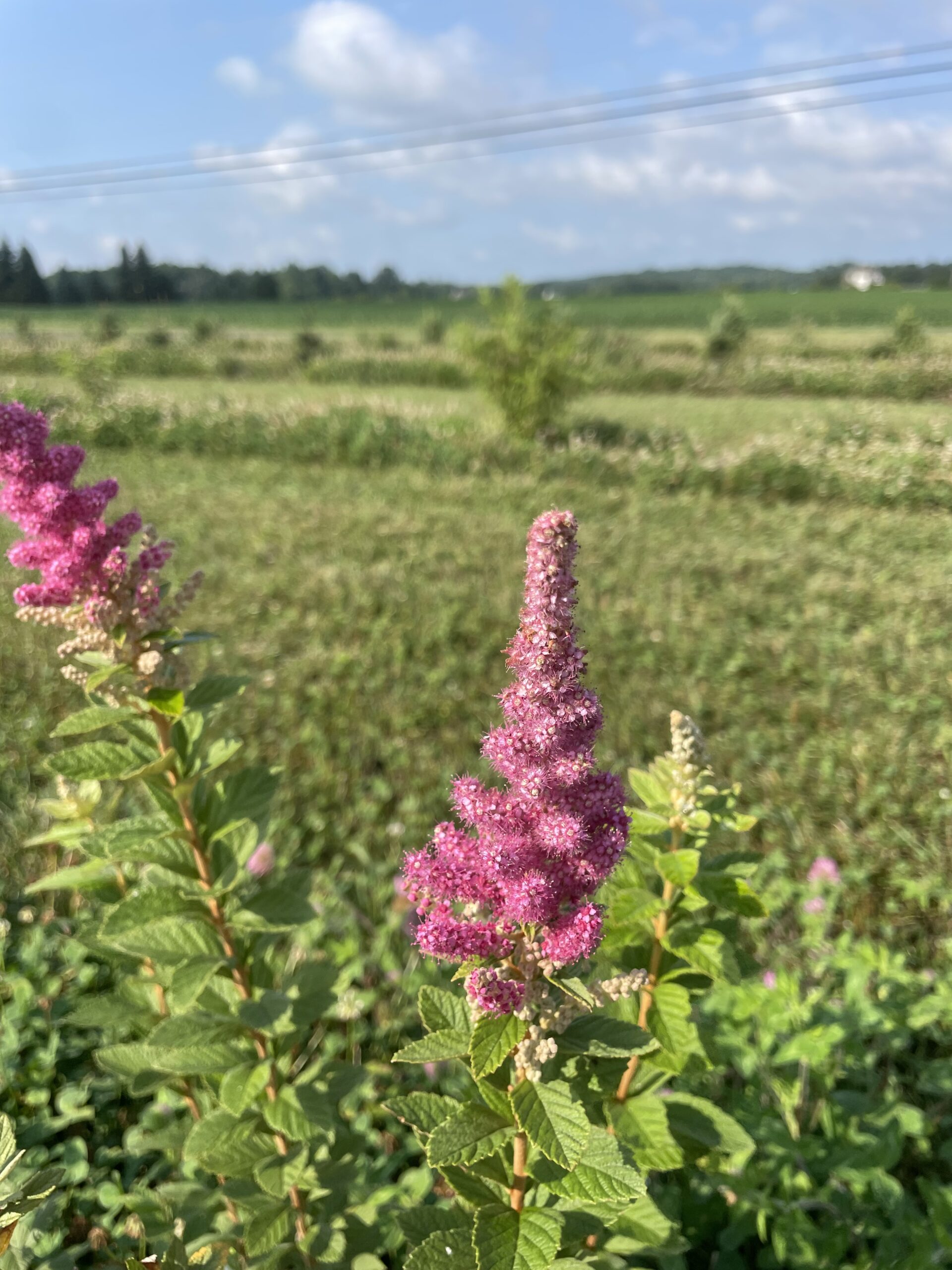

Description:
Steeplebush is a multi-stemmed, suckering, deciduous shrub in the Rose family. In the wild it can be found in wet meadows, marshes, fields and lake margins from Nova Scotia south to Louisiana and Georgia, growing up to 2 to 4 feet tall and 3 to 5 feet wide. Steeplebush features dense medium to dark green leaves that change to a striking golden-yellow or reddish-gold in the fall with tiny pink to rose-purple flowers in tightly narrow steeple shaped spikes that bloom July to September. It has many ecological benefits including support for native bees, butterflies and other significant pollinators. Additionally, Steeplebush serves as a larval host plant for several moths and butterflies. It is deer and erosion resistant.
Steeplebush thrives in full sun and requires moist to wet, acidic soils but is tolerant to a wide variety of soil textures. This makes it ideal for rain gardens, shoreline restoration and wet low spots in yards. The plant flowers on new wood thus meaning it can be pruned hard back to the ground in later winter or early spring to encourage good new growth and heavy blooming throughout the summer.
Plant Details
- Growing Conditions:
- USA Hardiness Zones: 3 to 8.
- Sun Exposure: Full sun (6 or more hours of direct sunlight per day).
- Soil Preferences: Acidic (<6.0).
- Soil Texture: Clay, Loam, Sand, Organic.
- Soil Moisture: Moist, occasionally wet with good drainage.
- Pruning & Maintenance: Requires 3 to 6 feet of available space to plant. Low maintenance.
- Bloom Time: Summer.
- Recommended Propagation Strategy: Stem cuttings, seed, division.
- Straight Species Size: 2-4’ tall x 3-5’ wide.
- Ecological Services:
- Nectar Source: Pink flowers produce pollen and small amounts of nectar that attract native bees, honeybees, bumble bees, syrphid flies, wasps, and long-horned beetles. Adult butterflies visit the flowers for nectar such as the endangered Karner Blue butterfly.
- Food Source: The leaves feed the caterpillars of numerous moth species like the Columbia silkmoth, Scallop Shell Moth, Sharp-Lined Yellow, Blind-Eyes Sphinx, Gordian Sphinx, and Spiraea Leaff-tier moth.
- Cover & Nesting: Provides cover and natural habitat to ground-dwelling birds like the ruffed grouse.
- Larval Host: Larval host for
- New England Buck Moth
- Spring Azure Butterfly
- Insects, Diseases or Problems: No significant problems, it is deer resistant. However, it is susceptible to rose related diseases like leaf spot, fire blight and powdery mildew. Some potential pests include aphids, leaf rollers and scale.
Additional Resources
Steeplebush USDA
References
- North Carolina Extension Gardener Plant Toolbox. (n.d.). Spiraea tomentosa. North Carolina State University. Retrieved October 6, 2026, from https://plants.ces.ncsu.edu/plants/spiraea-tomentosa/
- USDA, NRCS. (n.d.). Spiraea tomentosa L. steeplebush characteristics. PLANTS Database. National Plant Data Team. Retrieved October 6, 2026, from https://plants.sc.egov.usda.gov/plant-profile/SPTO2/characteristics
- Photos by Talia Gould, Rutgers SAS & Bill Errickson, PhD.