Scouting and Diagnostics
Scouting Guidelines, Diagnostic Tools, & Trapping Systems
Routine scouting and precise monitoring shifts pest management from reactive, calendar-based spraying, to target-driven, cost-effective management.
Scouting Frequency, Maps, and Protocols
A structured scouting route ensures that every crop block is inspected at least once every week during active growing windows.
-
Weekly Route Standardization: Divide production acres into distinct blocks. Walk a random “Z” or “W” pattern through container pads and field rows, sampling at least 10-15% of plants per block.
-
Focus on Edge Effects & Microclimates: Pay special attention to field borders adjacent to wooded woodlots (hotspots for ambrosia beetles and spider mites), greenhouse entrances, shade structures, and areas receiving excess overhead irrigation.
-
Record Keeping: Log plant species, crop block ID, pest species, life stage (egg, crawler, adult), severity rating (1-5 scale), and beneficial predator presence.
Field Diagnostic Protocols & Equipment Toolkit
Field managers and scouting personnel must carry a diagnostic kit to make timely on-site assessments.
| Tool | Primary Purpose | Scouting Protocol |
| 10-14X Hand Lens | Identifying armored/soft scale crawlers, aphids, thrips, and mites | Examine leaf undersides, terminal growth tips, and inner stem bark. |
| 20-40X Pocket Microscope | Detecting microscopic Eriophyid mites (rust/gall mites) | Inspect yellowing coniferous needles (e.g., Hemlock) and distorted bud tissue. |
| White Beat Clipboard | Quantifying spider mites, thrips, lacewings, and predatory mites | Hold beneath branches, strike 3-4 times with a stick, count dislodged organisms. |
| Pruning Shears & Knife | Diagnostic stem cross-sections | Slice wilting stems to check for dark vascular staining (Xylosandrus, Phytophthora). |
| Soil/Media EC & pH Meter | Rule out abiotic nutritional stress | Check root zone soluble salts; nutritional scorch mimics mite and foliar damage. |
Trap Deployment, Pheromones, and Monitoring Systems
Traps provide objective population tracking and trigger chemical applications based on pest activity rather than arbitrary calendar dates.
-
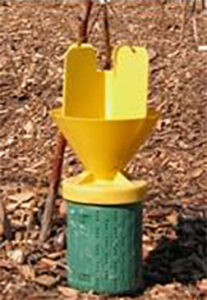
Ethanol-Baited Funnel Traps (Ambrosia Beetles):
-
-
Equipment: 4-to-8 funnel Lindgren traps or homemade ethanol traps, baited with high-purity ultra-ethanol lures.
-
Deployment Date: Hang by early March before degree days reach 70-100GDD.
-
Positioning: Hang 4 to 5 feet off the ground along wooded borders between natural timber and nursery container pads.
-
Action Threshold: Check weekly. Initial flight detection indicates immediate preventative pyrethroid bark spray windows for Xylosandrus spp.
-
-
- Sticky Cards (Thrips, Whiteflies, Fungus Gnats, Scale Crawlers)
-
-
Yellow Cards: Highly attractive to winged aphids, whiteflies, fungus gnats, syrphid flies, and adult parasitoid wasps.
-
Placement: Position cards 2 to 4 inches directly above plant canopies. Space 1 card per 1000 sq ft in greenhouses or every 50 feet along outdoor nursery blocks. Replace weekly.
-
-
Using Growing Degree-Days (GDDs)
Insects and mites are ectothermic, meaning their development is driven by accumulated heat over time, and so the lifecycles of insects are directly correlated with the timing of plant development. Use real-time Growing Degree Day (50 F base threshold) data paired with biological plant indicators (phenology) to predict pest emergence and activity levels throughout the season.
-
7-100 GDD (Forsythia Full Bloom): Southern Red Mite egg hatch, Hemlock Rust Mite emergence, Ambrosia Beetle spring emergence flight.
-
360-700 GDD (Rhododendron Full Bloom): Euonymus Scale crawler emergence (1st generation);,Two-Spotted Spider Mite emergence.
-
1000-1500 GDD (Hydrangea Bloom): Japanese Maple Scale crawlers, Calico Scale crawlers, peak summer warm-season spider mite explosions.
Important Regulatory Note: Always strictly adhere to product label guidelines. THE LABEL IS THE LAW.