Northern Bayberry
Northern Bayberry
Morella pensylvanica
Family: Myricaceae Rich. ex Kunth
Phonetic spelling: Mo-ree-luh pen-sil-VAH-ni-ka
By Talia Gould
Description:
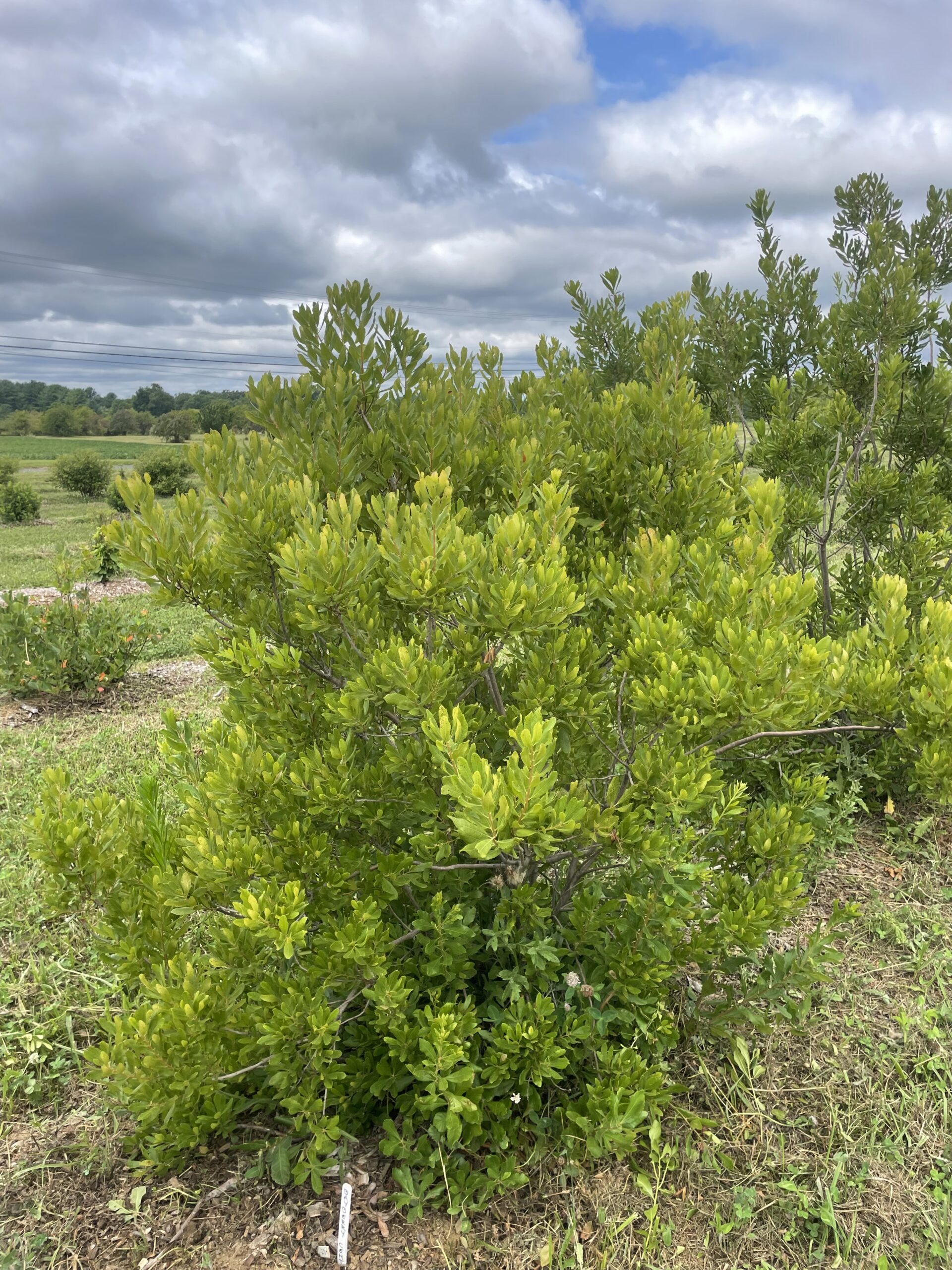
Northern bayberry is a rounded, deciduous shrub that grows to 6-8 feet tall. It is native to North America, specifically eastern Canada, and eastern United States from Maine down to North Carolina. In the wild it can be found in colonies bordering woods, in coastal zones like sand dunes or on wetland margins. The plant features glossy, dark green summer foliage with leaves that are aromatic when crushed. The flowers are yellowish-green on both male and female plants, and female plants contain small waxy-coated grey or white berries along the stem. The winter fruits of female bayberries provide food to many bird species and the bayberry thickets provide nesting sites. This plant requires one male per grouping for pollination purposes and has a symbiotic relationship with actinobacterium, that fixes atmospheric nitrogen.
The Northern Bayberry prefers to grow in full sun and moist, sandy, or acidic soils. It is an extremely tolerant plant to drought, erosion, high winds, poor soils and wet sites and can be very adaptable to different soil conditions.
Plant Details
- Growing Conditions:
- USA Hardiness Zones: 3 to 7.
- Sun Exposure: Full sun to Partial shade
- Soil Preferences: Prefers acidic (pH <6.0) soil.
- Soil Texture: Clay, Loam, Sand.
- Soil Moisture: Moist to average.
- Pruning & Maintenance: Can be pruned but next season’s fruit and blossoms will appear on old growth.
- Bloom Time: Spring.
- Recommended Propagation Strategy: Seed.
- Straight Species Size: 5′-10′ tall x 5′-10′ wide.
- Ecological Services:
- Food Source: Female plants produce waxy, grey-blue berries supplying winter food to native birds
- Cover & Nesting: Serves as a dense structure of cover for nesting sites and for small mammals and birds through intense weather.
- Beneficial Insects & Birds:
- Yellow-Rumped Warbler relies on bayberries to fuel their migration
- Leaves are used by Leaf-cutter bees for their nests
- Larval Host: Columbia silkmoth.
- Insects, Diseases or Problems: No serious insect or disease problems. It is generally deer resistant.
Additional Resources
Northern Bayberry USDA
References
- Jersey-Friendly Yards. (n.d.). Morella pensylvanica: Northern bayberry. Retrieved September 29, 2026, from https://jerseyyards.org/plant/morella-pensylvanica/
- North Carolina Extension. (n.d.). Myrica pensylvanica. North Carolina Extension Gardener Plant Toolbox. Retrieved October 2, 2026, from https://plants.ces.ncsu.edu/plants/myrica-pensylvanica/
- Photo by Talia Gould, Rutgers SAS.