 Bruce Franklin is the owner and publisher of Westholme Publishing, an independent publisher of nonfiction trade books founded in 2003. The press is noted for its distinguished and award-winning titles in a variety of subject areas, including American and world history, military history, ancient and medieval studies, sports, and science, as well as the Journal of the American Revolution. Westholme books are distributed by the University of Chicago Press Distribution Center and are available worldwide.
Bruce is also a good friend of mine and has published two of my books, Mrs. Goodfellow: The Story of America’s First Cooking School and The Thousand Dollar Dinner and will publish my next book, America’s Tavern: Drink, Debate, Food, and Fight at the Heart of the Nation’s Founding, about Philadelphia’s City Tavern restaurant. So I know him well! He had mentioned to me recently about how some of his historically focused books were being removed from certain locations, and with Banned Books Week this month, it made me think about getting a publisher’s point of view on banned and challenged books. I reached out to Bruce to see if he would do a little Q&A with Books We Read. He graciously agreed!
BWR: Hi Bruce! Please tell us a little about your background, e.g., past jobs, experiences.
BF: I grew up in the Philadelphia area; spent a year in India after high school on a Rotary scholarship; applied to college from India, where I was accepted to the University of Pittsburgh main campus as a “transfer student in nursing.” No idea how that happened, but I ended up meeting one of my best friends that first day who was a student worker at the office where they sorted out that kind of thing. I majored in linguistics, graduated, and got a full ride to the University of Chicago in their PhD program.
 BWR: You are the founder and publisher of Westholme Publishing. What gave you the idea to found a publishing company? How did your prior experiences impact this decision?
BF: As a graduate student at Chicago, I got a part-time job, by chance, at the front desk of the production department at the university press. Over the course of about a year, I segued from academia to a full-time position at the University of Chicago Press. (I saw the writing on the wall about careers in linguistics!) There is no school for publishing, so I was fortunate to be able to learn about the business from a top-tier press. From there I moved back to Philadelphia and worked for the University of Pennsylvania Press, first in their production department and then their marketing department. While in the marketing department I began a trade paperback imprint for the press. During this period I began thinking about how cool it would be to start a publishing company. (Probably a fantasy every person in publishing and book selling has had at least once.) I now had experience in how books are made (critical for anyone who wants to embark on starting a publishing company), acquiring them, and how they are marketed—distribution channels and other aspects of product availability. With naïve optimism, I went ahead and ordered one thousand ISBN numbers. I had to come up with a name for the press and decided on Westholme, an obscure geographical term. So I had ISBNs, a press name, but no books. That was in late 2002.
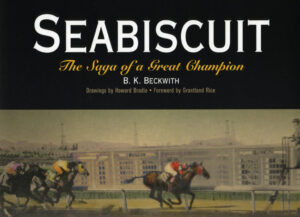
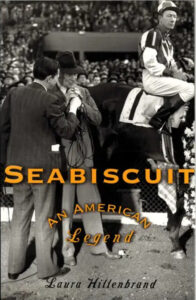 A summer or two before, I happened to have bought at a flea market an old book on the thoroughbred Seabiscuit for my wife Laura. In early 2003, it was announced that the bestseller Seabiscuit by Laura Hillenbrand would be coming to the big screen. My wife and I planned to see the movie, but before we did she insisted I read the book first. I began to read Hillenbrand’s book and recalled the old one I had found; curious, I looked at the notes and the first one was to the book we had. I did a bit of research and it turned out that I had essentially the only copy. It was in the public domain, so I decided I would be a fool if I didn’t reprint it to coincide with movie. Fortunately I had already bought those ISBNs!
I worked with various contacts to set up the entire process so that Laura and I were able to fulfill orders right from our house. Publishers Weekly ran a story and our bet on a long dead racehorse enabled me to take the leap (and insane risk!—we had a baby girl by this time!) to starting my own publishing house. I had to go into my boss and let him know that the PW article was coming out and that I was going to resign to begin this venture. We remain good friends. What transpired between that time and when Westholme had its first full season a year later was getting projects in the pipeline, a combination of reprints and commissioned titles, sketching out a few seasons of books, and securing a proper distributor.
 The latter was crucial. It just so happened that the University of Chicago Press Distribution Center was looking for a small nonfiction trade house to distribute—and as I was a known entity, they took me aboard. Like any small business, you have to do as much as you can yourself. I taught myself how to design and typeset books on a desktop computer. Timing is something you can’t predict, and page layout had just transitioned from the pasting up mechanicals with wax which would then be photographed and turned into printing plates to a computer program where a layout could be designed, saved as a pdf, and emailed to a printer. I could never have started a company if book production was still the old way or if I relied on an outside agency to design and set the interiors.
BWR: You are kind of a “one-man-show” within your company. Run us through a normal day as a publisher.
BF: Westholme is built around what I decide to publish, but I have been working with the same team, most of them for almost twenty years. The team developed quickly through contacts and recommendations to encompass all of the key components in the production of a book: copy editing, jacket design, cartography (when necessary), proofreading, and indexing. My team hails from across the country: New York, Indiana, Illinois, Kentucky, California, Iowa, Oregon, Virginia, South Carolina, and Oklahoma. Each day I review all of the books in the current season, each are usually at a different stage in production. I also review emails and sort these by priority. A key workflow strategy is to create blocks of time devoted to a particular task. This way things get completed and you can avoid having too many things going at the same time in different stages of completion. It doesn’t always work out that way, but it does provide some structure.
BWR: I can imagine it is so satisfactory to be your own boss but also can be challenging as you have to deal with things on your own. What are some of the highs and lows of this setup?
BF: There aren’t many lows, thankfully, but you always have to be aware of cash flow since it is what keeps things going. In publishing, there is a lag time—sometimes up to four months—between when a book leaves the warehouse and when we get paid. So managing the dollars is an ongoing job. Another challenge is the demand on my time—I receive proposals and various queries continually, so setting aside time to address these while working on projects can be difficult, particularly during the busiest times of a season. The highs have always been seeing a project going from an author’s idea to a finished book in the market. I really enjoy when our authors receive great reviews and other accolades for their work. A publisher can bring such added value to a project and I am pleased that our authors consistently indicate how happy they are to have worked with this press.
BWR: You launched your business in 2003. How has the publishing industry changed during this time?
BF: As I mentioned earlier, the transition in how book pages are produced was critical to creating this company in the first place. Notable changes have been the loss of chains like Borders and bookstores in general as well as smaller wholesalers. The rise of Amazon coincided with Westholme and that changed book buying habits. There was a moment at the advent of eBooks when many thought the book industry would flip like the recording and movie businesses to a mostly virtual experience, with books existing as electronic files to be read on a phone or computer. But something different happened: eBooks opened a new market in book consumption for those who loved to read but were no longer able to read a printed book due to issues with eyesight. With an eBook’s ability to change type sizes or to be read out loud via a mechanical voice, marginalized readers rejoined the world of books. Also travelers who still enjoy print books were able to bring books with them on their devices—not abandoning print books but complementing them with eBooks.
BWR: How many books have you published since then? What are some of the highlights for you?
BF: From the single Seabiscuit reprint, Westholme has grown over the past twenty years to having about 300 distinct active titles in multiple formats (hardcover, paperback, and eBook) in many subject areas, mostly history. I have many favorites, including the The Thousand Dollar Dinner by Becky Diamond, Stealing the General by Russell S. Bonds, Sitting Bull by Bill Yenne, To Raise Up a Nation by William King, The Unexpected Abigail Adams, by John Smith—so many!

BWR: Now I want to talk about banned and challenged books. You publish mainly history-focused books. Have any of these been banned, removed or challenged in any way? If so, how have you handled that?
BF: Apparently, Wives, Slaves, and Servant Girls: Advertisements for Female Runaways in American Newspapers, 1770–1783 by Don N. Hagist is on a list from the National Park Service of books to be removed from stores. There may be others. The current administration is taking umbrage on any reference to slavery or other issues that don’t paint the United States in a fully positive light. I don’t think there is much you can do, frankly, to re-curate these public bookshops at this time, but perhaps the attention any title may get from being banned could increase interest and promote the fact that censorship and book banning is not a Patriotic exercise.
BWR: How does the idea of people banning and challenging books affect you as a publisher? Care to share any personal feelings about this?
BF: I don’t think about it at all in making publishing decisions. Any publisher who publishes a book that is challenged or banned understands that it is not that the book is unavailable, it is just being targeted or removed from a public venue—it can be procured elsewhere. This can be a source for publicity, noting how anti-American book banning is, and if it is a great book, it will find its audience. The primary issue is not the individual books, but the idea of book banning in general—that is what needs to be addressed—that censorship is not an American ideal.
BWR: How do you think book banning will affect the future of publishing?
BF: It don’t think it will affect it at all, really, unless the next step is to have fully state-controlled publishing, but I think we are a very long way from that. We have gone through this same thing in the past. It is sad, but that hasn’t stopped publishers from producing books that they think are important, helpful, and affirming for readers. It is important to make censorship known, and it looks like folks are doing that. We have a problem though when other groups of citizens support these bans.
BWR: Do you have a favorite book that has been banned?
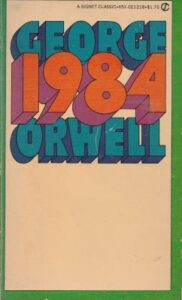
BF: I haven’t read any of the today’s most challenged books (looking at the ALA list). I do have favorites that have been banned in the past, such as George Orwell’s 1984.
BWR: Any words of advice for aspiring authors who want to break into a writing career?
BF: For nonfiction, make sure you are familiar with source material, as well as what has been written before on the subject. Take lessons from writers who you admire—how do they present a story. Consider your subject: is it something others would find interesting? And be very honest with yourself about that.
BWR: What do you think the future holds for you as a publisher? Where do you see yourself and the company in the next 5-10 years?
BF: I have a lot of terrific books in the pipeline. I hope I am answering another series of questions from you in the future!
- Read more about Westholme Publishing and their upcoming books on their website. This is how you can get in touch, some recent news and a link to their book catalogue.
And here is how to find some Westholme books at Rutgers!
- The caning : the assault that drove America to Civil War by Stephen Puleo
- Coming through fire : George Armstrong Custer and Chief Black Kettle by Duane Schultz
- New Jersey : a military history : the third state of the Union by Joseph G. Bilby.
- Sioux War dispatches : reports from the field, 1876-1877 by Marc H. Abrams
- The Thousand Dollar Dinner: America’s First Great Cookery Challenge by Becky Libourel Diamond
For the full list, click on this link!