
October is National Disability Employment Awareness Month, or “NDEAM,” celebrating the value, talent and contributions workers with disabilities bring to America’s workplaces and economy. This year is NDEAM’s 80th anniversary of focusing on recognizing the positive impact of people with disabilities in the American workforce. NDEAM 2025 will recognize the value and talent American workers with disabilities add to our workplaces and economy and highlight their achievements both past and present. That’s the spirit behind this year’s official theme: “Celebrating Value and Talent.” Books We Read is publishing a series of blog posts throughout the month to help promote and honor this initiative, including books highlighting disability-related topics and books by authors with disabilities, including this post highlighting disabilities featured in children’s and young adult books.
***
I have always enjoyed children’s and young adult books. Understandably, they impacted me when I was a child and teenager – I have written about this for Books We Read in reference to Judy’s Blume’s books. But I also loved reading them with my kids when they were young, taking pleasure in sharing the joy of reading with them, while also using books as a parenting tool. I was sad when my children “aged out” of this bedtime ritual! I also just like reading youth and children’s books for myself and discover and revisit books in these genres even now as an adult in my 50s.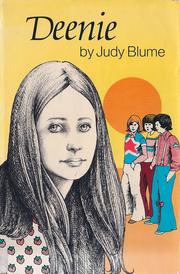
Two books in particular made a big impact on me in my youth. One was by the previously mentioned Judy Blume. I have adored all of Blume’s books, but I’d like to discuss Deenie here. In this book, the lead character Wilmadeene “Deenie” Fenner, is a thirteen-year-old whose overbearing mother who wants her to be a model. But when Deenie is diagnosed with adolescent idiopathic scoliosis, she has to wear a full-body brace, dashing her mother’s modeling aspirations and leading to Deenie’s emotional struggles, self-acceptance, and growing independence from her mother’s expectations.
The story explores themes of body image, dealing with a visible condition, and family dynamics, as Deenie learns to cope with her scoliosis and finds strength in her relationship with her father and sister. This gave me such empathy as a child and a realization and admiration of Deenie’s bravery. I was so angry at the character of her mother not understanding and selfishly wanting Deenie to be something else. Many teens can relate to similar themes, if not regarding their parents, than regarding other adults or even peers. It was a really helpful glimpse at someone my age with a disability. In addition, Deenie’s character helped me cope with feelings of self-pity and loathing. When I was three, I had to have plastic surgery on my arm and have a visible scar still today, which was even more prominent then. People would often point it out and ask questions about it, and not necessarily in a kind way. So reading about Deenie’s courage in overcoming how society can be cruel and unaccepting and how she handled it was very helpful.
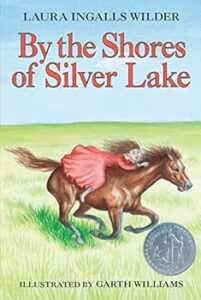 The other book that really resonated with me (well actually the whole series did) was By the Shores of Silver Lake, by Laura Ingalls Wilder (one of my favorite writers ever and definitely my favorite children’s book author). The fifth book in her famous “Little House” series, this is where Laura describes her sister Mary becoming blind after a bout of scarlet fever, a fact which serves as a major plot point and emotional catalyst for the family’s decision to settle in one place. Pa asks Laura to “be Mary’s eyes,” leading to Laura’s maturation as she describes the world to Mary. While the book states scarlet fever caused the blindness, it is now generally thought that the actual cause was more likely viral meningoencephalitis.
For the rest of the books in the series, Laura explains how she was “Mary’s eyes,” vividly describing colors and other imagery for her sister (which I think probably contributed to her gifted descriptive prose). Last year I wrote about blindness for one of my Books We Read posts for NDEAM, highlighting the unfortunate stigma that continues to exist around blindness even though blind people are a vital part of society. As a child I had such admiration for Laura and her kindness and unselfishness in doing this for Mary. It was helpful to realize and understand the powerful connection between families and the variety of different things we do for them out of love.
Children’s and youth books that feature a character with a disability or other condition can be so beneficial to young readers, helping them see they are not alone if they have a similar issue (or know someone who does). They can also help create and foster sympathy for others and provide an understanding around differences.
Some other children’s and youth books to check out:
Picture Books
- The Girl Who Thought In Pictures by Julia Finley Mosca
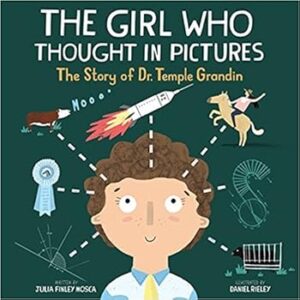
Tells the story of Dr. Temple Grandin, a renowned scientist with autism, and her journey of defying expectations.
- Hello Goodbye Dog by Maria Gianferrari
A heartwarming story about a girl who uses a wheelchair and her special bond with her dog.
- Just Ask by Sonia Sotomayor and Rafael López
A popular book where children with various disabilities, including diabetes and blindness, share their experiences.
Middle School and Young Adult Books
- Out of My Mind by Sharon M. Draper
A powerful story about Melody, a brilliant girl with cerebral palsy who cannot speak but has a deep inner life.
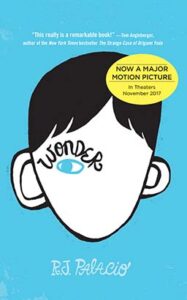
- Wonder by R.J. Palacio
Follows Auggie Pullman, a boy with a severe facial difference, as he navigates starting middle school.
- The Hank Zipzer Series by Henry Winkler and Lin Oliver
Features a protagonist who has a learning disability and struggles with traditional schooling but excels in other areas.