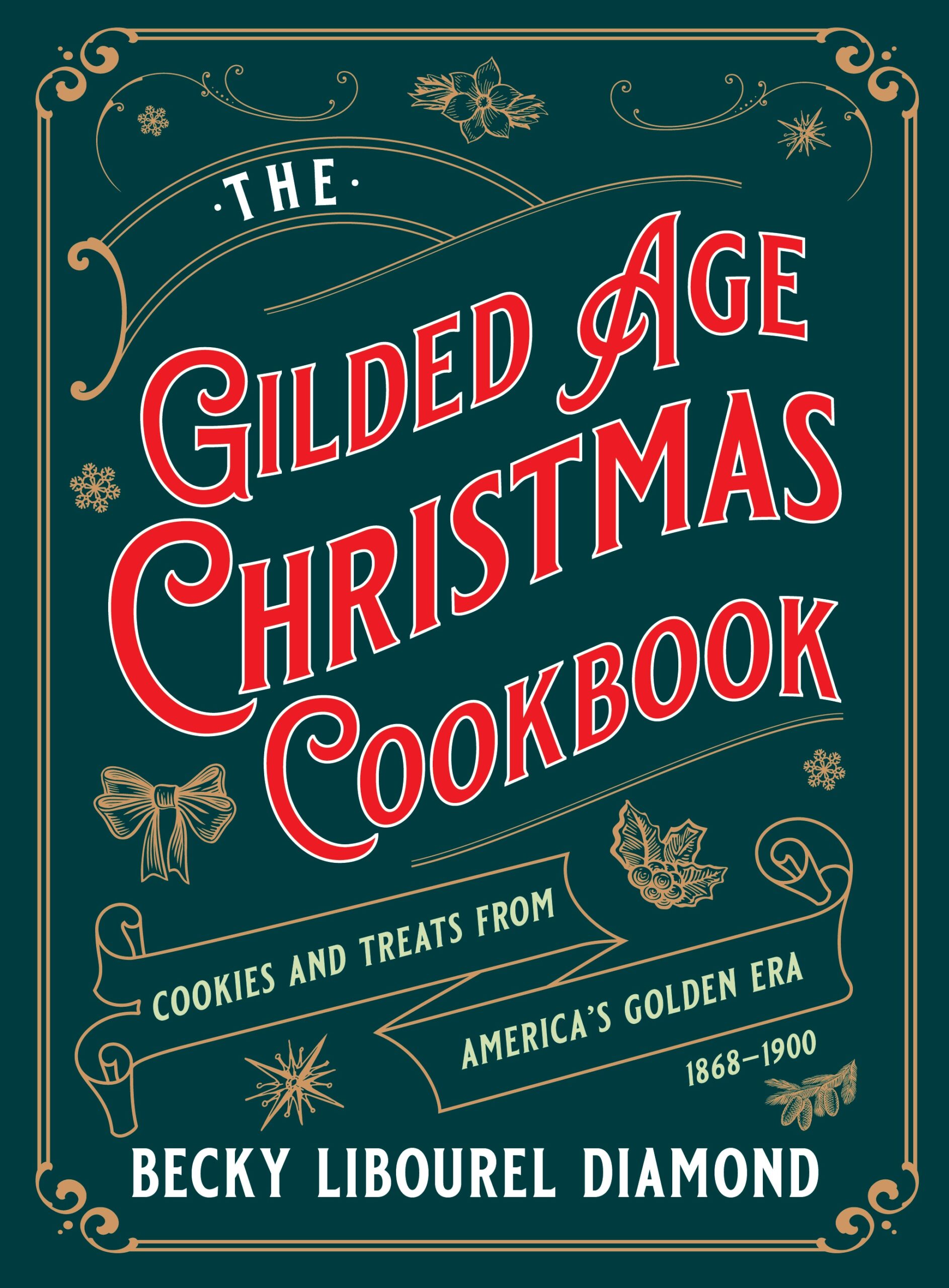
Interview with Becky Diamond, author of the The Gilded Age Christmas Cookbook
Becky Diamond is the Business Librarian at Rutgers University Libraries–New Brunswick, bringing valuable experience from past roles at Dow Jones, Korn/Ferry International, Johnson & Johnson, and InfoDesk. At Books We Read, we are fortunate to have her as a co-owner of our blog. Becky has contributed over 50 posts, many of which explore themes related to food and cookbooks. A food writer and blogger since 2008, Becky has published several books blending culinary interest with historical research: Mrs. Goodfellow: The Story of America’s First Cooking School and The Thousand Dollar Dinner, followed by The Gilded Age Cookbook.
Congratulations on your new book, The Gilded Age Christmas Cookbook! We are always excited to see Rutgers authors published—especially when they are our colleagues. At Books We Read, we are honored to continue our conversation with you (on writing food history and an interview after the publication of your third book) about this latest addition to your historical cookbook series.
BWR: How does the new book fit into your work as an author? While it clearly maintains your focus on the Gilded Age, it also reveals a deeper pattern, your appreciation of history and historical research, presented through the topic of food.
BLD: Well, an idea for a holiday cookbook based on Gilded Age recipes had been brewing for a number of years – ever since I started to focus on the nineteenth century as a timeframe for historic food. Originally, the book started out as a Christmas Cookie book and then evolved into including other holiday treats. It was a natural “companion” to the Gilded Age Cookbook. I actually would like to do a “trilogy,” with the final book on Gilded Age teas and parties. I feel so much of our history can be learned through food, and it is my hope this cookbook serves to both educate and entertain readers.
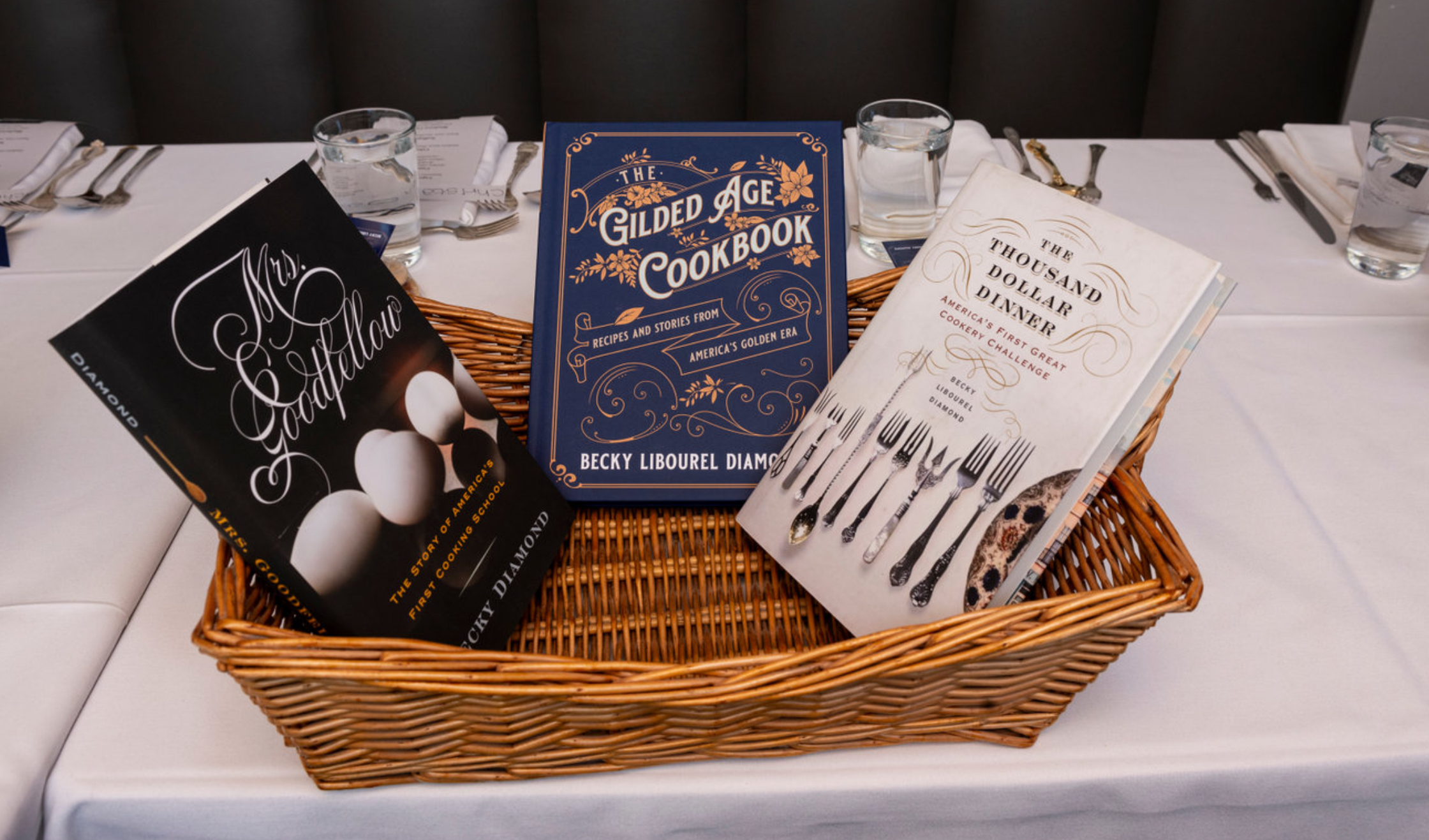
BWR: How does this book compare to other Gilded Age cookbooks, including yours and those by other authors? What are a few distinctive features that set your book apart from other historical cookbooks in this genre?
I think it is the combination of historical facts, stories about the food, recipes, and the Gilded Age in general. Several people have told me that they have read the book from cover to cover (like a regular book) and really enjoy the format, photos, and other imagery. In addition, I have taken the time to recreate the historic recipes, complete with easy-to-follow instructions, so that cooks can make them at home in their own kitchen.
BWR: Yes, that’s me, reading it from cover to cover! However, it will also serve as a valuable reference book. As a fellow librarian engaged in historical research, I admire your dedication. From idea to publication, planning, writing, editing, cooking, experimenting, and photography, your work is truly impressive. I’m curious how library resources have shaped this project and supported your research.
BLD: Knowing which sources to search and how to craft search statements is key when doing the research for my books. It is very helpful to have access to the wealth of resources available at Rutgers, such as the ProQuest Historical Newspapers, ProQuest One History, America’s Historical Newspapers, the Gilded Age and Progressive Era, and Nineteenth Century U.S. Newspapers. I also have a subscription to newspapers.com, and there are many “free” resources out there, including Google Books, Library of Congress, the Internet Archive, and HathiTrust, which have been very helpful. All of these resources have allowed me to track down period articles and recipes from places such as Ladies’ Home Journal, Peterson’s Magazine, Good Housekeeping, Collier’s Once a Week, Godey’s Lady’s Book, The New York Times, The Philadelphia Inquirer, and The Washington Post.
BWR: What were the biggest challenges in researching the Gilded Age, and how did you navigate them? Given your extensive experience with primary sources, archives, and history databases, how did your skills as a librarian help you overcome these obstacles?
BLD: I think the biggest challenge regarding resources was that many do not have images that correspond with the recipes or food or other topics being described. It is difficult to write a sidebar about the historical celebrations or recreate a recipe or without the imagery of the finished product. The images that are available are often drawings, not photographs, and any photographs that I did happen to find are often hazy and not very helpful. Also, just finding images in the public domain to include in the book was challenging, but I have bookmarked a collection of them over time and refer to them over and over. These include Wikimedia Commons, Google Images, New York Public Library Public Domain Collections, Library of Congress Digital Collections and Flickr Commons.
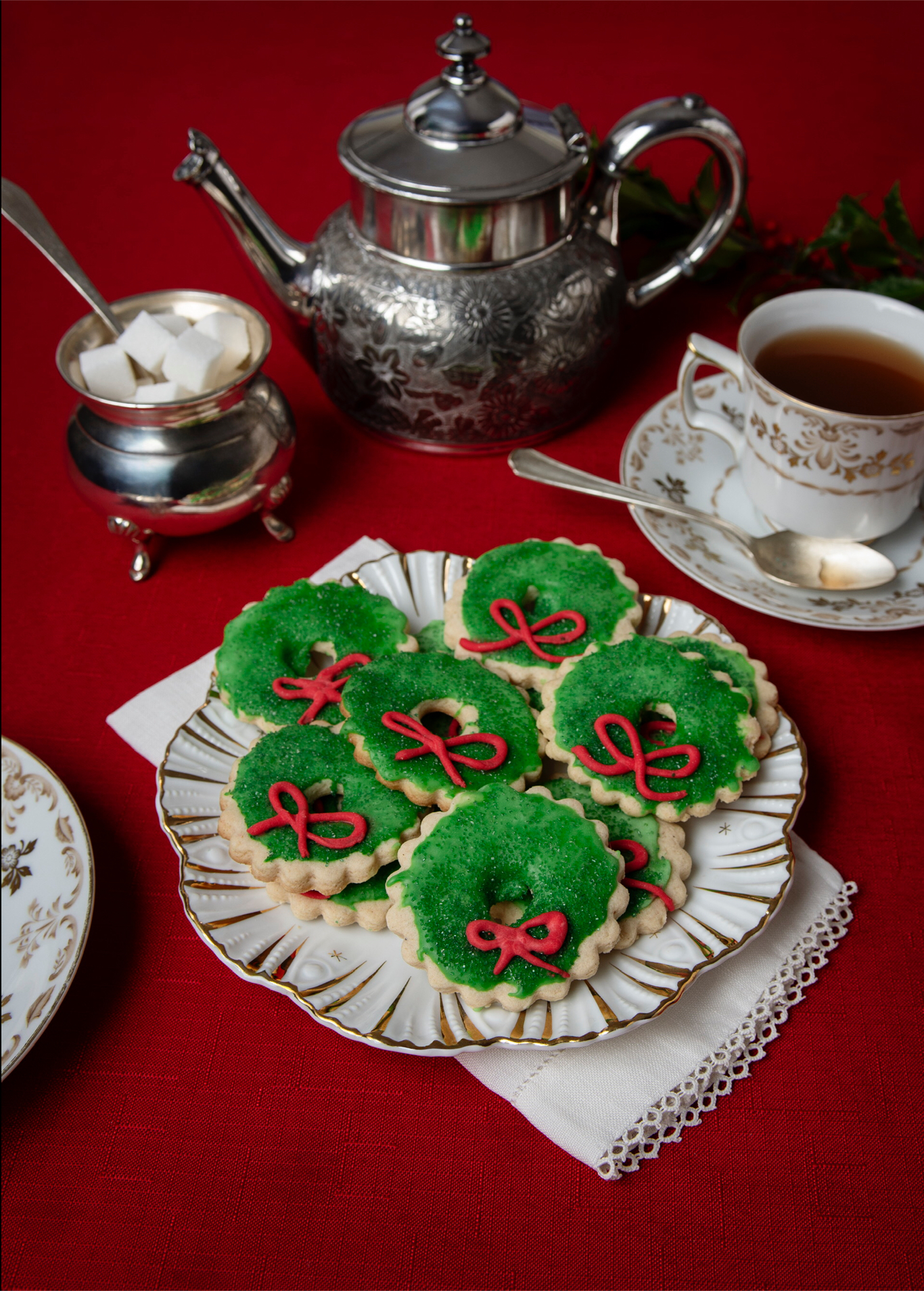
Holiday jumbles
BWR: For those who didn’t have a chance to take a look, the book is not just a collection of recipes. It also chronicles Christmas traditions, staged amidst period tableware, Christmas trees, Santa, and captured by stunning photography, just like in your previous Gilded Age cookbook. How did you gather all those props to create such an authentic holiday vibe?
BLD: Many of the props have been given to me by my mother and have been handed down in my family for generations. In addition, my friend Laura (wife of Bruce Franklin, whom I interviewed for a previous Books We Read post!) has a huge collection of antique dishware and let me browse and borrow from that. I also have a good friend and fellow historian, Dan Macey, who is a talented food stylist and has a sizable assortment of authentic props that he let me borrow (he also wrote several sidebars for the book and helped as a consultant on several photos). In addition, I looked at as many historical images as I could to track down other props such as Christmas stockings, tablecloths, etc., and which greenery would have been used (holly, evergreens, mistletoe). Luckily, I have several pine trees, ivy vines, and holly bushes in my yard that I could choose from.
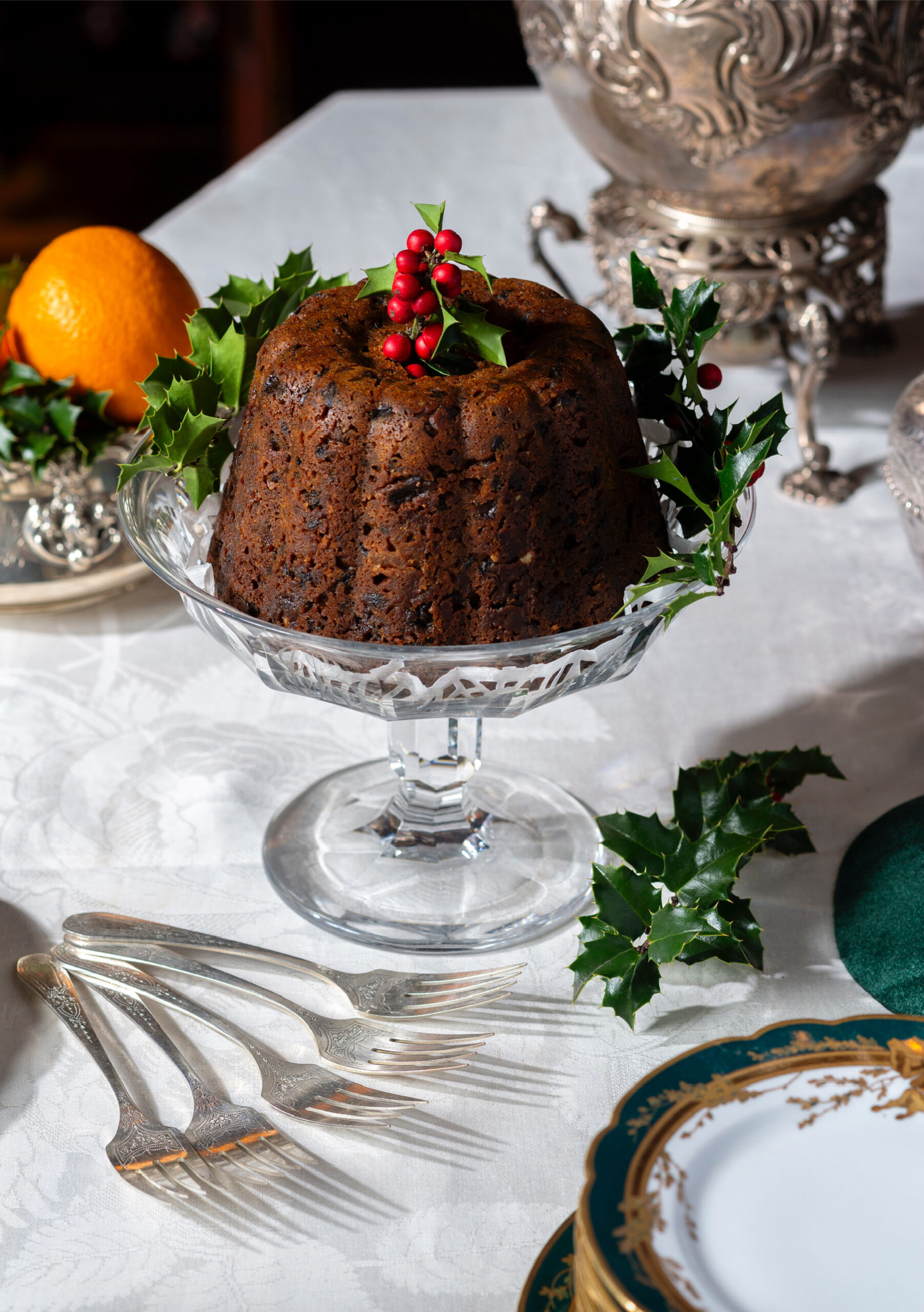
Plum pudding
BWR: I was delighted to discover recipes for Hanukkah and New Year’s Eve, in addition to Christmas. I love macaroons, presented as a treat for New Year’s Eve, along with dessert fruit and chocolate wine. I’m guessing calorie counting wasn’t a big thing in the Gilded Age. As a librarian who supports the Department of Nutrition at SEBS, I have to ask: how do you view these rich holiday treats from today’s nutritional perspective?
BLD: Yes! The recipes are not what we might consider “healthy” today! Especially Plum Pudding, which contains suet (the fat surrounding the kidneys of sheep or cows). Since I view these recipes from a historical perspective, I try to be as authentic as possible in terms of recreating them for the reader. So I try not to concern myself with the amount of butter or eggs contained in some of the recipes. In this cookbook, they are all treats, so they are meant to be consumed as exactly that – special indulgences. I think people expect this around the holidays anyway. Having said that, I did pivot on the recipe for Mince Pie, including ingredients for a “mock” version without meat, which I think is more appealing for modern palates.
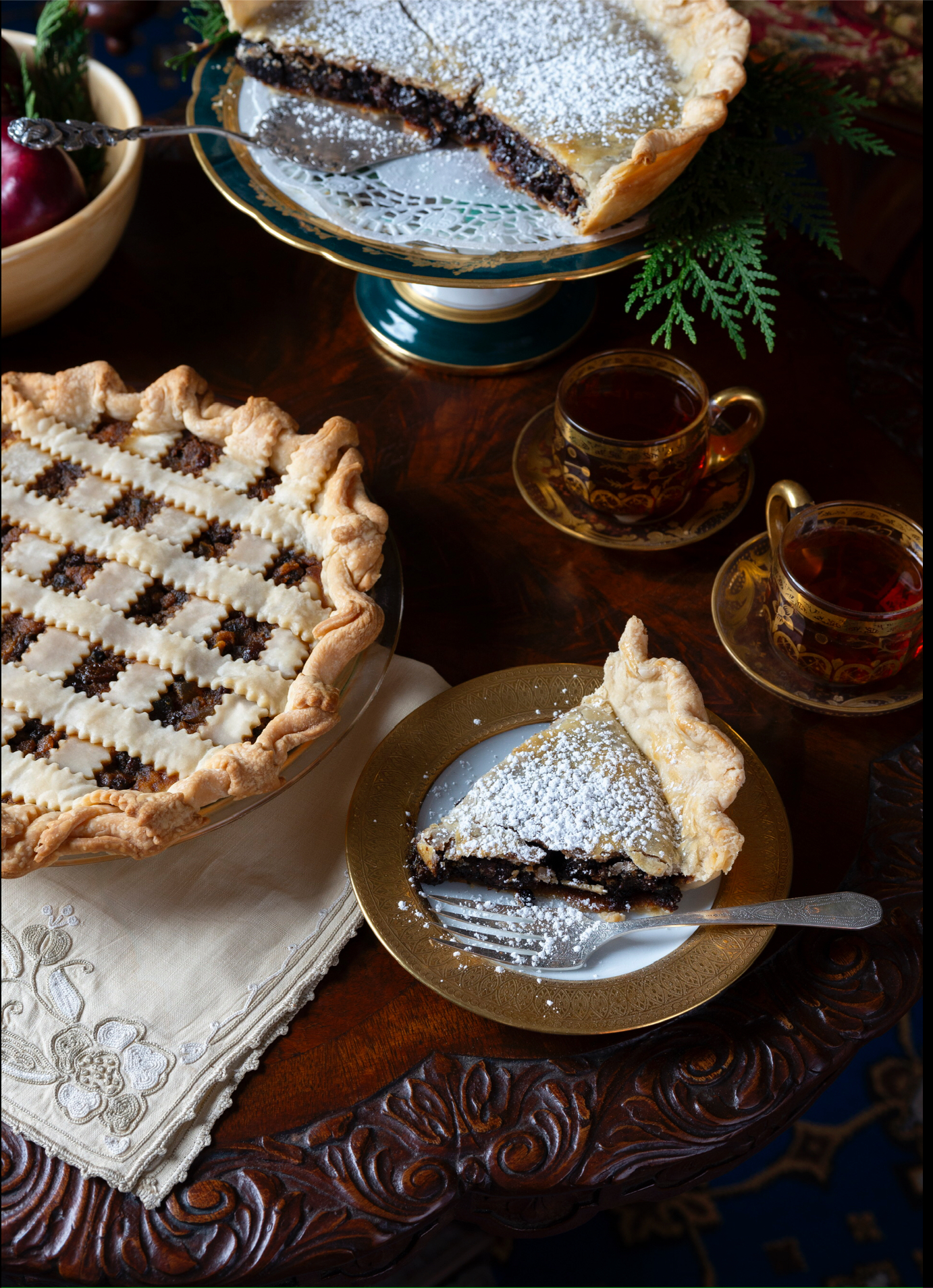
Mock mince pie
BWR: We have talked about this before, but I think readers will really appreciate your tips on ingredients and techniques—especially now that they are front and center in the book. I consider myself a pretty good cook, but when I moved to the U.S. over 25 years ago, I was surprised to find that many of my go-to recipes didn’t work the same way. I thought I had lost my touch, but it turned out I just needed to adjust to the ingredients here. That came to my mind when I saw how you adapted traditional European recipes for modern American kitchens. Can you share more about your process for testing and developing these recipes?
BLD: Yes! Not only ingredients can be slightly different globally in taste and texture, but measurements as well. It is quite a bit of tweaking and kind of “backing into a recipe.” I see how a recipe has evolved over time, looking for similar ingredients and slight changes in techniques. So sometimes it is a matter of using several different recipes to land on the correct ingredient combination. Measurements can be the trickiest, since in the nineteenth century a recipe might call for a “wineglassful” or “dessertspoonful” of liquid. They also often call for more eggs since eggs were smaller then and leavening agents were “new” at the time, so the amount of baking powder or soda might not be the same as today.
BWR: One thing I really appreciate in your recipes is the focus on natural ingredients, especially the creative alternatives to artificial food coloring. Many of those dyes are tightly regulated or even banned in Europe, so it’s great to see healthier options. Based on your research, what are some practical ways to swap additives for more natural ingredients?
BLD: Food colorings are definitely one area you can do this. You can actually purchase naturally derived food colorings in the grocery store or a specialty store or make your own as I suggest in the cookbook. I looked at a number of different historic resources and modern recipes to come up with mine. Using a basic frosting as a base, I experimented with a variety of ingredients such as spinach (for green), turmeric and lemon juice (for yellow) and cherry juice and strawberries (for pink). The trick is not to carry over these flavors to the icing, but most of the time there isn’t enough of the ingredient to do so. You can pretend you are doing a chemistry experiment – extra fun for kids! It is also nice to use real flavorings and extracts such as lemon juice and zest, vanilla, and rosewater. The taste is worth it!
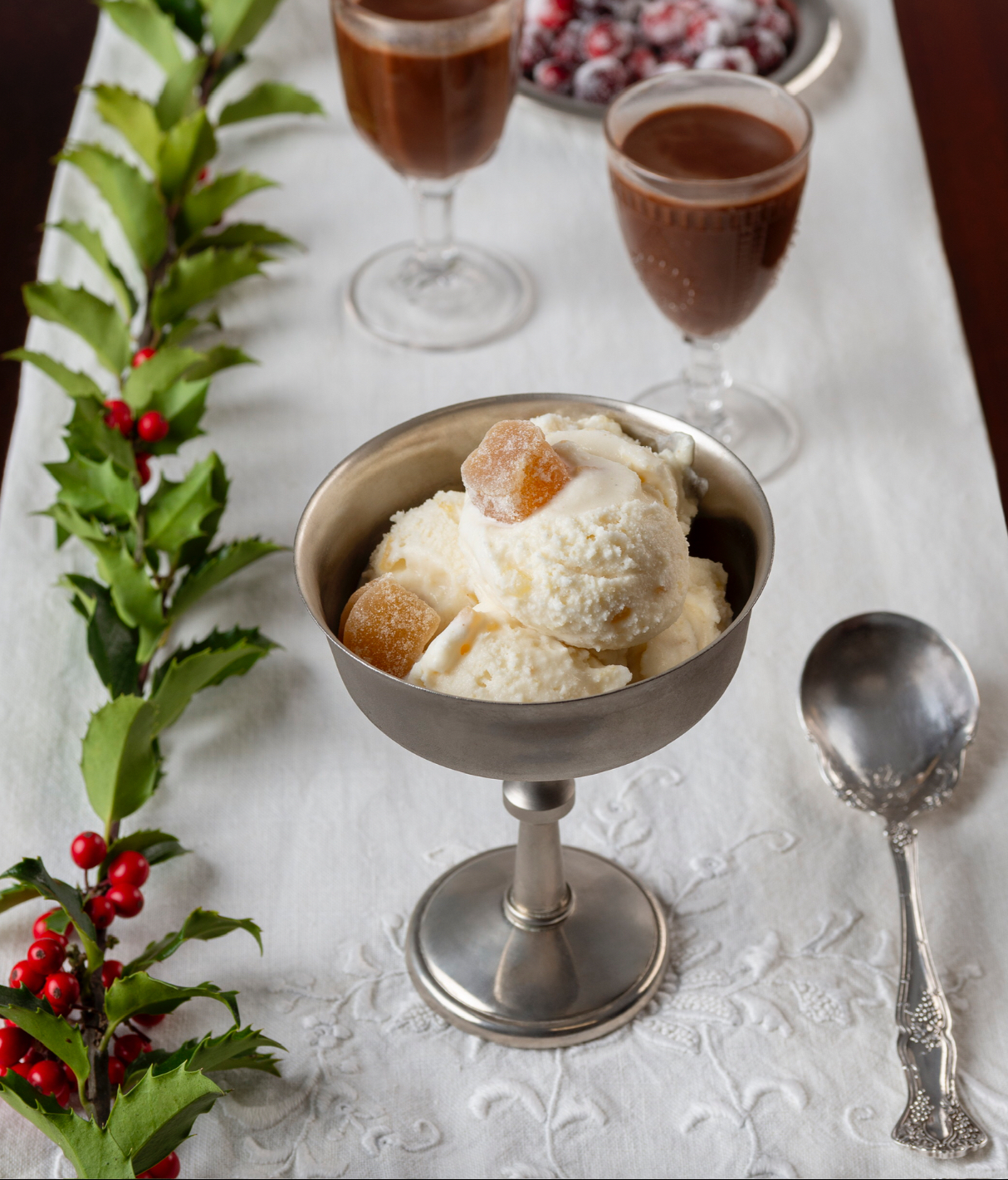
Ginger ice cream
BWR: I can’t believe that you added cupcakes! I bet they were not called cupcakes in the Gilded Age, but with their small, convenient size, they must have been great people pleasers at that time, too. Which reminds me to ask, what is your favorite recipe in this book and why?
BLD: So, fun fact: The term “cup cake” was actually first mentioned in print by nineteenth-century food and etiquette writer Eliza Leslie in her first cookbook, Seventy-Five Receipts for Pastry, Cakes and Sweetmeats (1828). But it really didn’t enter the common vernacular until later in the 19th century. They were often called small cakes or Queen Cakes. I think my favorite recipe in the book is for Ginger Ice Cream. Ice cream is one of my favorite foods, and ginger is one of my favorite spices, so a double whammy for me! I was really proud of the way this recipe turned out. The original recipe called for preserved ginger, but I modified it to incorporate a triple play of ginger preserves, crystallized ginger, and ground ginger, resulting in a deliciously spicy-sweet flavor and texture.
BWR: We at Books We Read really benefit from your social media experience—especially how you share and promote your books and related events. It is clear that staying active online teaches a great deal and keeps you sharp. What advice would you give to new authors looking to promote their work on social media? How should they select platforms, plan their content, and pace their postings?
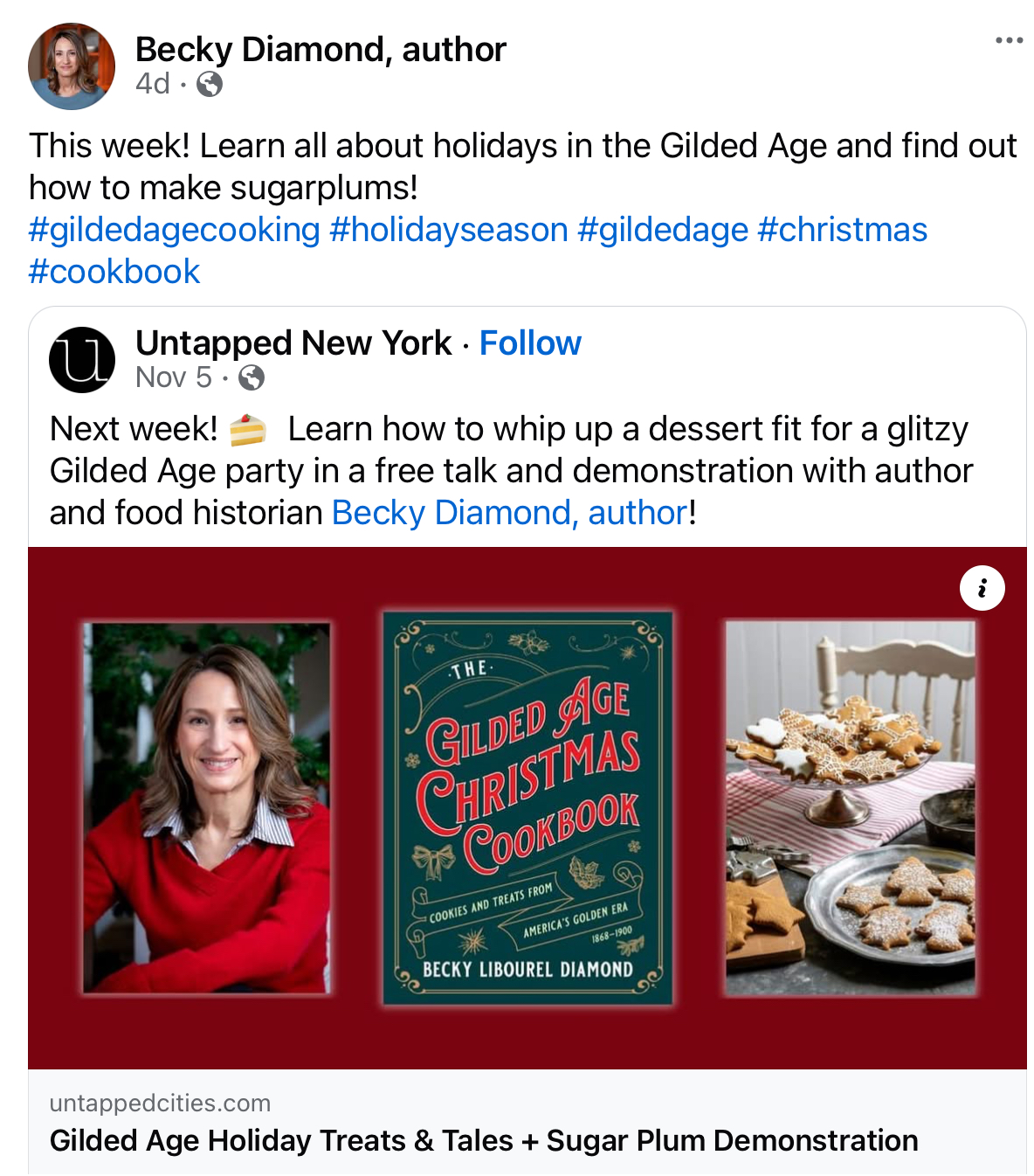 BLD: I think it depends on the main demographic of your readers. For example, I know the most common social media platform for much of my content is Facebook, so I make sure I post there. I actually have two pages – my personal one and an author page, and I typically post on both. It is easy enough to post on one and then share to the other. I have also started to do some Facebook ads, which seem to work pretty well (and I can dictate how much I’d like to spend). I also post on Instagram, TikTok, and LinkedIn. I have hired my daughter’s friend to help me do reels, which she posts on TikTok and Instagram, and then I can repost on Facebook and/or LinkedIn. The reels do seem to help with engagement. I only do about one a week since more than that can be overkill (plus I don’t have the time)!
BWR: We are looking forward to your presentation at SAPAC in early December. Too bad that it is online, no Christmas cookies to test! See, we know that you host Gilded Age-related events, which are far more than just simple author talks. Could you tell us a little more about them, including where they are held and what exactly is happening there?
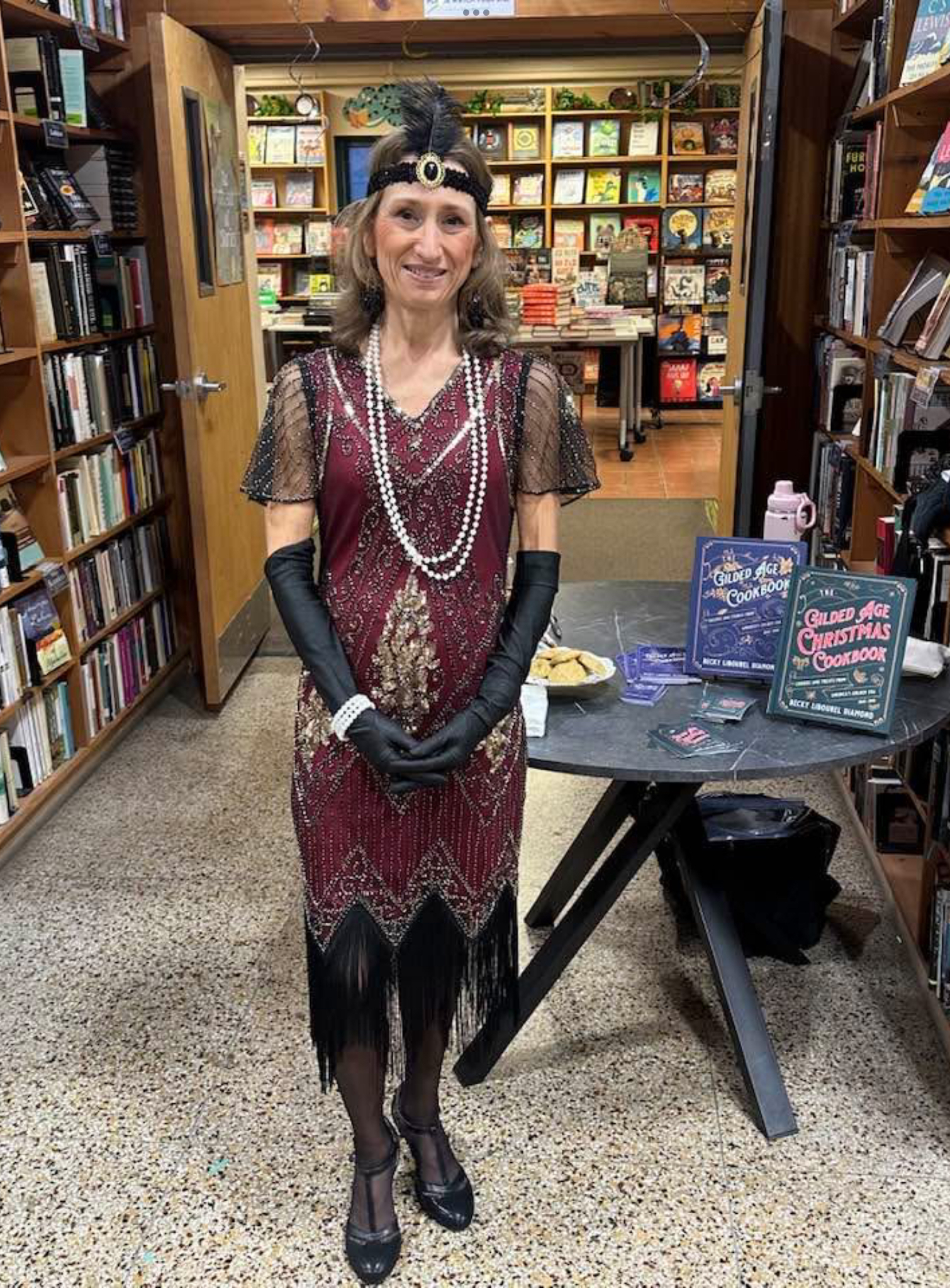 BLD: This is one of my favorite things about being an author! It is so fun and rewarding to go to different places and meet all kinds of people who are also interested in the intersection of food and history. As I have expanded my network of contacts, I have also increased and diversified the types of events to encompass talks on a variety of food-related topics, podcasts, radio and TV appearances, author Q&As and food demos. This has included a Gilded Age Experience Weekend, A French Influence in Newport Symposium, and Baking Demos at the Mill City Museum in Minneapolis. I have had the honor of visiting many beautiful Gilded Age mansions and other historic sites over the years and meeting other culinary enthusiasts and experts. I count myself lucky to have these experiences! You can see my full event listing (upcoming and past) and pics here.
BWR: We always love asking this one at Books We Read: What’s your best advice for new authors just starting out? (Besides the classic “just keep writing,” of course!).
BLD: Well, that is helpful to do! I suggest writing something every day, whether in a journal, blog, etc. But also getting to know your target audience. There are so many different book genres, and each has a different demographic. Using author events and conferences to network with fellow authors, publishers, and others in the industry can be very helpful. Getting an agent can help too, especially with getting access to publishers and helping negotiate contracts. Also knowing how to use and navigate AI. These tools can be very useful in helping flesh out outlines and proposals and condensing text for presentations; but don’t use it for the actual writing. You need to keep your voice and convey your thoughts.
BWR: Thank you for your time. We hope this book will make Christmas special for many, just like your parents did for you. I loved the dedication in the book!
BLD: Thank you so much for your interest and very thoughtful questions! Have a wonderful holiday season!
Photography by Heather Raub/FrontRoom Images
Related posts
Interviews with Becky Diamond
- Books We Write: Writing Food History
- Books We Write: Historic Recipes and Stories from the Gilded Age
Holiday Cooking