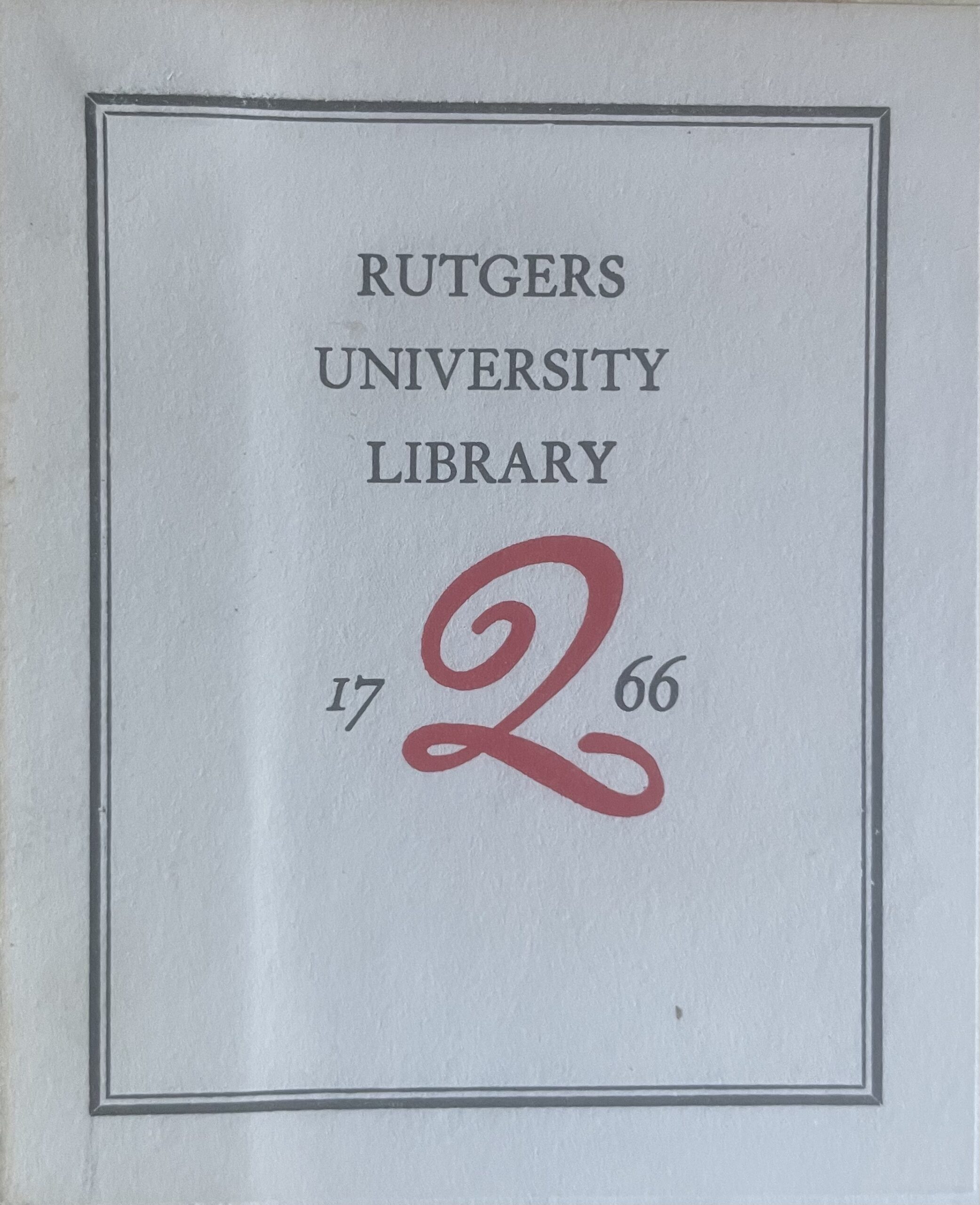
 No longer in fashion, a bookplate, or Ex Libris, used to function as proof of ownership, whether private or institutional. The phrase “Ex Libris” comes from Latin, meaning “from the books (of),” an inscription denoting the proud owner or holding library. Bookplates, over time, developed into their own forms of art, with intricate designs, making them highly popular collectible items.
Successors of bookplates
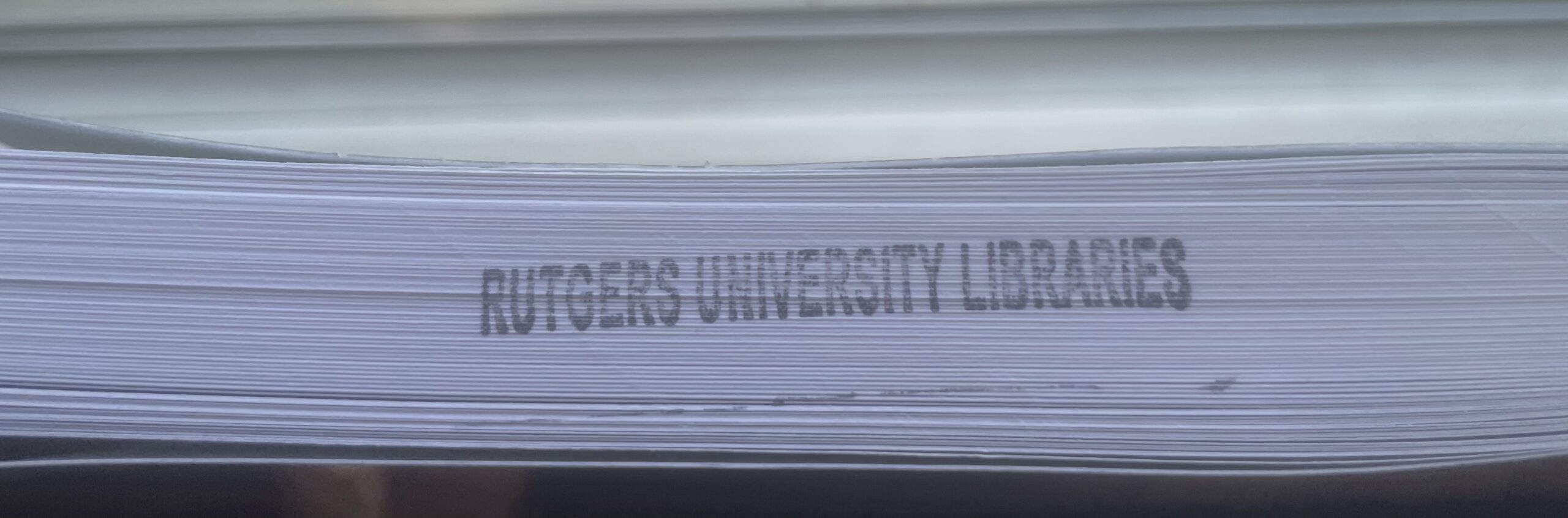
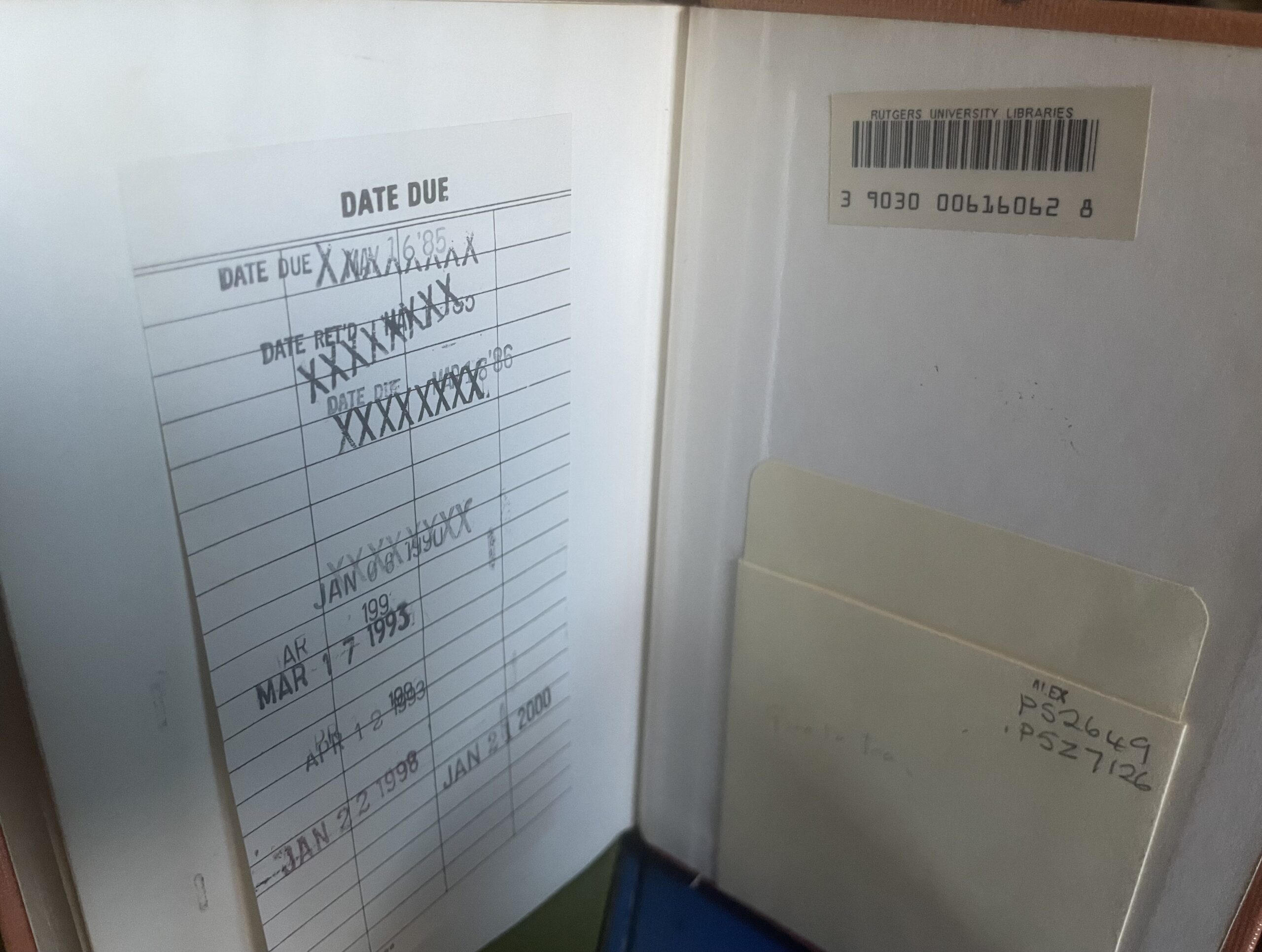
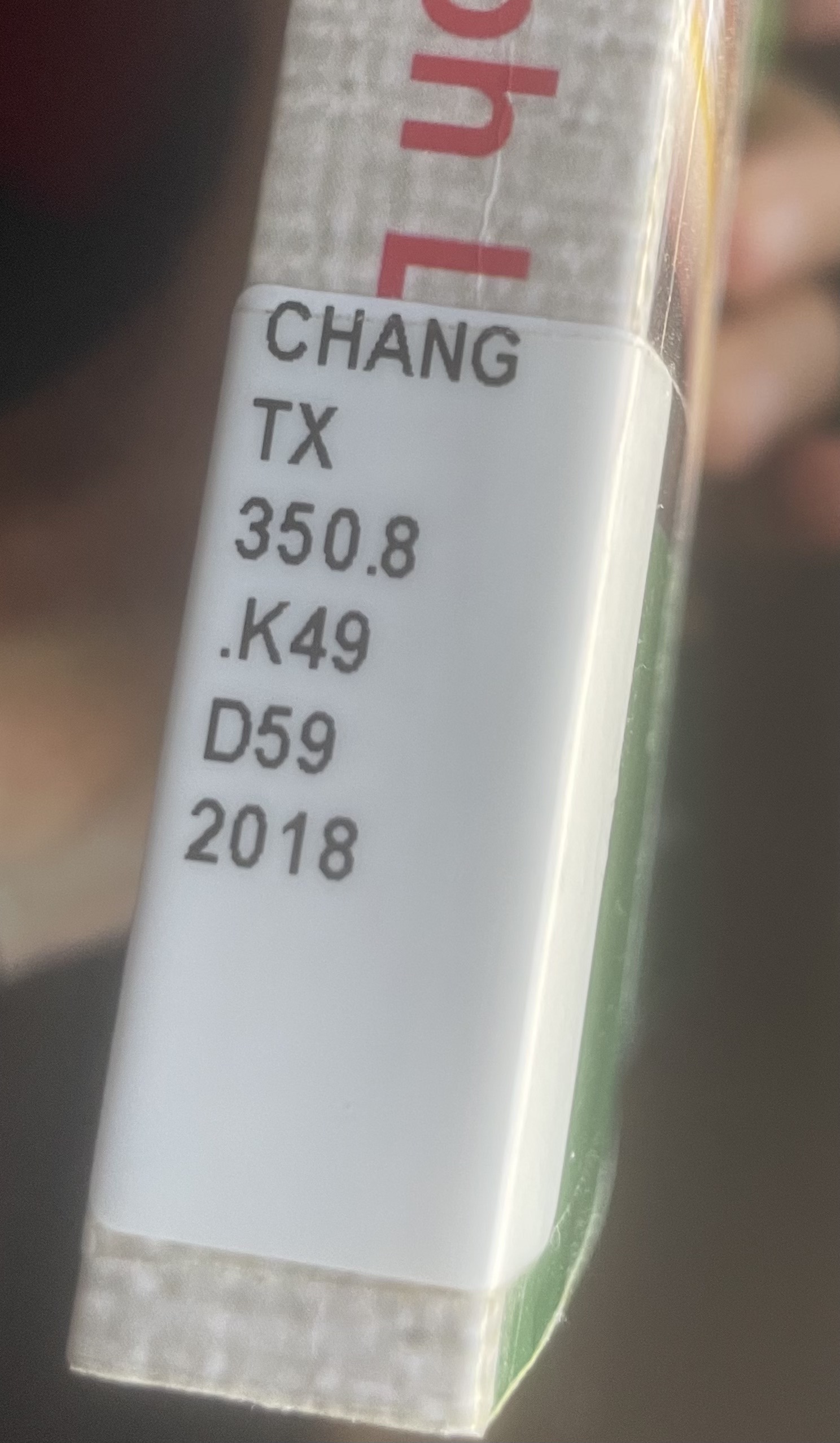 Some of the various physical markers that replaced bookplates are still in use, such as property stamps with the institution name, labels with a call number, and barcodes on book spines or inside covers.
Others are obsolete, such as due date slips, but can still be found in older books.
Looking at bookplates as pioneers of anti-theft measures, tattle-tape security strips and RFID (Radio-Frequency Identification) tags embedded in books can also be considered as their successors, along with many other, systemwide, digital solutions, such as Integrated Library Systems and online catalogs with a unique item identifier for each book. Modern technology makes electronic checkout for users faster and inventory management for the library easier.
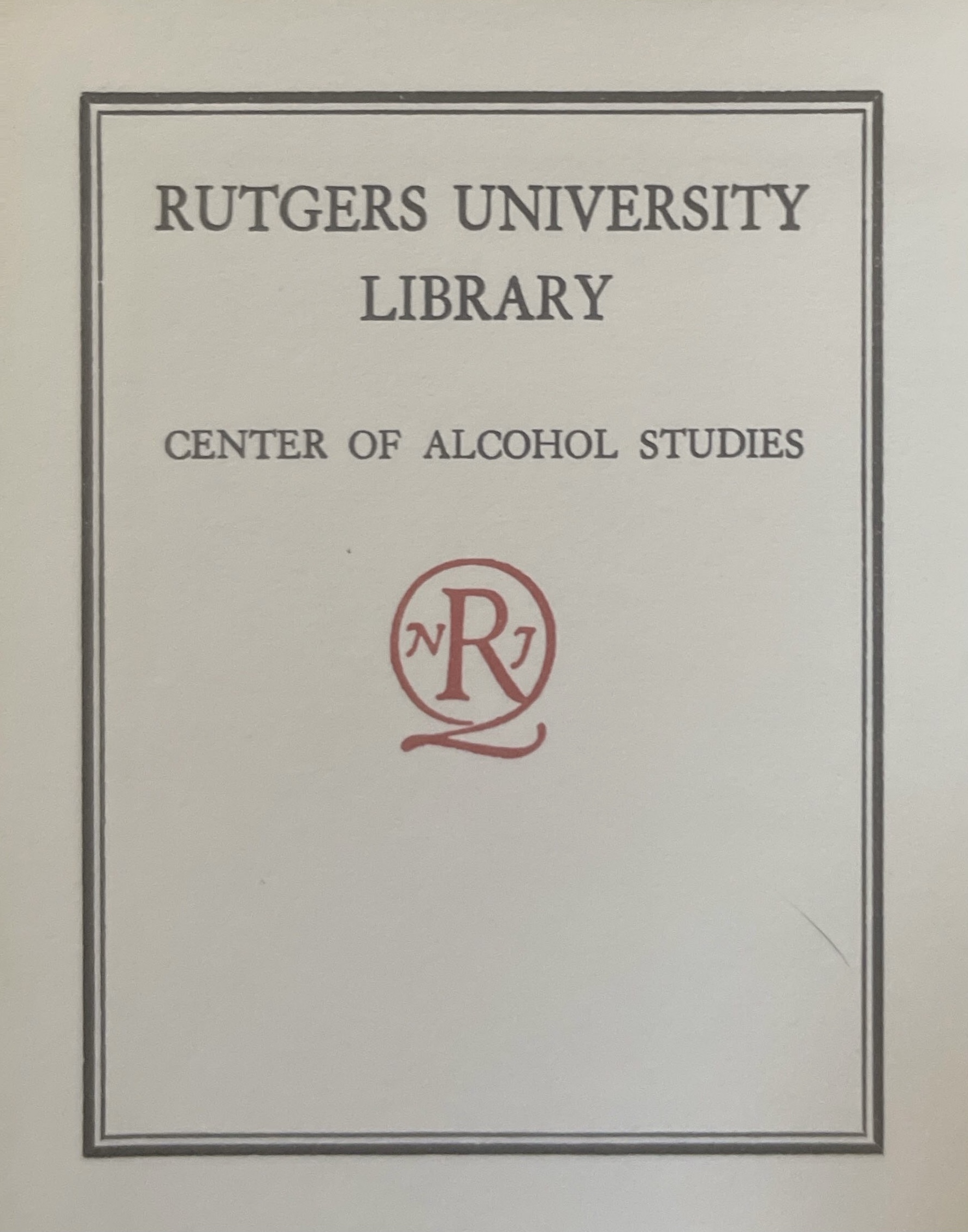
The Center of Alcohol Studies Library
Even though the shift from bookplates to modern solutions resulted in efficient circulation workflows and better theft prevention, it’s just so heartwarming to spot one of the time-honored Center of Alcohol Studies bookplates in the RUL Collection, which currently hosts all books related to alcohol studies, after the independent Alcohol Library in the Adele and Brinkley Smithers building was closed in 2016.
The Center of Alcohol Studies Library had its roots at Yale University, as the collection was built on the publications amassed for Research Council on Problems of Alcohol funded by the Carnegie Foundation. The project to collect, index, and abstract alcohol literature started in 1939 at the New York Academy of Medicine, then brought to Yale. Designed and developed by the original Documentation and Information Division at the Section of Studies on Alcohol at Yale, the Classified Abstract Archive of the Alcohol Literature was the first tangible product.
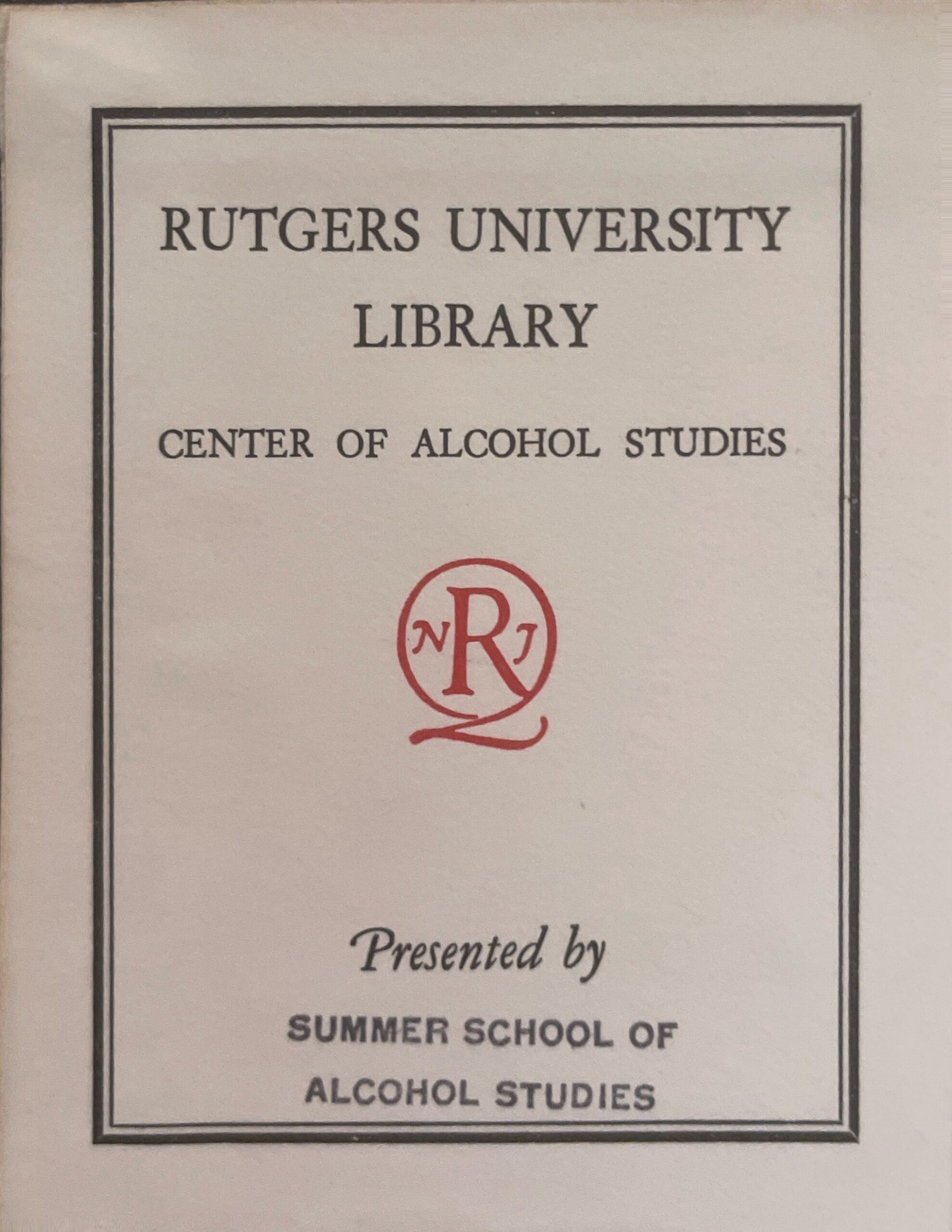 Although any published work collected for the project was cataloged, indexed, and abstracted, and a separate library space existed by 1959 at Yale, a dedicated Alcohol Studies library emerged only at Rutgers, after the move from Yale in 1962. Various fragments of the collections were first used for the Summer School of Alcohol Studies in the summer of 1962. The library started operating as a fully functioning unit in the Christopher Smithers Hall on the Busch Campus after the building’s official dedication in 1964.
Bookplates at the Center of Alcohol Studies Library
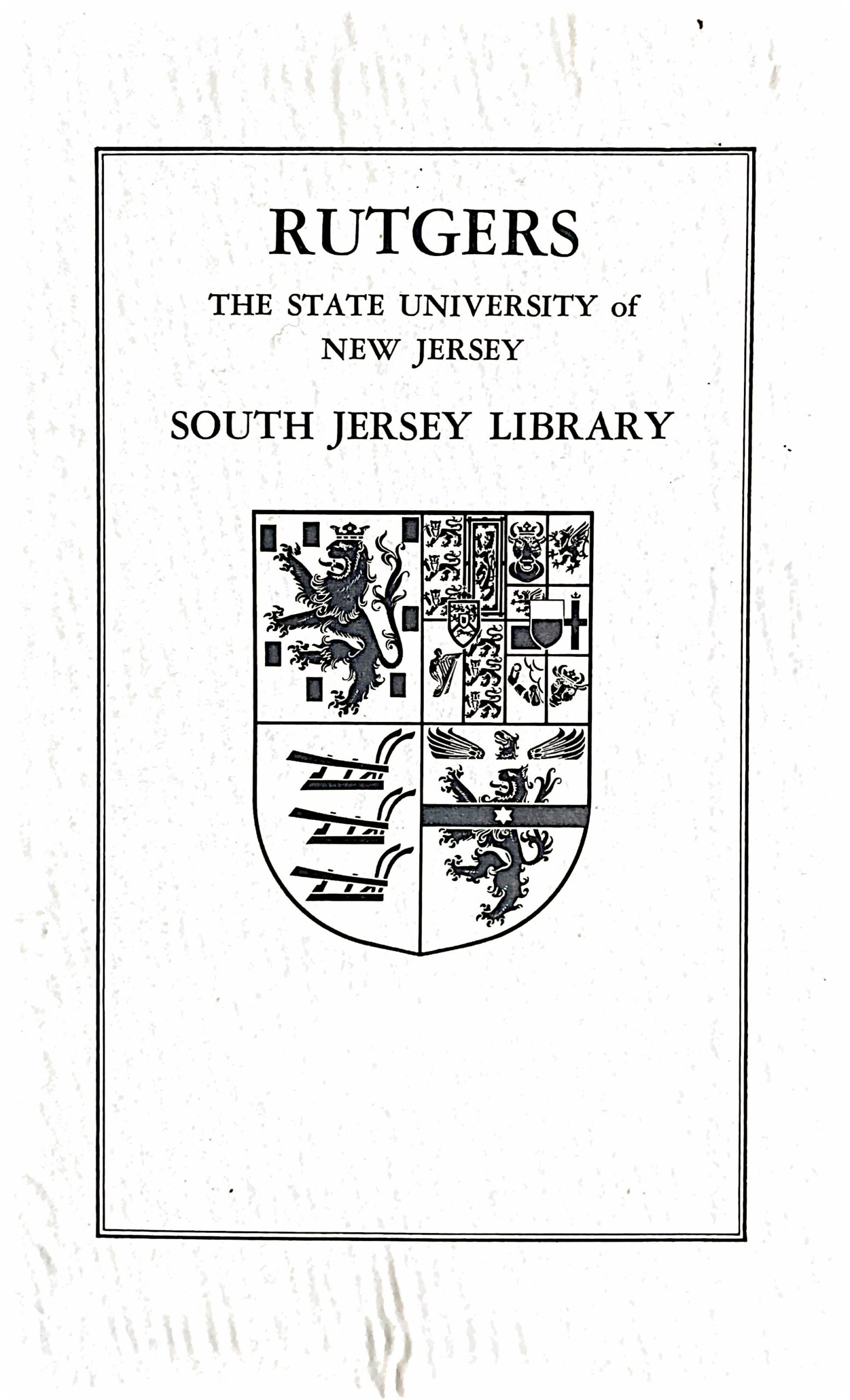
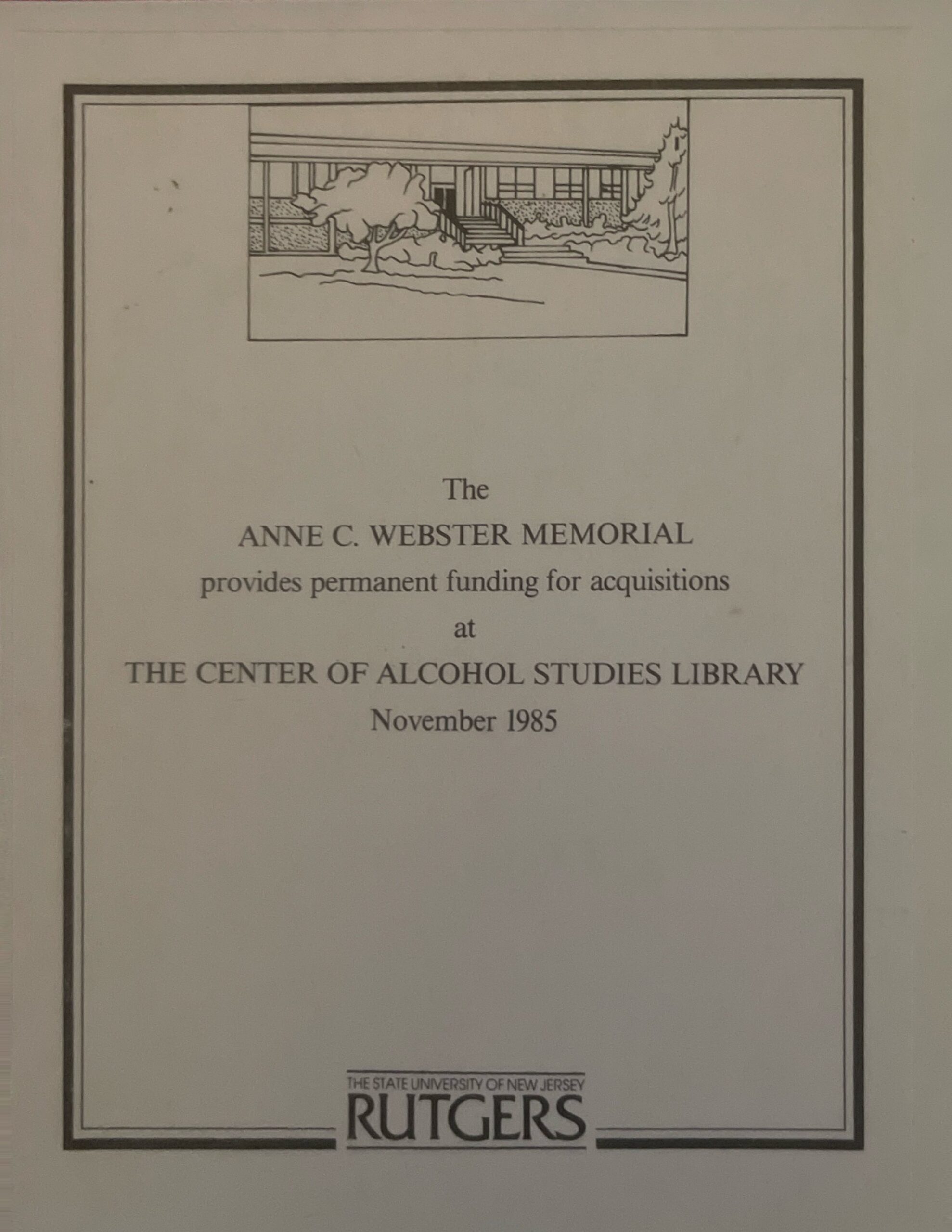 The library, integrated into the Rutgers University system, used several versions of its own bookplate in the 1960s and 1970s. In 1985, the Anne Webster Memorial Fund started to provide generous funding for acquisition. A new bookplate was designed to memorialize the support, still ongoing.
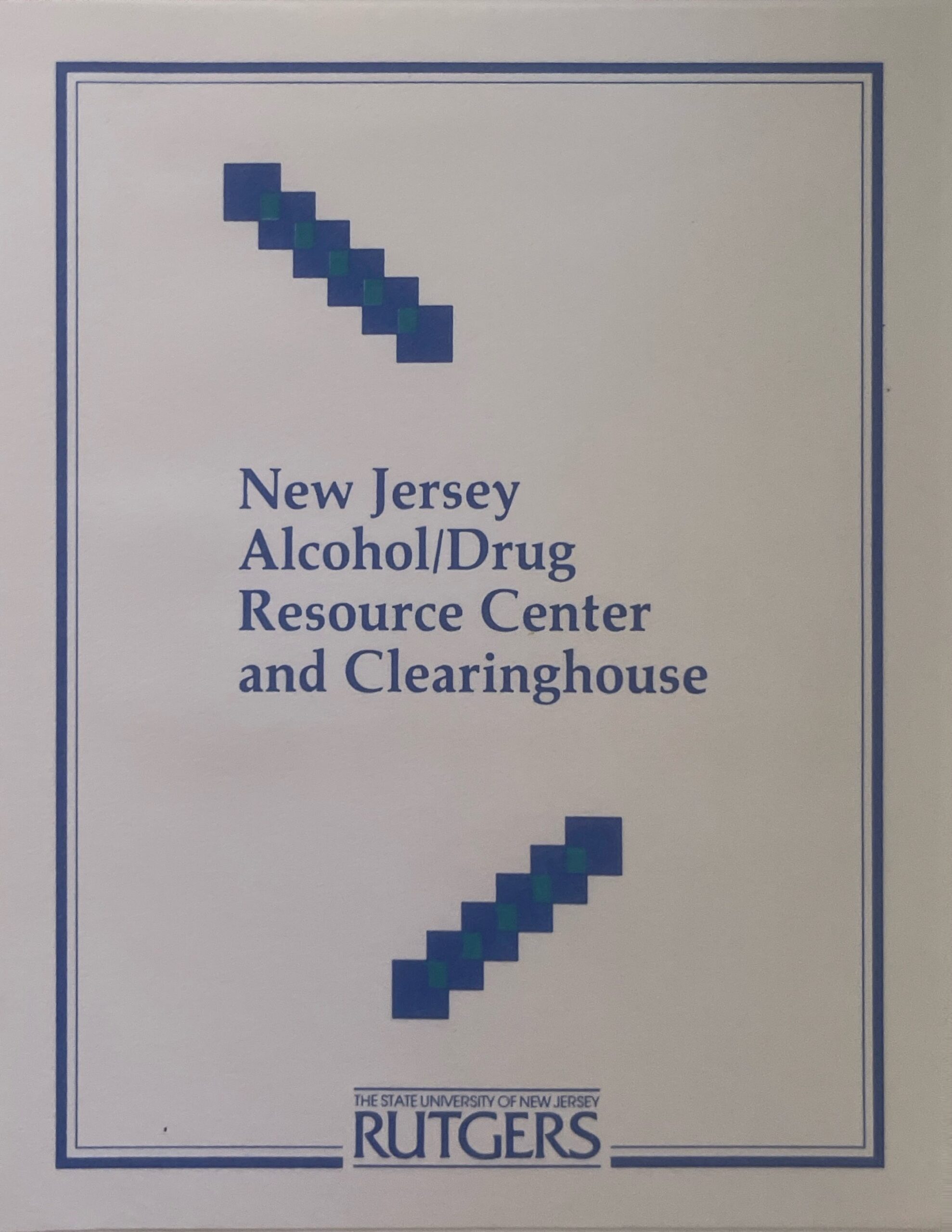 The state of New Jersey provided funding to purchase books for the New Jersey Alcohol/Drug Resource Center and Clearinghouse, also known as sublocation AlcoholNJ or AlcNJ, to separate this small but important collection from the main Alcohol Collection. Although no special funds are available to grow AlcNJ, the traditional acquisition of popular titles, such as self-help books, biographies and memoirs related to people grappling with addiction, and even some genre literature, has been ongoing, to satisfy the need of Rutgers readers with interest in general alcohol and addiction-related topics.
An all-time favorite ex libris
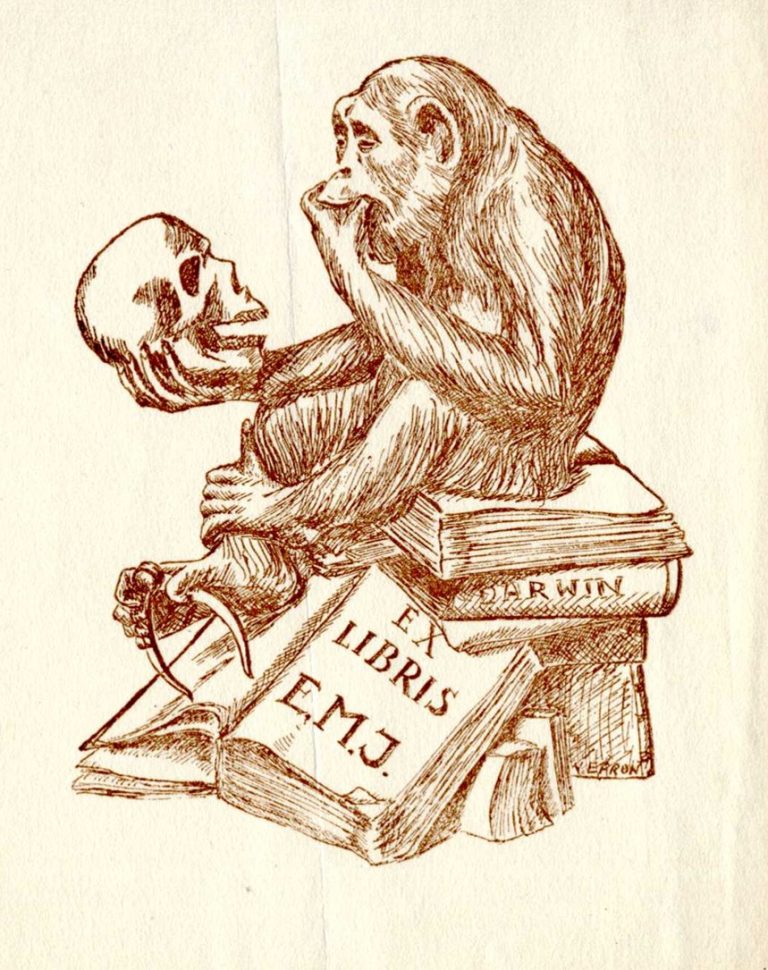 The greatest find in the library, when it comes to bookplates, is undoubtedly the “monkey in the library,” a sketch by CAS documentalist and artist Vera Efron for E. M. Jellinek. The 4×5-inch ex libris marked with the initials E.M.J. features a perplexed ape contemplating a human skull while sitting on a book entitled “Darwin.”
The bookplate testifies that several books in the Alcohol Studies Rare Book Collection came from Jellinek’s own collection preserved at Yale and later at Rutgers.
 More on bookplates from Rutgers Libraries
- Almack, E. (n.d.). Bookplates. In Bookplates. Project Gutenberg.
A great overview of the history of various styles and sources, along with a collection of examples ranging from early bookplates, such as by Albrecht Dürer and other German artists, to modern bookplates. - Junge, C. S. (Carl Stephen)., Goble, L. Truman. (1935). Ex libris. New York: H. L. Lindquist.
A collection of beautiful bookplates. Available in print from Special Collections or online. - Gadsdon, J. (1976). Something personal: a short essay on bookplates. The Australian Library Journal, 410–411.
A very short essay introducing the reader to the beauty of bookplates. - Severin, M., & Reid, A. (1972). Engraved bookplates: European ex libris 1950-70. Private Libraries Association.
A treasure trove of beautiful 20th-century bookplates with a variety of European examples.
This post was adapted from the Alcohol Studies Archives blog, sources include:
- Bookplates Preserving, published on November 5, 2024
- The Monkey in the Library: E. M. Jellinek’s Bookplate, published on November 10, 2020