 [SPOILERS AHEAD!]
I love movies! Sometimes even more than books. I especially love movie adaptations of popular books I’ve never read because if they as good as a movie, they might be even better as a book. Maybe watching the movie will inspire me to check out the book at my local library or buy it on sale. It’s especially important that banned books adapted for film are read in order to show how needed they are, despite being banned.
The American Library Association (ALA) released their Top 10 Most Challenged Books of 2024. Two on the list are film adaptations I have seen:
3. (TIE) The Perks of Being a Wallflower by Stephen Chbosky and
6. (TIE) Me and Earl and the Dying Girl by Jesse Andrews.
I saw these two movies years ago, and they both have inspired me to add the books to my very extensive To-Be-Read (TBR) list for this year’s Banned Books Week.
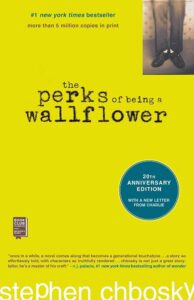
The Perks of Being a Wallflower, by Stephen Chbosky
I wrote about this movie last year for Banned Books Week 2024, and I still feel the same way today. After main character Charlie (Logan Lerman) becomes afraid of making new friends as a result of being bullied at his last school, he meets a group of misfit friends who show him what life is really about. The movie also includes other familiar faces like Emma Watson from Harry Potter, and Nina Dobrev from The Vampire Diaries.
 The chemistry between Logan Lerman and Emma Watson throughout the movie is the sweetest connection in the world. Watson plays Sam, Charlie’s friend and crush who does her best to make Charlie feel included. I also love the connection between Charlie and his older sister, Candace, played by Dobrev. I thought their relationship was very tender and heartfelt, especially since Candace is going through her own domestic violence with her boyfriend.
One of the most poignant moments of the movie was when Charlie asks his English teacher why nice people choose the wrong people to date. And his teacher replies, “We accept the love we think we deserve.” That line is such a staple for why people accept bad behaviors and being treated poorly because they think they deserve it.
Another powerful moment was when Sam and Charlie kissed for the first time. Sam felt safe with Charlie and wanted to make sure that the first person he kisses does love him. This was such a sweet moment for them both. More moments throughout the movie explore Sam and Charlie and their friends putting on Rocky Horror Picture Show performances, with an emphasis on LGBTQIAP+ culture and the joy it means to young people.
I could go on and on about this movie. Wonderful and quietly determined, it features incredible characters and great storytelling. I’ll definitely pick up the book to see if it holds up to this awesome movie.
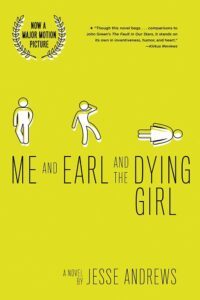
Me and Earl and the Dying Girl, by Jesse Andrews
I remember this movie being an incredibly sweet, weird, goofy and wonderful representation of childhood friends reconnecting through tragedy. Jesse Andrews, the author of the 2012 novel, also wrote the screenplay, a good sign that the movie would remain faithful to the book. In most cases, I trust the movie more when the author plays a huge role in their film adaptation. The movie is about Greg Gaines (Thomas Mann), a socially awkward high school senior growing up in Pittburgh. His only friend is Earl (RJ Cyler), who he calls his “coworker”, and together they make goofy versions of classic films. Greg’s mother (Connie Britton) insists that Greg reconnect with his old friend Rachel (Olivia Cooke), who was recently diagnosed with leukemia. As Rachel goes through treatment, Greg and Earl decide to make a short film dedicated to her. The pressures of making the film strains the friendship between Greg and Earl, but it makes for a great fight scene! Another impactful scene is when Rachel tells Greg she’s stopping her treatment. The cinematography, with the camera angle of Greg standing in one end of Rachel’s room, makes the scene more heartbreaking for both of them. After Rachel passes, Greg finds out that she wrote his college explaining their summer experience, and how much she appreciated his kindness. Completely touched by this, Greg decides to send the letter, along with his application and short film for Rachel, to his college.
 I thought the chemistry between the actors was great, especially between Mann and Cooke; I loved seeing their friendship evolve throughout the movie. I also loved the friendship between Cyler and Mann. Their scenes together were funny and goofy, much like a real friendship between boys. I absolutely cried over Greg showing Rachel the final film! I always found the meta of having a movie within a movie stand out the most because the short film movie shows the main movie’s true identity.
According to some other book blogs who have both seen the movie and read the book, the movie tones down the book’s vulgar language and suggestive humor. Rachel’s character has more depth in the movie, and the movie adds in cinematic elements like breaking the fourth wall. Knowing this much about the movie makes me want to check out the book even more.
It’s funny how some movie adaptations can be so good that people want to read the book that inspired them, yet people work so hard to ban or challenge them in libraries and schools. So if that’s the case, why not ban movies, then? Because that defeats the purpose of making great art and showing amazing talents. Book banning still makes no sense to me, but at least it makes for a great movie.
Happy Banned Books Week!
More on books and movies
- Seen the Movie? Read the Book! – Our Covid-era collection of recommended titles for those in need of a change of pace during binge-watch marathons: books that some popular movies and shows are based on.
Popular posts related to Banned Books Week
- The Giver, by Malcolm Lowry – Our most popular post, written by Becky Diamond, with over 5,000 views: Banned Books as a Parenting Tool: Lessons from The Giver.
- Judy Blume’s Banned Books – A related post about the impact of Judy Blume’s books, many of them on banned book lists from the time she started writing them.
- Banned children’s books – A post on the frustration to see banned and challenged children’s books that impacted children, taught me lessons, and helped them grow.
- Intellectual Freedom Stories from a Shifting Landscape – This book has a memorable, albeit appalling, reference to Rutgers, and as educators, we shouldn’t miss the teaching moment. Read The Vitruvian Man and a Threat to Burn Down the Art Library by Megan Lotts in Part 1, chapter 2.
- What is Samizdat? – Based on a Banned Books Week event flash talk, this post points out the practice of underground publication and circulation of articles or books with political views in stark contrast to the party line. Written by Judit H. Ward, who grew up with samizdat.
Banned Books We Read (and wrote about, too)
- Animal Farm, by George Orwell – chosen as a single book you can recommend to readers of all ages to explain the concept of banning books.
- The Great Gatsby, by F. Scott Fitzgerald – Part 1 and Part 2 of our celebration of the book’s 100th anniversary also explain why this book was favored and supported as harmless in dictatorships.
- Slaughterhouse Five, by Kurt Vonnegut – When our Music PhD student-blogger ended up writing a midterm paper on the concept of the postmodern sublime in Beethoven’s 9th Symphony, based on a banned book.
- Banned Books Librarians Read – Results of a survey by the New Brunswick Libraries (NBL) Learning Community in 2023.
- The Library Book, by Susan Orlean – The story of the fire that engulfed the Los Angeles Public Library in 1986, consuming 400,000 books and damaging an additional 700,000 volumes.
- Danielle’s favorite banned books – Six titles representing six years, from Harry Potter to The Hate U Give, by Angie Thomas, as viewed by a grad student in Library School.
New to Banned Books Week?
Start with some of our perennial resources to familiarize yourself with what Banned Books Week is all about and how you can get involved.
- Guide to Banned Books: Curated by New Brunswick librarians, this LibGuide provides an overview of challenging books and a brief summary of events at Rutgers-New Brunswick. Updated annually.
- Introduction to Banned Books: A recap of our 2020 events, this post will walk you through the various reasons books can be challenged or banned from the perspective of literature, written by Nicholas Allred, an English PhD student at that time.
- Banned No More: Nancy Kranich, instructor at SC&I and former ALA President, takes a closer look at book bans and their dangers to democracy.
- Banned or Challenged: If you ever wondered about the differences between the two terms, this post will shed some light from a unique perspective.
- The Banned Books of Rutgers Special Collections and University Archives: Archivist Tara Maharjan collected some famous examples available at Rutgers. How many of them have you read?