Since its inception, the Books We Read blog has evolved into a community of diverse voices, perspectives, and experiences. It began as an extension of the Reading for Recovery project at the Center of Alcohol Studies Library (2015–2016), a bibliotherapy initiative that eventually evolved into a broader project: Books We Read.
This site was launched in August 2019 to continue connecting readers with meaningful texts by expanding the original scope. It now serves as a digital platform for students, librarians, general faculty, and staff to share reflections on books, reading habits, and the role of books in personal and academic growth, reflecting the diversity of the Rutgers community.
A platform rooted in inclusivity
 The blog builds on the belief that reading is for everyone. Whether you are a first-year student navigating college life, a faculty member seeking new teaching tools, or a librarian curating collections, Books We Read offers something meaningful. It’s a space where scholarly rigor meets personal reflection, and where reading becomes a shared journey.
Since 2019, the blog has intentionally expanded its scope to include books by authors from underrepresented backgrounds and genres that speak to varied interests—from memoirs and historical fiction to poetry and cookbooks. This approach has helped develop a sense of belonging among readers who can see their identities and experiences reflected in the texts.
Books are not necessarily chosen for their academic or literary merit, but rather for their ability to resonate with diverse readers. The blog often includes student bloggers, showcasing through their voices how diverse books impact people at different stages of their academic and personal journeys.
Main themes
The thematic variety reflects scholarly insight and personal engagement. Here is a list of our key themes with sample posts to mark the new school year.
- Bibliotherapy/Guided reading: An exploration of how reading can support mental health, personal growth, and resilience. By treating librarians as “accidental bibliotherapists,” the Books We Read blog guides readers to texts that resonate with their experiences.
-
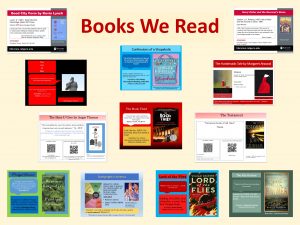
Miniposters of books that students recently read on display in Chang Library. Click on the image to open all galleries. Student voices: Rutgers mentoring programs are frequently featured, such as Academic Mentoring at SEBS and Portals to Academic Success. Posts reflect student feedback, reading habits, and library experiences, often showcasing the importance of recreational reading and creativity in academic settings.
- Food and culture: A recurring theme is the intersection of literature and culinary history. Posts like “History through food” and “Historical cookbooks” blend storytelling with cultural analysis, showing how food-related texts can present broader historical and social contexts.
- Celebrations and reflections: Books We Read observes anniversaries, provides seasonal and thematic reading lists, and explores a variety of genres such as historical fiction and memoir.
 James Baldwin and his Lasting Legacy
- Women’s Equality Day
- The Joy of Reading Guidebooks
- Thoughts on Aging
- 100 years of The Great Gatsby, Part 1
- Holodomor: Reading Recommendations
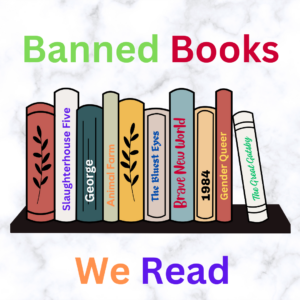
- Banned Books: Animal Farm Revisited
- Judy Blume’s Banned Books
- Celebrating the Legacy of Nelson Mandela
- Three Sisters and Historical Fiction
- Banned Books Librarians Read
- Banned Books Week 2024
- Staff picks promote New Jersey authors, honor scholars, or simply share a particularly good read.
- Myron Bolitar: your favorite Jersey boy you might not know yet
- Holidays, dogs, and Rutgers -a Mystery by David Rosenfelt
- The Country of the Blind
- Staff Picks: “Breaking Through: My Life in Science” by 2023 Nobel laureate Katalin Karikó
- The Mysterious World Within and Around Us
- Staff Picks: Crook Manifesto by Colson Whitehead
- Staff Picks: “Perspectives on the Life and Works of Gabriel García Márquez” by Gustavo Arango
- Staff Picks: Beautiful World, Where Are You by Sally Rooney
- Artificial Intelligence, as seen through the eyes of the librarian, author, and students is a fairly new but significant addition to our diverse topics.
- Cross-posts with Alcohol Archives: Occasionally, the blog features crossover content from the Alcohol Studies Archives blog, reinforcing the shared mission of preserving and interpreting Rutgers’ scholarly heritage.

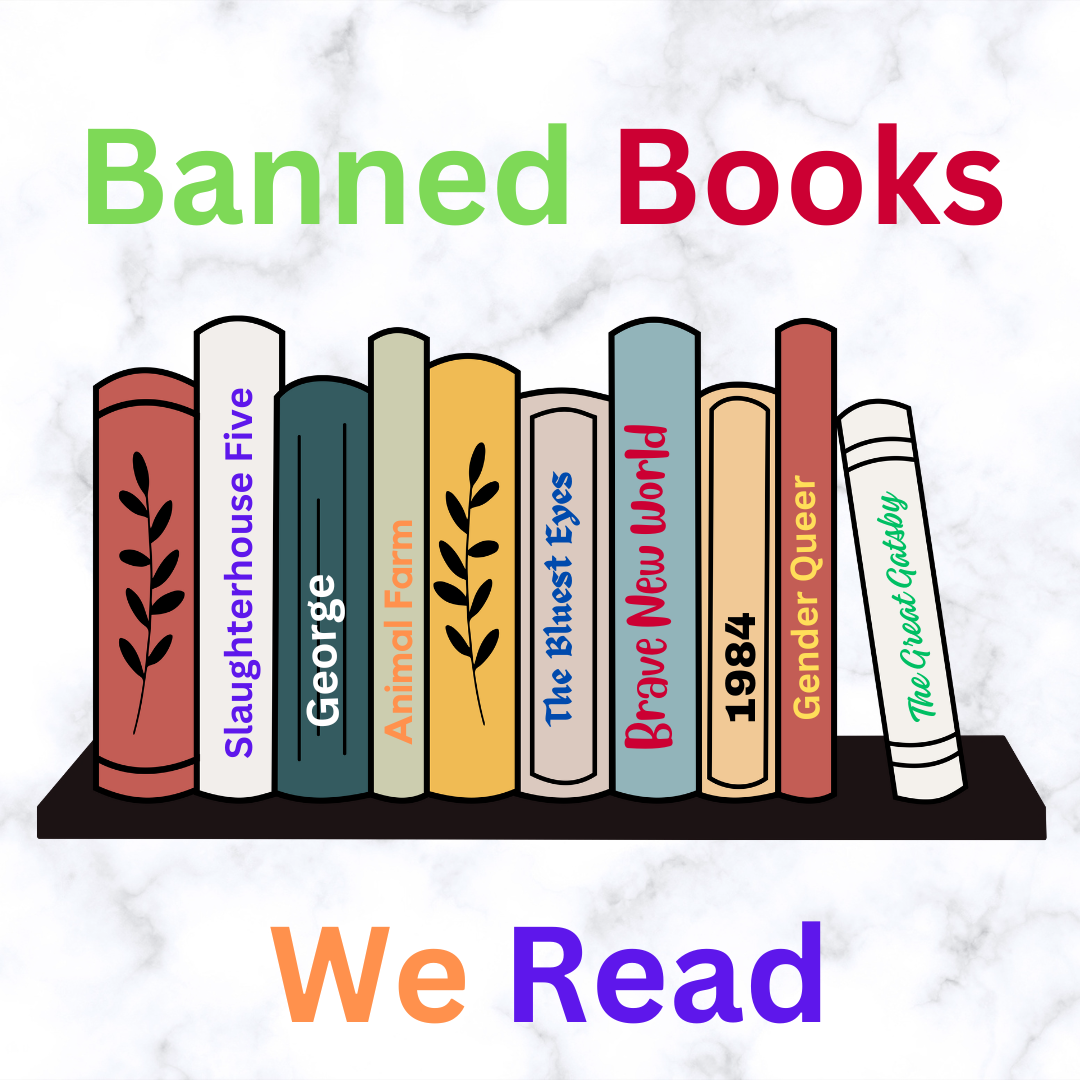
As shown by page views statistics, these topics resonate well with readers. The tone is casual and non-judgmental, encouraging readers to engage with the material in their own way and on their own time while reflecting on their own experiences.
Stay tuned for part 2: purpose and impact (with statistics).